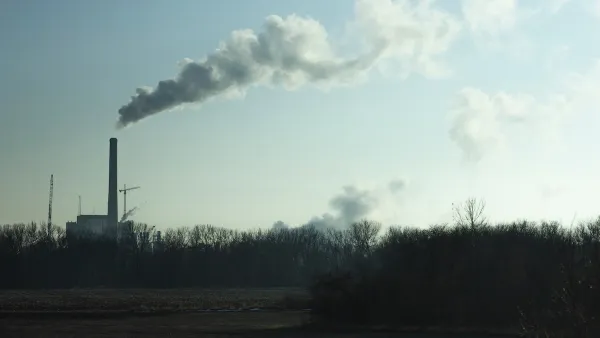
The writing is on the wall for what's left of the coal industry.


Alexis C. Madrigal reports on the sudden loss of fortune for the American coal industry, despite its best efforts to oppose climate change legislation and subsidies for competing energy sectors. Madrigal describes the state of the American coal industry as one of collapse: "The four largest coal companies were worth a combined $21.7 billion dollars in June 2010. Now they’re worth $1.2 billion. Two other large coal concerns, Patriot and James River, have both filed for bankruptcy in recent years." Industry sources cited by madrigal expect more bankruptcies in the near future.
Madrigal also provides some analysis on just what happened to the industry in the past five year as well as links to further discussion about the state of the industry.
Read the full story: The American coal industry is collapsing


Why the Gas Stove Debate Misses the Point
Banning gas-powered appliances is one part of a broader toolkit of changes in building codes that could vastly improve efficiency.
Methane Emissions Replace CO2 Emissions— Is This Progress?
For the first time, electricity generated from burning natural gas will surpass coal, largely due to fracking of shale. While that means that carbon dioxide emissions will continue to drop, it also means that methane emissions will increase.

Appalachian Coal's Last Wheezing Breath
As the nation abandons old-school West Virginia coal, a scarred and cratered landscape remains. Can residents build a new economy and overcome the legacy of an often-brutal industry?

Planetizen Federal Action Tracker
A weekly monitor of how Trump’s orders and actions are impacting planners and planning in America.

Amtrak, CN end decades-long dispute with eight-year agreement
The new operating agreement establishes an updated framework for the companies to work together, including processes to resolve disputes.
Nation's most wind-powered state turns to coal as data centers increase energy demand
For the first time in decades, Iowa has increased its generation of coal power.

Alabama scores up to $2.5 billion federal loan for largest infrastructure project in state’s history
The Mobile River Bridge and Bayway Project aims to ease congestion at Alabama’s worst bottleneck.

Trump is considering data centers on 6 states' public land — some state officials say they had no idea
If the administration approves the proposed projects, data center and data center-related developments will cover 17,600 acres of public land.

Despite court ruling, Trump is keeping nearly all wind projects in the US on hold
At least 110 wind energy projects have not heard from the government since a federal judge ruled that the Trump administration's freeze on wind turbine clearances was likely illegal.

FREE Course: Walkable City 1: Why Walkability?
After describing his path towards focusing on walkability as the essence of good planning, Jeff Speck marches through his five principal reasons for making more walkable places.
Reinventing Malls: Planning Alchemy—Turning Gray Fields Into Gold
The course focuses on the opportunities and imperatives that shape reinvention of mall sites.

KFH Group Inc.
Greater Baltimore Committee
Eagle County Government
The Architects Foundation
University of Cincinnati Online
The Pocatello Development Authority
The Urban Renewal Agency of the City of Pocatello