Facing an ever expanding shortage of affordable housing and growing inequality, São Paulo's new master plan hopes to change the face of the city.


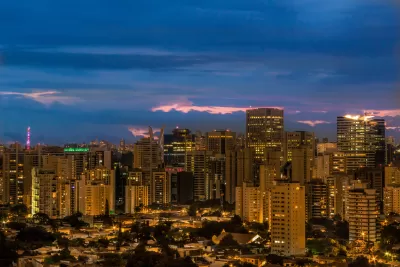
Catesby Holmes of Next City reports on what might be the legacy of São Paulo Mayor Fernando Haddad, who faces a difficult re-election campaign. With a housing shortage of between 100,000 and 500,000 housing units, the mayor is betting on a long-term strategy to create 717,000 housing units by 2030, with 244,000 of those being allocated for affordable housing.
For its proponents, the master plan, or “plano diretor,” has the potential to change São Paulo’s urban design “in a revolutionary way,” Haddad told the BBC. “Today, private investment does whatever it wants in the city,” he added. “It builds where it wants. It destroys neighborhoods, creates pockets of skyscrapers and overloads urban infrastructure.”
The master plan will designate areas within the city—mostly those served by transit infrastructure—for increased density, with development incentives such as additional height, in return for inclusion of low-income housing. As Holmes reports, however, the plan has sparked concern from wealthier residents about the intrusion of low-income people into their communities.
Read the full story: São Paulo Is Betting Better Urban Planning Can Solve a Housing Crisis
A Toolkit to Improve the Slums of Brazil
Brazilian slums represent huge segments of the country's urban population, especially in Sao Paulo. Upgrading them into economically sustainable segments of the city is a challenge, but a new toolkit offers a path to success.
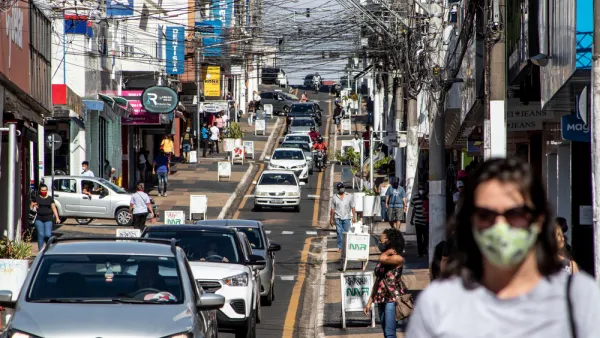
The World's Worst COVID Outbreak
Brazil has surpassed the U.S. and led the world in the daily average of COVID-19 deaths and coronavirus infections during the last week. Experts point to a coronavirus variant and the lack of a federal strategy, leaving states without assistance.

The Pandemic's New Epicenter
On May 22, the World Health Organization declared Latin America the new epicenter of the coronavirus pandemic. Brazil is second in the world in reported cases after the U.S., and Ecuador, Peru, Chile, and Mexico are also suffering disproportionately.

Planetizen Federal Action Tracker
A weekly monitor of how Trump’s orders and actions are impacting planners and planning in America.

California plans to bury El Niño’s downpour
If the state plays its cards right, it may be able to store a billion acre-feet of El Niño’s water in aquifers.

Desperate measures: Advocates weigh draining Lake Powell to fill Colorado River
Draining the reservoir could reduce evaporation losses by a couple hundred thousand acre-feet.

Chicago voters approve permanent festival grounds, penalty for vacant property owners
Currently, major summer and fall festivals take over public parks for weeks at a time, drawing criticism from nearby residents

NYC votes to cut outdoor dining red tape, speed up permitting
New York City also voted to allow the Department of Transportation to begin work on urgent projects before notifying elected officials.

California appears to reject Prop. 45
The proposition would have expanded the projects that qualify for a streamlined environmental review, effectively paring down the California Environmental Quality Act.

FREE Course: Walkable City 1: Why Walkability?
After describing his path towards focusing on walkability as the essence of good planning, Jeff Speck marches through his five principal reasons for making more walkable places.
Reinventing Malls: Planning Alchemy—Turning Gray Fields Into Gold
The course focuses on the opportunities and imperatives that shape reinvention of mall sites.

City of Rosemead
Rutgers University, Edward J. Bloustein School of Planning and Public Policy
One Hundred Miles
Hunter College, City University of New York (CUNY)
The Architects Foundation
University of Cincinnati Online
City of Cambridge
Montrose County
The Pocatello Development Authority