In an effort to bring relief to homeowners, the city will reduce property taxes on 95 percent of the city's residential properties.


"Detroit Mayor Mike Duggan is set…to announce details of the city’s annual proposed property assessment changes, which are expected to bring a reduction in assessments for nearly all city residential property owners," reports The Detroit News.
The article notes that property tax reductions are becoming something of an annual tradition in Detroit, following "years of complaints from homeowners that home assessments, which taxes are based on, didn’t match market value, significantly increasing taxes and leading to foreclosures." The article also credits a report from the Lincoln Institute of Land Policy for advocating for the continued overhaul of the city's tax assessment system.
Matt Helms also reported on the most recent property tax reductions, with a few more details about the adjustments:
City officials said large portions of northwest, north and northeast Detroit will see 15% reductions, while the southwest, near west and lower east parts of the city will see reductions around 5%. Some of the city's more stable neighborhoods — Boston-Edison, Indian Village and Sherwood Forest — will see increases of 15%, reflecting rising sale prices. But assessments on 95% of homes in the city will go down.
Helms also includes statements from Mayor Mike Duggan about the health of the real estate market in Detroit. Mayor Duggan recommended potential homebuyers to buy in 2016, because real estate price are stabilizing and growing in the city.
Read the full story: Detroit officials to unveil property assessment changes
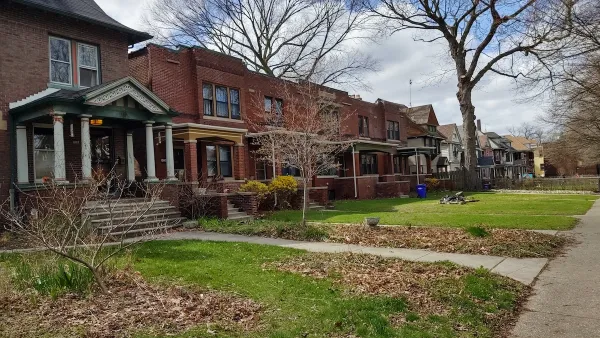
Detroit Says Problems With Property Tax Assessments are Fixed. Advocates Disagree.
With higher-valued properties under assessed and lower-valued properties over assessed, advocates say there's still a problem with Detroit's property tax system.

Proposed Land Value Tax Plan in Detroit
Detroit Mayor Mike Duggan proposes hiking property taxes for vacant land and buildings while lowering the rate for occupied homes and businesses in a split tax plan he contends will resolve many of Detroit's blight and high property tax woes.
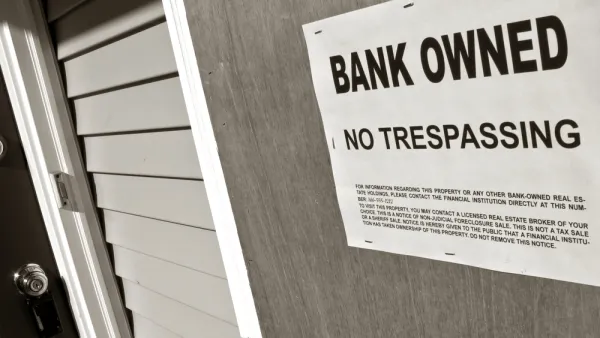
Detroit Program Keeps Homeowners Facing Foreclosure Housed
The buyback plan diverts properties from Wayne County's tax foreclosure auction, keeping them in government hands until residents can repay the purchase price.

Planetizen Federal Action Tracker
A weekly monitor of how Trump’s orders and actions are impacting planners and planning in America.

California plans to bury El Niño’s downpour
If the state plays its cards right, it may be able to store a billion acre-feet of El Niño’s water in aquifers.

Desperate measures: Advocates weigh draining Lake Powell to fill Colorado River
Draining the reservoir could reduce evaporation losses by a couple hundred thousand acre-feet.

Los Angeles just elected an urban planner as its mayor
Transportation analysts are optimistic that Raman will be more aggressive in addressing transit issues than Bass.

Mamdani’s pied-à-terre tax survives legal challenge
A panel of judges found that the plaintiffs failed to demonstrate injury as a result of New York City's implementation of the tax.

Eastern Nebraska is running out of electricity
Data centers and electrification are straining eastern Nebraska’s grid, throttling economic development.

FREE Course: Walkable City 1: Why Walkability?
After describing his path towards focusing on walkability as the essence of good planning, Jeff Speck marches through his five principal reasons for making more walkable places.
Reinventing Malls: Planning Alchemy—Turning Gray Fields Into Gold
The course focuses on the opportunities and imperatives that shape reinvention of mall sites.

City of Rosemead
Rutgers University, Edward J. Bloustein School of Planning and Public Policy
One Hundred Miles
University of Michigan School for Environment and Sustainability (SEAS)
Hunter College, City University of New York (CUNY)
The Architects Foundation
City of Cambridge
Montrose County
The Pocatello Development Authority