Newly released data from the Weldon Cooper Center's Demographics Research Group shows a state shifting in population growth northward—toward Washington D.C. and inner ring suburbs.


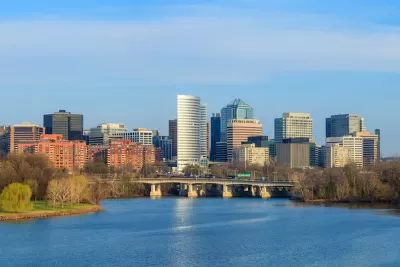
Hamilton Lombard reports on a reversal of long-standing trends in Virginia's population growth. "Population growth in Loudoun [County], as in much of Virginia during the two decades [of the 1990s and 2000s] was fueled by people moving out to newly built subdivisions on the edges of the commonwealth’s largest metro areas," writes Lombard. "Though Loudoun remains the fastest growing locality in the state, according to the 2015 population estimates released today by the Weldon Cooper Center’s Demographics Research Group, its growth has slowed considerably."
The article includes population heat maps for the state's counties as well as a series of Google Streeview screengrabs to show the development that has followed the state's growth in recent years.
The jist of the data reported by the article, however: growth is accelerating closer to Washington D.C., and slowing farther away from the District. In fact, "seven of the ten fastest growing localities in Virginia since 2010 have been urban localities, a noticeable change from previous decades when most of Virginia’s cities had stagnant or declining populations."
Read the full story: Population Growth in Virginia Is Reversing Decades-Old Trend, Estimates Show

The 2010s Didn't Live Up to Potential as the 'Decade of the City'
The renaissance predicted for urban areas in the United States started strong during the 2010s but slowed in the years leading up to a potentially generation defining pandemic.
Pushing Back on 'Suburban Triumphalism'
Interested observers have been predicting a crest of the American "back to the city" movement for years now—the idea that as Millennials come of age they will lose interest in urban lifestyles and seek the comfort of the suburbs.
Richard Florida: 'The Urban Revival Is Over'
The author of the "The Rise of the Creative Class" and the "New Urban Crisis" says cities have had their moment.

Planetizen Federal Action Tracker
A weekly monitor of how Trump’s orders and actions are impacting planners and planning in America.

California plans to bury El Niño’s downpour
If the state plays its cards right, it may be able to store a billion acre-feet of El Niño’s water in aquifers.

Desperate measures: Advocates weigh draining Lake Powell to fill Colorado River
Draining the reservoir could reduce evaporation losses by a couple hundred thousand acre-feet.

Housing is the top priority of Seattle’s sole new councilmember
Jenks campaigned on building 1,000 new units of affordable housing.

New tax cuts may slash $1.5 billion in funding for Miami transit, public parks
Amendment 3 will save Miami-Dade homeowners $2,700 in 2028.

Arizona, Wisconsin, Pennsylvania hope to finally advance climate goals post-midterms
The three states have spent years under Republican or divided control.

FREE Course: Walkable City 1: Why Walkability?
After describing his path towards focusing on walkability as the essence of good planning, Jeff Speck marches through his five principal reasons for making more walkable places.
Reinventing Malls: Planning Alchemy—Turning Gray Fields Into Gold
The course focuses on the opportunities and imperatives that shape reinvention of mall sites.


City of Rosemead
Rutgers University, Edward J. Bloustein School of Planning and Public Policy
One Hundred Miles
University of Michigan School for Environment and Sustainability (SEAS)
Hunter College, City University of New York (CUNY)
The Architects Foundation
City of Cambridge
Montrose County
The Pocatello Development Authority