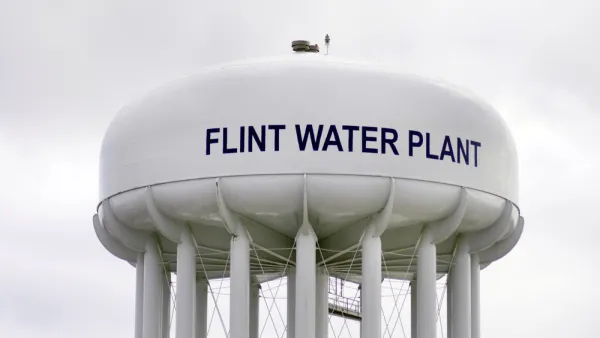
The Washington Post shows why the Flint water crisis is so concerning for the health of the residents affected.


Christopher Ingraham presents visual evidence of the Flint water crisis in the form of a series of infographics. The infographics use data gathered by "[a] group of Virginia Tech researchers who sampled the water in 271 Flint homes last summer found some contained lead levels high enough to meet the EPA's definition of 'toxic waste.'"
The infrographics show what the lead exposure in the drinking water supply of nearby cities like Detroit (2.3 parts per billion) and Troy (1.1 parts per billion) looks like, followed by the 90th percentile of the Flint homes (27 parts per billion) and the highest level found in the sample (158 parts per billion). That last sample was found at a home in the city's 8th Ward, which was using water at "more than 10 times the EPA limit" and "30 times higher than the 5 ppb reading that can indicate unsafe lead amounts."
FULL STORY: This is how toxic Flint’s water really is

1,700 Flint Residents Sue U.S. EPA for $722 Million in Damages
Flint residents are suing the U.S. Environmental Protection Agency for damages caused by exposure to lead in the city's drinking supply.
How the U.S. Environmental Protection Agency Failed the People of Flint
While blame squarely lays with Michigan state officials, agencies, and possibly Gov. Rick Snyder himself, the EPA also played a role by both detecting the cause of the problem but not acting on the reports of improper treatment of river water.
First Step to Restoring Drinking Water for Flint—Coat the Existing Pipes
Gov. Rick Snyder (R-Mich.) announced on Wednesday that the state is working to ensuring safe tap water for Flint residents. While there is no schedule to replace the corroded lead pipes, they are being treated to prevent further lead leaching.

The state-sanctioned urbicide of Austin
People don’t kill cities. Freeways do.

US to reduce Colorado River water deliveries to Mexico
A new Colorado Treaty amendment reduces Mexico’s Colorado River water allocation by 250,000 acre feet.

New Jersey’s second-largest city bans standalone data centers
Jersey City will continue to allow co-location facilities, such as those meant for research institutions that store their own data.

Amtrak not solely to blame for New Jersey commuter rail's unreliability, report finds
A new study from the Garden State Initiative found that NJ Transit’s budget grew 20% across a 4 year period, but reliability declined significantly over the same period.

EPA erases limits on planet-warming pollution from power plants
Under Monday’s plan, power plants would still have some limits on how much mercury, arsenic and other contaminants they can emit.

Phoenix announces new on-demand transit service, more frequent RAPID buses
Both new services will launch in October, and are part of Phoenix's Project Effective Access Solutions for Easing Congestion.

FREE Course: Walkable City 1: Why Walkability?
After describing his path towards focusing on walkability as the essence of good planning, Jeff Speck marches through his five principal reasons for making more walkable places.
Reinventing Malls: Planning Alchemy—Turning Gray Fields Into Gold
The course focuses on the opportunities and imperatives that shape reinvention of mall sites.

Eagle County Government
Harvard University Graduate School of Design
Nashville Planning Department
The Architects Foundation
University of Cincinnati Online
The Pocatello Development Authority
The Urban Renewal Agency of the City of Pocatello
Journal of the American Planning Association