Is MSP really "Greater"? A brief look at the Human Ecology of Minnesota's Twin Cities reveals tremendous upside along with numerous challenges


This past August I was honored to participate in Thriving Cities' own conference and workshop. Held over two days in Portland, Oregon, the seminar featured urban scholars and practitioners from all the across the country with topics ranging from the arts to economic development.
Since then, I have been thinking more and asking questions about how Thriving Cities' methodology and its Six Endowment Human Ecology framework speak to own my organization, Minnesota Compass—an initiative that seeks to inform local efforts to improve communities throughout our state by tracking social, economic, and demographic trends vital to quality of life. Specifically, I have been wondering how might we incorporate qualitative and even subjective assessment with data? And how might urban analysis include entire realms of experience, not currently tracked by Minnesota Compass, like religion and the arts?
Below is my preliminary effort to answer these questions, by applying Thriving Cities’ framework to my own backyard, the Minneapolis-Saint Paul metropolitan area, also known as "Greater MSP" or simply, the Twin Cities...
Read the full story: A View from the Twin Cities
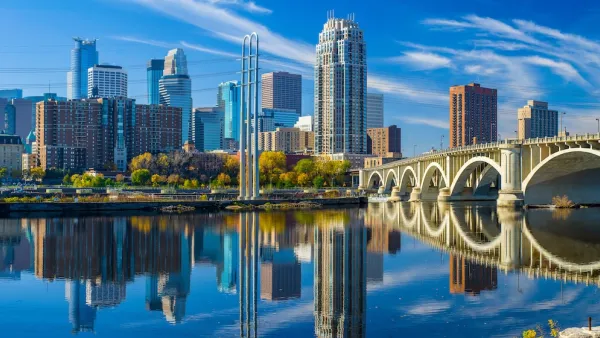
Looking Back on 60 Years of Land Development in the Twin Cities
In 1960, about 12 percent of the Twin Cities metro's land was already developed. By 2020, about 34 percent had been developed. Many factors influenced how the region has changed since 1960.
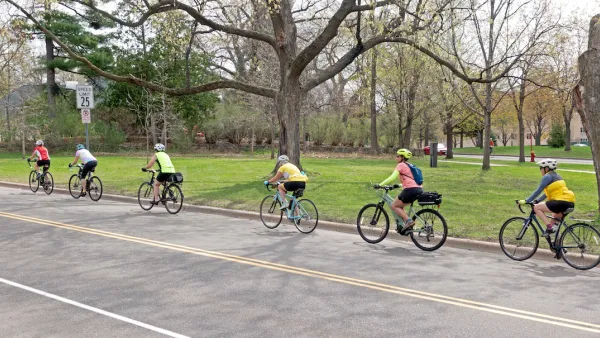
Twin Cities Suburbs Look to Improve Bike Facilities
Communities around Minneapolis and St. Paul are working to build more robust bike infrastructure networks.
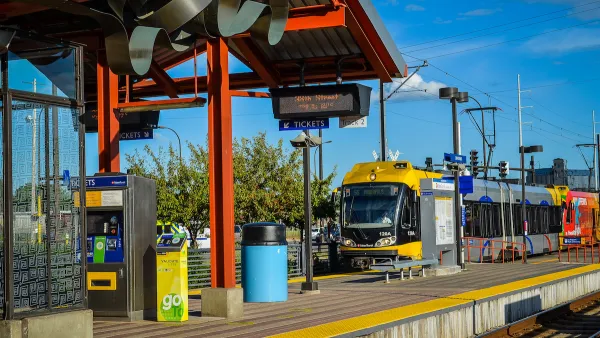
Twin Cities Trains Move to Fewer Cars, Higher Frequency
Headways will drop from 15 minutes to 12 minutes.

Planetizen Federal Action Tracker
A weekly monitor of how Trump’s orders and actions are impacting planners and planning in America.

California plans to bury El Niño’s downpour
If the state plays its cards right, it may be able to store a billion acre-feet of El Niño’s water in aquifers.

Desperate measures: Advocates weigh draining Lake Powell to fill Colorado River
Draining the reservoir could reduce evaporation losses by a couple hundred thousand acre-feet.

Mamdani’s pied-à-terre tax survives legal challenge
A panel of judges found that the plaintiffs failed to demonstrate injury as a result of New York City's implementation of the tax.

Eastern Nebraska is running out of electricity
Data centers and electrification are straining eastern Nebraska’s grid, throttling economic development.

Seattle passes record-breaking transit services expansion
Proposition 1 will double the city’s transit tax to add 95,000 more bus trips and preserve 180,000 bus trips annually.

FREE Course: Walkable City 1: Why Walkability?
After describing his path towards focusing on walkability as the essence of good planning, Jeff Speck marches through his five principal reasons for making more walkable places.
Reinventing Malls: Planning Alchemy—Turning Gray Fields Into Gold
The course focuses on the opportunities and imperatives that shape reinvention of mall sites.

City of Rosemead
Rutgers University, Edward J. Bloustein School of Planning and Public Policy
One Hundred Miles
Hunter College, City University of New York (CUNY)
The Architects Foundation
University of Cincinnati Online
City of Cambridge
Montrose County
The Pocatello Development Authority