The Washington Post performs a sort of reverse archaeology: looking skyward to the heights of building for a record of the country's economic fortunes.


Emily Badger examines the influence of economics on city skylines, or "how construction costs and condo prices shape the skyline, how building booms chase business cycles, why new record-breaking towers reach the heights they do."
Badger is sharing the work of Jason Barr, an economist and author who calls his area of study "skynomics." Barr's new book, Building the Skyline: The birth and growth of Manhattan's skyscrapers, and the article focus specifically on New York City. Depending on the era, according to the timeline laid out in this article, the economy pushed the development of skyscrapers for different reasons. One pattern Barr has noticed shared by those eras: "Periods of extreme income inequality in the U.S. have occurred alongside the growth of New York's skyline."
FULL STORY: How skyscrapers reveal the rise and fall of American fortunes

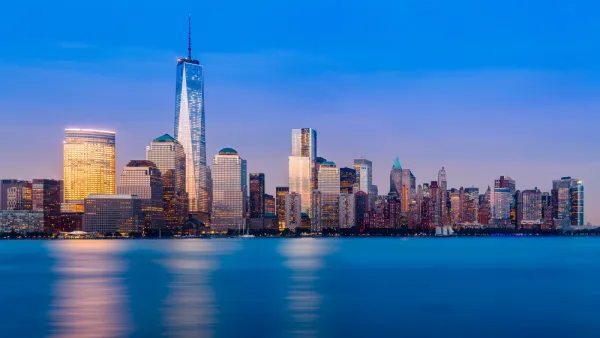
20 Years After 9/11: The 'Age of Skyscrapers' Is Nowhere Near Over
Despite predictions that the events of September 11, 2001 would be the end of skyscrapers, U.S. cities are building more tall buildings than ever.
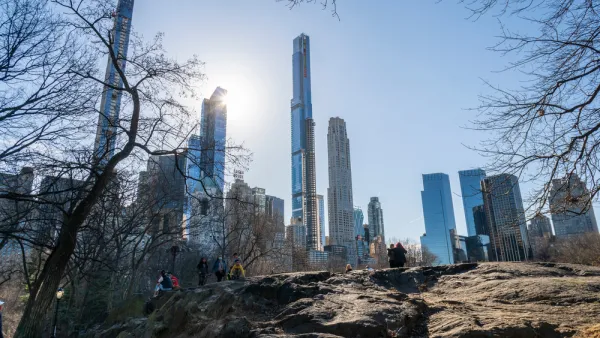
World's Tallest Residential Building Nears Completion in Manhattan
Central Park Tower, coming soon to New York City's "Billionaires' Row" was designed by Adrian Smith + Gordon Gill architecture.
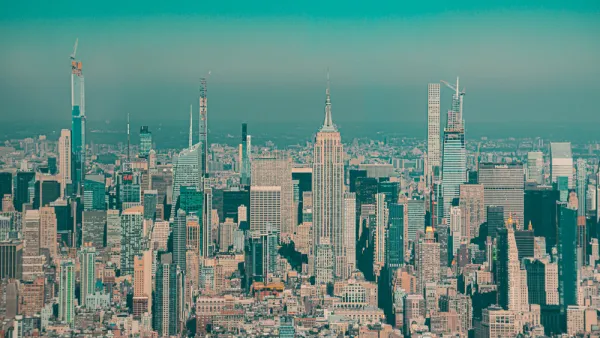
Vote for New York City's 'Building of the Year'
New York is still a place of bold architecture.

Planetizen Federal Action Tracker
A weekly monitor of how Trump’s orders and actions are impacting planners and planning in America.

The state-sanctioned urbicide of Austin
People don’t kill cities. Freeways do.

US to reduce Colorado River water deliveries to Mexico
A new Colorado Treaty amendment reduces Mexico’s Colorado River water allocation by 250,000 acre feet.

5 New England states march closer to 800 megawatt wind energy project
Securing federal approval for the project may be complicated under the Trump administration, which has historically been hostile towards domestic wind power.

Baltimore to break ground on $50 million Transit Priority Project
The project will bring faster bus trips, safer streets and better bike connections to Baltimore.

Airbnb launches $250 million 'last-dollar financing' housing accelerator, makes first investment in Austin
The company will put $6.4 million towards affordable housing development in Texas’ capital.

FREE Course: Walkable City 1: Why Walkability?
After describing his path towards focusing on walkability as the essence of good planning, Jeff Speck marches through his five principal reasons for making more walkable places.
Reinventing Malls: Planning Alchemy—Turning Gray Fields Into Gold
The course focuses on the opportunities and imperatives that shape reinvention of mall sites.

Eagle County Government
Harvard University Graduate School of Design
Nashville Planning Department
The Architects Foundation
University of Cincinnati Online
The Pocatello Development Authority
The Urban Renewal Agency of the City of Pocatello
Journal of the American Planning Association