Is a city with its own fair share of high profile projects on the way doing enough to ensure the safety of pedestrians?


According to an article by Kristoffer Tigue "while the City of Minneapolis has been making active efforts over the last year to fund pedestrian and bicycle infrastructure projects, some residents said the city needs to do more to prioritize making its transit ways more pedestrian friendly, especially in areas of the city where residents are more dependent on public transportation."
Tigue spoke with Minneapolis Pedestrian Advisory Committee member Scott Engel, who argues that the most important priority for the city should be making poorly designed roads safer for pedestrians. "It almost feels suburban, the way the roads are built," says Engel in the article. "Plymouth Avenue and West Broadway and Highway 55 …. A comfortable, connected, walking network is not there."
So what's the city doing? Tigue notes that the city of Minneapolis's 2016 budget allocates "tens of thousands of dollars to reconstructing specific roads around the city," which is when a lot of pedestrian infrastructure gets upgraded (Louisville recently provided an example of just the opposite, however). "The city is also putting more than $20,000 into sidewalk repairs," adds Tigue.
Pedestrian advocates say that's not nearly enough money, nor are those improvements a reflection of any coordinated vision for improved pedestrian to the public right of way.
Read the full story: Is Minneapolis doing enough to make the city pedestrian friendly?
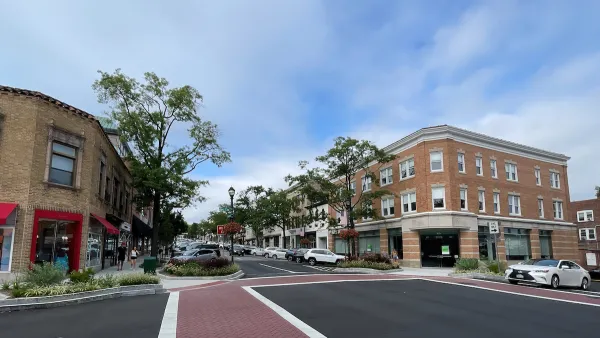
Connecticut Launches Complete Streets Standards
The new policy calls for sidewalks, bike lanes, and crosswalks on state roads and state-funded road projects.
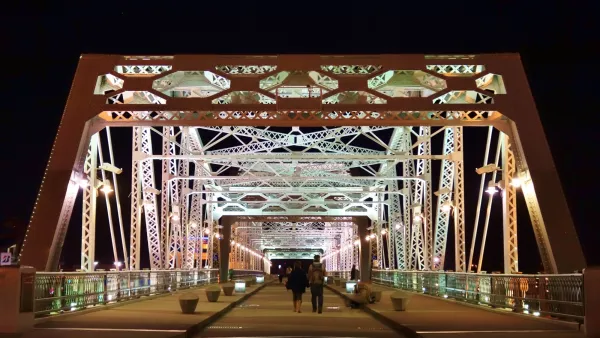
Nashville Releases 5-Year 'WalknBike' Plan
The plan lays out the city's plans for improving its bike infrastructure and sidewalk network.

The number of kids walking to school dropped from over 50% to 11% since the 1960s
Unsafe pedestrian infrastructure makes walking to school dangerous or impossible for a growing number of American students.

Planetizen Federal Action Tracker
A weekly monitor of how Trump’s orders and actions are impacting planners and planning in America.

California plans to bury El Niño’s downpour
If the state plays its cards right, it may be able to store a billion acre-feet of El Niño’s water in aquifers.

Desperate measures: Advocates weigh draining Lake Powell to fill Colorado River
Draining the reservoir could reduce evaporation losses by a couple hundred thousand acre-feet.

US buildings threatened, destroyed by fires set to triple by 2060
Researchers found a high fire risk for socioeconomically vulnerable neighborhoods in the American West.

LA residents may be allowed to paint their own crosswalks
Councilwoman Katy Yaroslavsky put out a motion instructing the Los Angeles Department of Public Transportation to study the feasibility of allowing volunteers to paint crosswalks.

Dallas moves to overhaul its zoning code
The city's zoning reform will allow more multi-family and mixed-use developments.

FREE Course: Walkable City 1: Why Walkability?
After describing his path towards focusing on walkability as the essence of good planning, Jeff Speck marches through his five principal reasons for making more walkable places.
Reinventing Malls: Planning Alchemy—Turning Gray Fields Into Gold
The course focuses on the opportunities and imperatives that shape reinvention of mall sites.

City of Rosemead
Rutgers University, Edward J. Bloustein School of Planning and Public Policy
One Hundred Miles
Hunter College, City University of New York (CUNY)
The Architects Foundation
University of Cincinnati Online
City of Cambridge
Montrose County
The Pocatello Development Authority