Here's one way to improve jobs-housing balance: employers can incentivize short commutes by helping to pay for the cost of housing.


"Facebook wants to keep its workers close to the office, and it’s willing to pay for it," reports Patrick Clark.
"The social networking giant is offering workers $10,000 or more to move within 10 miles of the company’s Menlo Park, Calif., headquarters," according to news originally broken by Reuters.
Clark names the ability to work longer hours, and spend less time commuting, as the reasoning behind the cash incentive. Clark also spends some time analyzing the question of why more companies don't do the same:
"The simple answer has to do with taxes. Unlike with retirement funds, say, where the government provides an explicit tax benefit for companies to pay for employee benefits, housing stipends can be taxable for both the employer and employee, according to a report this summer from Bloomberg BNA (subscription required). So employers operating in expensive housing markets have become accustomed to paying higher salaries, and letting workers decide how to spend the money."
Read the full story: More Companies May Start Helping Employees Buy Homes

Meta’s Plans to Revive an Old Rail Bridge Halted During the Pandemic
The company formerly known as Facebook’s once planned to revive the Dumbarton Rail Bridge across the San Francisco Bay. Those plans are as derelict as the bridge.
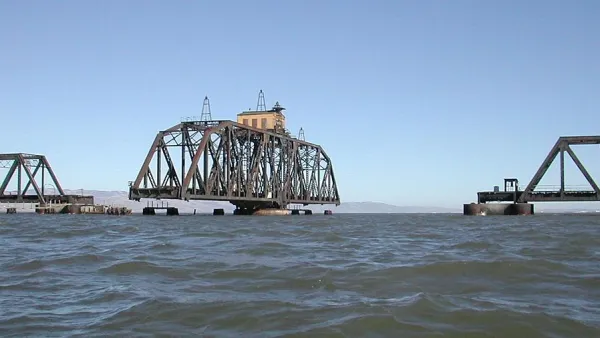
Facebook Could Partner With Local Transit Authorities to Repair Defunct Rail Bridge
The Dunbarton Rail Bridge has been out of service since the 1980s. In a potentially groundbreaking development, Facebook is interested in repairing the bridge to serve multi-modal commuters.
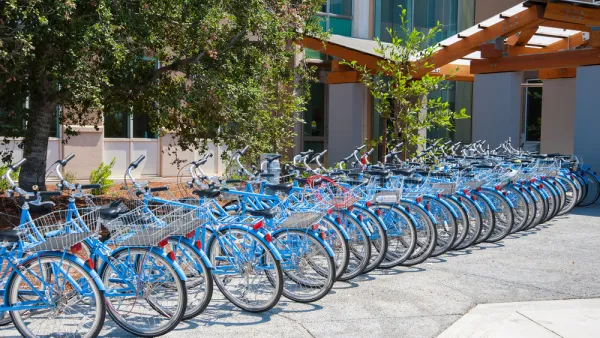
Facebook's Expansion Plans Would Create a New 'Village' in Menlo Park
Facebook has proposed a campus expansion that would take shape as a neighborhood center or village, providing needed community services and amenities in the sprawling Menlo Park.

Planetizen Federal Action Tracker
A weekly monitor of how Trump’s orders and actions are impacting planners and planning in America.

California plans to bury El Niño’s downpour
If the state plays its cards right, it may be able to store a billion acre-feet of El Niño’s water in aquifers.

Desperate measures: Advocates weigh draining Lake Powell to fill Colorado River
Draining the reservoir could reduce evaporation losses by a couple hundred thousand acre-feet.

Mamdani’s pied-à-terre tax survives legal challenge
A panel of judges found that the plaintiffs failed to demonstrate injury as a result of New York City's implementation of the tax.

Eastern Nebraska is running out of electricity
Data centers and electrification are straining eastern Nebraska’s grid, throttling economic development.

Seattle passes record-breaking transit services expansion
Proposition 1 will double the city’s transit tax to add 95,000 more bus trips and preserve 180,000 bus trips annually.

FREE Course: Walkable City 1: Why Walkability?
After describing his path towards focusing on walkability as the essence of good planning, Jeff Speck marches through his five principal reasons for making more walkable places.
Reinventing Malls: Planning Alchemy—Turning Gray Fields Into Gold
The course focuses on the opportunities and imperatives that shape reinvention of mall sites.

City of Rosemead
Rutgers University, Edward J. Bloustein School of Planning and Public Policy
One Hundred Miles
Hunter College, City University of New York (CUNY)
The Architects Foundation
University of Cincinnati Online
City of Cambridge
Montrose County
The Pocatello Development Authority