Permits to rehab existing multi-family buildings have skyrocketed in St. Louis.


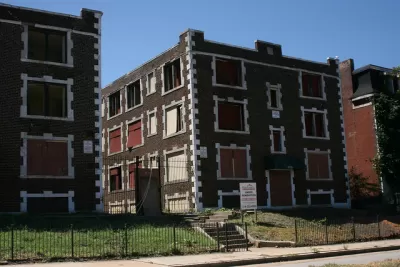
"While big new construction announcements have been grabbing most of the headlines (and the numbers are big) at nextSTL lately, the latest numbers show that 2015 is set to be a banner year for small scale development," reports Richard Bose.
Bose notes that most of St. Louis' development history is defined by smalls scale, granular development, so the ongoing development rend should be a good fit for the city.
The most eye-popping of the new building data in the city, according to Bose, are the numbers for multi-family rehabs.
Permits are on pace to surpass last year’s 4084 housing units by 75% and 2013’s 2,992 by 140%. Through October there have been permits for 6,097 units. According to the US Census there are 92,587 housing units in multi-family buildings. If this pace continues through the end of the year, over 15% of the city’s multi-family housing units will have seen significant rehab over a three year period.
The article includes infographics and links to recent research that can inform a more thorough picture of the St. Louis housing market and its effects in the city's neighborhoods.
Read the full story: St. Louis City Multi-Family Building Permits Skyrocket in 2015
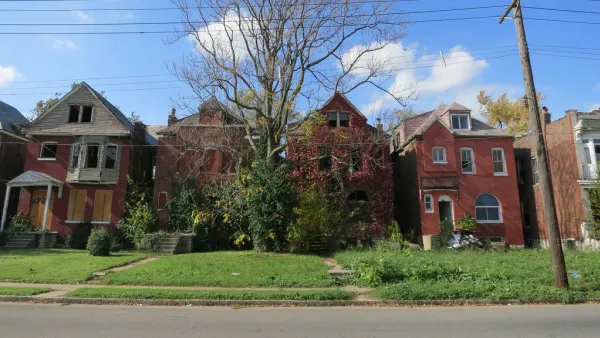
St. Louis Could Fine Developers For Multi-Family Conversions
The city is considering implementing a fee for developers who reduce the number of units in a rehabbed building in a bid to discourage the loss of housing.

Multi-Family Market Grinds to a Halt in New York City
Not since the Great Recession have sales of multi-family residential buildings in New York City slowed to such a standstill. Experts are blaming the state's new rent control regulations.
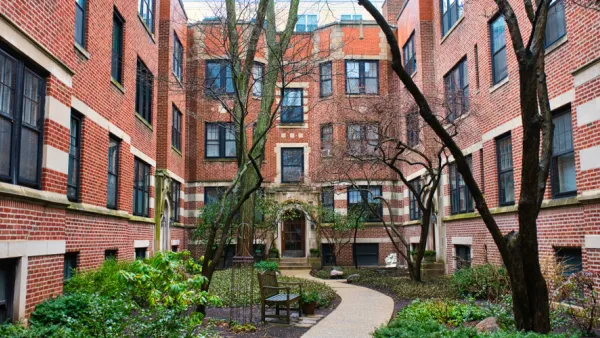
Millennials Prefer Renting: Demand for Multi-Family Options Grows
Millennials need housing they can afford, and that means apartments instead of houses.

Planetizen Federal Action Tracker
A weekly monitor of how Trump’s orders and actions are impacting planners and planning in America.

Washington state to charge fee to drivers with fuel-efficient cars
Revenue from the fee will go towards supporting the state’s highways.

Illinois considers spending $1 billion in taxpayer money on data center
A quantum computing campus and data center are currently under construction in Chicago.

Senate passes bill overhauling permitting
The bill still needs to pass the House.

Did data centers change how voters cast their ballots?
Texas, Ohio, and Georgia all flipped party control. But in rural counties, the effect of local data centers was mixed.

Amtrak invests in eight new Airo trainsets
The new trainsets will begin serving passengers in 2031.

FREE Course: Walkable City 1: Why Walkability?
After describing his path towards focusing on walkability as the essence of good planning, Jeff Speck marches through his five principal reasons for making more walkable places.
Reinventing Malls: Planning Alchemy—Turning Gray Fields Into Gold
The course focuses on the opportunities and imperatives that shape reinvention of mall sites.

City of Charlotte
City of Rosemead
Rutgers University, Edward J. Bloustein School of Planning and Public Policy
University of Michigan School for Environment and Sustainability (SEAS)
Hunter College, City University of New York (CUNY)
The Architects Foundation
University District Partnership