The message of a new study funded by NASA and the National Science Foundation: don't forget freshwater when considering the impacts of climate change. Lakes and other bodies of water are threatened by potentially catastrophic vulnerabilities.


A NASA press release reports: "Climate change is rapidly warming lakes around the world, threatening freshwater supplies and ecosystems, according to a new NASA and National Science Foundation-funded study of more than half of the world's freshwater supply."
The study is the largest of its kind, "[u]sing more than 25 years of satellite temperature data and ground measurements of 235 lakes on six continents." The key finding: lakes are warming an average of 0.61 degrees Fahrenheit each decade over that time span.
The warming of freshwater has a spiraling effect. According to the press release: "As warming rates increase over the next century, algal blooms, which can rob water of oxygen, are projected to increase 20 percent in lakes. Algal blooms that are toxic to fish and animals are expected to increase by 5 percent. Emissions of methane, a greenhouse gas 25 times more powerful than carbon dioxide on 100-year time scales, will increase 4 percent over the next decade, if these rates continue."
Read the full story: Study: Climate change rapidly warming world's lakes
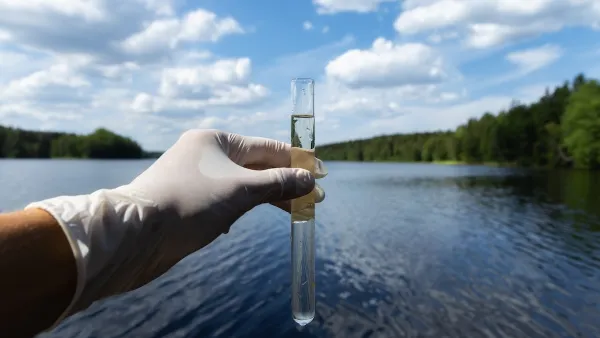
Study: Lakes Near Communities of Color Less Inspected for Water Quality
The research is the first of its kind to analyze the relationship between freshwater monitoring and the race and ethnicity of nearby communities.
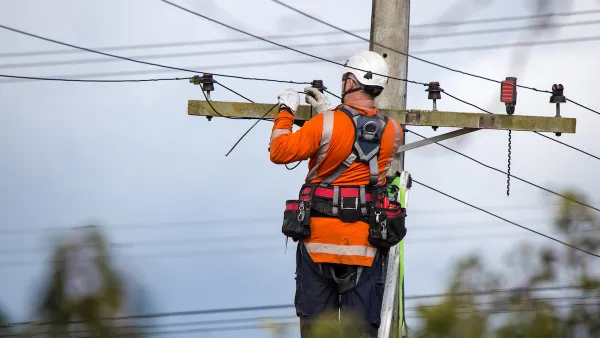
Building Resiliency in Rural Power Grids
A National Science Foundation study seeks to understand the impact of climate change and extreme weather on rural electrical grids in diverse geographic areas.
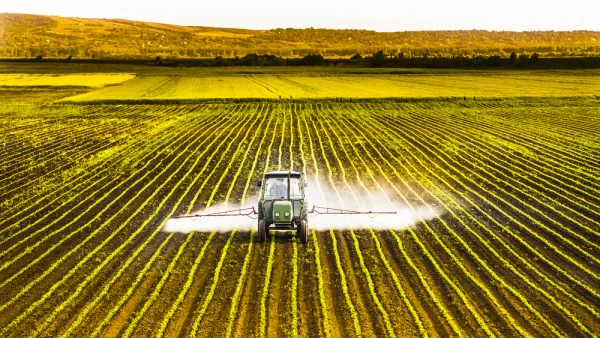
Land Use the Subject of Latest IPCC Report
Not urban land use, but in the literal sense: land used to produce food, graze livestock, supply drinking water, grow trees, and sequester carbon. As the climate warms and the population grows, crop yields will decrease and land will be degraded.

Planetizen Federal Action Tracker
A weekly monitor of how Trump’s orders and actions are impacting planners and planning in America.

Washington state to charge fee to drivers with fuel-efficient cars
Revenue from the fee will go towards supporting the state’s highways.

Illinois considers spending $1 billion in taxpayer money on data center
A quantum computing campus and data center are currently under construction in Chicago.

People Mover delayed again, LAX and contractor trade barbs
The automated train was last slated to open in January 2027.

Trump to blast ‘hydrocarbon highway’ through ‘world’s longest art gallery’
Environmental and historic preservation groups are suing to stop the project.

25 states cast bids to be the home of U.S. Space Academy
The academy will train scientists, officers and astronauts for the U.S. Space Force.

FREE Course: Walkable City 1: Why Walkability?
After describing his path towards focusing on walkability as the essence of good planning, Jeff Speck marches through his five principal reasons for making more walkable places.
Reinventing Malls: Planning Alchemy—Turning Gray Fields Into Gold
The course focuses on the opportunities and imperatives that shape reinvention of mall sites.

City of Charlotte
City of Rosemead
Rutgers University, Edward J. Bloustein School of Planning and Public Policy
University of Michigan School for Environment and Sustainability (SEAS)
Hunter College, City University of New York (CUNY)
The Architects Foundation
University District Partnership