In the United States, urban wealth and poverty are often quite segregated. But they can also be next-door neighbors. This article looks at cities with the highest and lowest levels of income inequality.


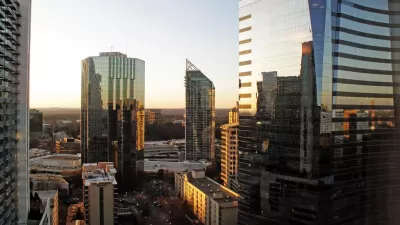
David A. Arnott reports on data showing which major U.S. municipalities are the most equal, and which are the least. "The Census Bureau calculated inequality in all those areas by the Gini index, which measures the distribution of money in a given place. It's expressed on a scale from zero (everybody in town has the exact same income) to one (a single person in town has all of the income)."
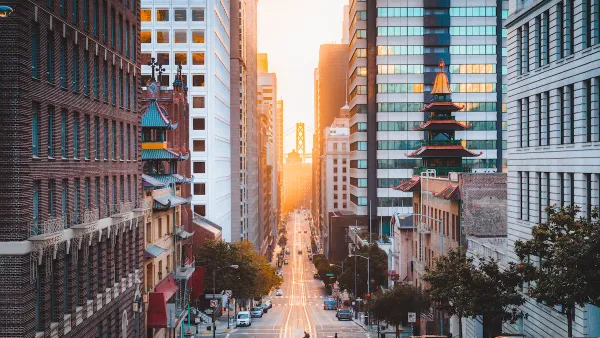
Arnott cites the area around San Francisco's Chinatown as one place where the well-off and the poor live side by side. "The list also contains information about whole cities that may be surprising. Detroit — notorious for its blight, yet with incredibly wealthy pockets scattered throughout — is listed as more equal (0.499) than Pittsburgh (0.521), Houston (0.525), Boston (0.533), Tampa (0.533), and other cities that don't have nearly that kind of reputation."
The most unequal cities tend to be larger by population and land area, embracing a wider variety of neighborhoods. "The American big city (population greater than 100,000) with the most income inequality, by far, is Atlanta (0.583). At the other end of the spectrum, West Jordan, Utah (0.330), has the most income equality."
Read the full story: Unequal cities: Where rich and poor live within blocks of each other

Top 5 US Cities for Office-to-Residential Conversions
As more and more cities look to adapt vacant office buildings into homes, a new analysis from Urban Institute says some cities will benefit more than others.
Is Inequality Destroying American Cities?
A recent video claimed that high income inequality is the “Thing That Will Destroy Our Cities.” Is this true?
Contrasting the Coronavirus Impact in the Bay Area to New York City
Early intervention, or population density? NPR reporters based in the Bay Area and New York City offer explanations as to why the two regions are seeing such a wide contrast in experiences during the coronavirus outbreak.

Planetizen Federal Action Tracker
A weekly monitor of how Trump’s orders and actions are impacting planners and planning in America.

Amtrak, CN end decades-long dispute with eight-year agreement
The new operating agreement establishes an updated framework for the companies to work together, including processes to resolve disputes.

Judges permit Denver to divert 77,000 acre feet from the Colorado River for reservoir expansion
Overuse and climate change have caused the Colorado River’s water levels to plummet.

NYC DOT wants faster, more permanent street upgrades
The city is examining ways to build more concrete infrastructure without getting entangled in 'decades-long' projects.

'Something we’ve never seen before:' rising utility rates could strain city finances nationwide
Data centers, climate change and other factors have caused utility rates in the United States to increase by 38% since 2020.

Trump to overrule local leaders, lease millions of acres of America’s Pacific Island territories’ seafloors to mining companies
International law says that the Indigenous people of America’s territories have a right to prior and informed consent regarding projects that impact their countries.

FREE Course: Walkable City 1: Why Walkability?
After describing his path towards focusing on walkability as the essence of good planning, Jeff Speck marches through his five principal reasons for making more walkable places.
Reinventing Malls: Planning Alchemy—Turning Gray Fields Into Gold
The course focuses on the opportunities and imperatives that shape reinvention of mall sites.

Harvard University Graduate School of Design
KFH Group Inc.
Greater Baltimore Committee
The Architects Foundation
University of Cincinnati Online
The Pocatello Development Authority
The Urban Renewal Agency of the City of Pocatello