Updates to Philadelphia’s zoning code are designed to "clean-up" the code, adopted in 2011.



The work of various city organizations to amend and improve Philadelphia's zoning code has received the thumbs up from the City Council’s Committee on Rules and the Planning Commission. Jared Brey of Plan Philly reports that the changes to the zoning code, adopted in 2011, include minor tweaks and some more significant changes.
Among the more significant changes to the zoning code will be a requirement for "major planned developments to go through the Civic Design Review Committee." The Committee is largely responsible for ensuring that large new projects are reviewed to determine how they will impact the surrounding neighborhood. Brey writes that projects, including the recent redevelopment of Mt. Sinai Hospital, received approval from the Planning Commission before going through the Committee for review.
Other changes include new rules on the expiration of entitlements and restrictions on "front-loading garages" in certain zoning districts. The changes to the zoning code will now go before the City Council for a final vote.
Read the full story: Council to vote on major zoning code amendments
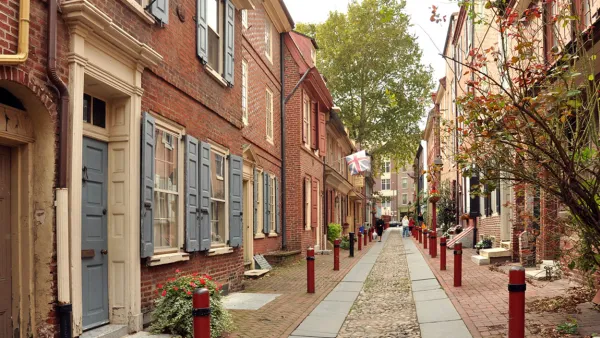
Philadelphia Planning Commission Approves ADU Bill
The commission recommended a trio of bills focused on historic preservation, including one that would permit accessory dwelling units on historic properties.
Auto-Repair Facility Permit Filed a Day Before Pedestrian-Friendly Zoning: What Next?
A case study in the development miscues that can move forward while plans are developed and approved.
Finding the Right Mix of Uses for Former Industrial Sites
The Philadelphia City Council is tinkering with a novel land use created by its 2012 Zoning Code update to help guide mixed use development on former industrial sites.

Planetizen Federal Action Tracker
A weekly monitor of how Trump’s orders and actions are impacting planners and planning in America.

Eastern Nebraska is running out of electricity
Data centers and electrification are straining eastern Nebraska’s grid, throttling economic development.

Study reveals best places in the U.S. for cycling, walking
New research from Streetlight Data examines bicycle and pedestrian miles per capita in the 100 largest U.S. cities by population.

DSA members accuse Mamdani of 'abandoning values' over housing redevelopment
New York City's mayor plans to replace about 2,000 units of public housing with private, mixed-income housing.

All sides of BRT debate unhappy with CDOT’s most recent move
The Colorado Department of Transportation is no longer considering center-running bus lanes for Colorado Boulevard.

Massachusetts bogs generate both power, and cranberries
Putting solar panels above farmland is one way Massachusetts is advancing toward its goal of net-zero carbon emissions by 2050.

FREE Course: Walkable City 1: Why Walkability?
After describing his path towards focusing on walkability as the essence of good planning, Jeff Speck marches through his five principal reasons for making more walkable places.
Reinventing Malls: Planning Alchemy—Turning Gray Fields Into Gold
The course focuses on the opportunities and imperatives that shape reinvention of mall sites.

City of Rosemead
Rutgers University, Edward J. Bloustein School of Planning and Public Policy
One Hundred Miles
University of Michigan School for Environment and Sustainability (SEAS)
Hunter College, City University of New York (CUNY)
The Architects Foundation
City of Cambridge
The Pocatello Development Authority
The Urban Renewal Agency of the City of Pocatello