This list of the worst places for traffic congestion in the country might cause some rubbernecking of its own.


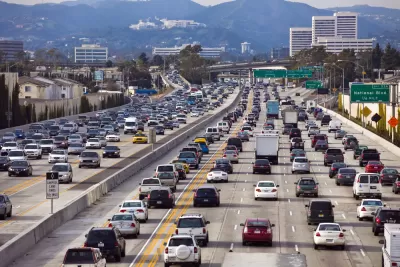
"There aren’t enough roads, transit systems and walkable communities to handle America’s burgeoning population, one projected to grow by 70 million in the next 30 years," writes Ashley Halsey III. That's the conclusion offered by a new report on the nation's 50 worst bottlenecks, paid for by the American Highway Users Alliance.
The worst bottleneck in the land: "Interstate 90 in Chicago, where 12-mile backups are said to be common." But if you're looking for a more thorough ignominy, look no further than Los Angeles, which took the next six spots on the list, and nine out of the "top" 20.
More than just providing an account of where Americans suffer, the report also quantifies the deleterious effects of all that congestion, such as in lost time, burnt fuel, greenhouse gas emissions, and vehicle crashes.
Read the full story: Is the bottleneck you battle with every day one of the nation’s 50 worst?

America's Most Congested Cities
Forbes has released its list of the most congested cities in America. Los Angeles, New York, Chicago, Dallas and Washington D.C. top the list.
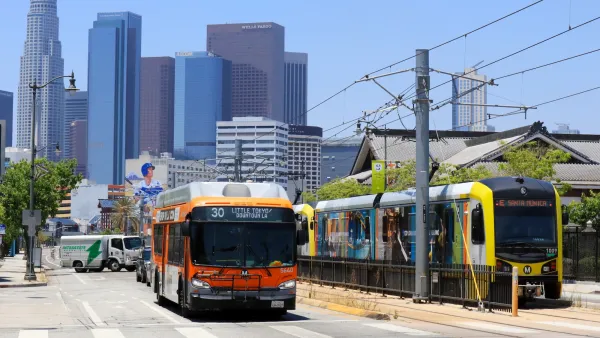
LA Metro Increases Highway Expansion Budget by 40%
Metro has plans to expand freeways including the 5, 105, and 405, among others.
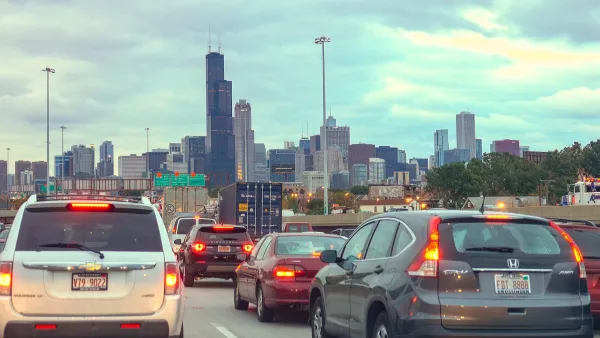
Since NYC Congestion Pricing, Chicago now has Nation’s Worst Traffic
Chicago overtook New York for the worst traffic of any major U.S. city as NYC saw traffic decline after congestion pricing went into effect.

Planetizen Federal Action Tracker
A weekly monitor of how Trump’s orders and actions are impacting planners and planning in America.

‘Going backwards:’ Baltimore mayor, students rally against state's transit funding plan
Maryland's proposed six-year plan provides no funding for Baltimore’s BMORE bus program and reduces its road maintenance funding.

Detroit to transform waterfront with $2.2 billion investment
Developers will convert about 18 acres of unused parking lot space into civic spaces.

Central Park has seen three deadly crashes since June. It banned cars 8 years ago.
100,000 bikers, pedestrians and horseback riders compete for space on the loop daily, sometimes resulting in deadly collisions.

SF residents can no longer use potential shadows to block housing developments
The SHADE act also halves the allotted time for certain appeals before projects can progress.

HUD, USDA agree on framework to simplify housing environmental review standards
Their agreement is a requirement of the 21st Century ROAD to Housing Act.

FREE Course: Walkable City 1: Why Walkability?
After describing his path towards focusing on walkability as the essence of good planning, Jeff Speck marches through his five principal reasons for making more walkable places.
Reinventing Malls: Planning Alchemy—Turning Gray Fields Into Gold
The course focuses on the opportunities and imperatives that shape reinvention of mall sites.

planning NEXT
City of Thousand Oaks
City of Wisconsin Rapids
The Architects Foundation
University of Cincinnati Online
Northern Illinois Transit Authority (NITA)
The Pocatello Development Authority
The Urban Renewal Agency of the City of Pocatello