While standardized metrics for determining the number of and place for city parks cannot replace more fine grain analysis, they can be useful tools. Park planner Clement Lau writes about five park-need metrics, including a couple of the newest.



Standardized park planning metrics that prescribe, for example, x acres of park per 1,000 residents, have a bad rap. However, planners cannot rely solely on subjective input. Standardized metrics are an invaluable tool for planners when not blindly implemented. Park planner Clement Lau reviews five valuable metrics, including a couple of the newest, which work best when integrated with other metrics and more fine grain analysis. Excerpts of his review are as follows:
Park Acres per 1,000 Residents
This is a commonly used indicator of the amount of parkland available in a given area.
. . .
Park Accessibility
This metric is evaluated by using a Geographic Information System (GIS) and Census data to determine the percentage of households that are within walking distance from a park.
. . .
Park Pressure
Park pressure is a lesser known, but helpful metric that refers to the potential demand on a park, assuming that the residents in a “parkshed” use the park closest to them.
. . .
Quantity and Variety of Park Amenities
It should be obvious that not all parks are created equal and that the quantity and variety of amenities vary widely.
. . .
Condition of Park Amenities
The condition or quality of park amenities is a key measure of park adequacy. . . . The condition of this infrastructure and park amenities may be rated as “Good,” “Fair,” or “Poor” or in any other way that allows a city to determine its deferred maintenance and park improvement needs in terms of costs.
Lau goes on to explain in more detail how each of these metrics should be used and integrated with other factors.
Read the full story: How Should Park Needs be Measured?

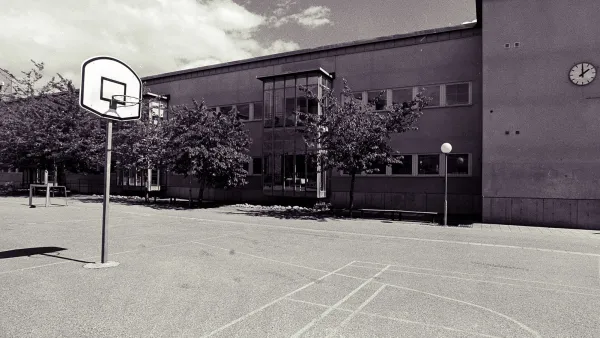
'Greening' L.A.'s Schoolyards
Advocates for increasing green space on school campuses say giving students a more healthy outdoor environment can also reduce the urban heat island effect and improve public health in historically underserved communities.

Magic Johnson Park to Reopen in February
A much-needed park in South Los Angeles will reopen to the public after undergoing major renovations.

Santa Monica Mountains Acquires More Land For Conservation
The Mountains Recreation and Conservation Authority has acquired the final 150 acres of the 325-acre Triangle Ranch open space in the Santa Monica Mountains.

Planetizen Federal Action Tracker
A weekly monitor of how Trump’s orders and actions are impacting planners and planning in America.

Amtrak, CN end decades-long dispute with eight-year agreement
The new operating agreement establishes an updated framework for the companies to work together, including processes to resolve disputes.

Northwest rail fans eager for Sept. 30 debut of Amtrak’s Airo fleet
Get ready for that new train smell and more seats. But they won’t go faster or run more frequently on the Cascades route in Washington and Oregon.

A 'dangerous' precedent: North Carolina successfully pressures communities into voting for toll roads
Two mayors resigned from the Charlotte Regional Transportation Planning Organization after it voted in favor of the toll roads.

Austin landlords only need to address mold when it covers 25 sqft. A resolution looks to change that
The city manager will propose updates to the city code regarding regulations around mold in May.

NYCHA’s green future? Officials open ‘showroom’ apartment with sustainable features
Heat pumps, inductions stoves and infrared heating panels: these are a few of the climate-friendly upgrades being installed at some public housing developments, with more to come, officials said Tuesday.

FREE Course: Walkable City 1: Why Walkability?
After describing his path towards focusing on walkability as the essence of good planning, Jeff Speck marches through his five principal reasons for making more walkable places.
Reinventing Malls: Planning Alchemy—Turning Gray Fields Into Gold
The course focuses on the opportunities and imperatives that shape reinvention of mall sites.

City of Thousand Oaks
City of Wisconsin Rapids
Harvard University Graduate School of Design
The Architects Foundation
University of Cincinnati Online
The Pocatello Development Authority
The Urban Renewal Agency of the City of Pocatello