A public-private partnership to build a tunnel connecting Norfolk with the city of Portsmouth under the Elizabeth River in Virginia has gone awry, saddling the public with increasing costs and, likely, more expenses in the future.


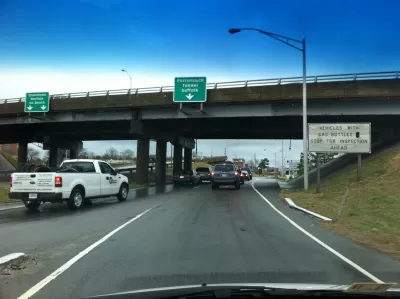
"The private proposal to build a new underwater tunnel in [the] congested port city [of Norfolk] was originally billed as a way for Virginia to get a crucial piece of infrastructure without having to put in a single dollar of state money," according to an article by Michael Laris.
"Instead, Virginia officials have agreed to spend slightly more than $580 million on the project, more than twice the investment from the companies behind the deal."
The article cites the Midtown Tunnel project, as it's known, as the latest example of public-private partnerships that failed to deliver on their promise of delivering cheap and efficient transportation investment. For example, according to Laris: "An Indiana toll road went bankrupt last year after falling short of traffic projections; in Chicago, a 75-year deal privatizing parking meters has been denounced by critics as an unnecessary giveaway."
Laris goes on to describe just how the public cost burden spun so far from its original promise, which representative from one of the companies on the private side of the equation comes from the state's unwillingness to charge the money necessary in tolling.
Read the full story: Agreement for new submerged tunnel in Norfolk leaves Virginia underwater
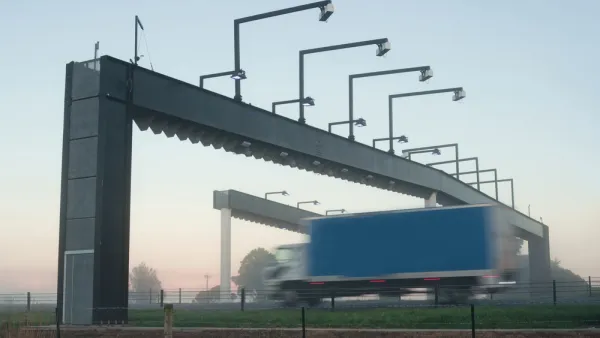
Toll Rates at Center of Controversy in Public-Private Partnership in Virginia
Elizabeth River Tunnels, a complex project involving a new tunnel, rehabilitating two existing tunnels, and extending an expressway, is financed by a public-private partnership that includes tolls that Gov. Terry McAuliffe (D) called "exorbitant."
North Carolina Inks its First Public-Private Partnership for Highway Construction
The state of North Carolina joins the roster of states working with the private sector to invest in highway infrastructure around growing urban areas.
Ohio's Experiment in Public-Private Partnership Just Tripled in Cost
The Portsmouth Bypass will provide Ohio's first test case of public-private partnership on a major transportation project. As such, the news about the project's ballooning costs could have been better.

Planetizen Federal Action Tracker
A weekly monitor of how Trump’s orders and actions are impacting planners and planning in America.

Washington state to charge fee to drivers with fuel-efficient cars
Revenue from the fee will go towards supporting the state’s highways.

Illinois considers spending $1 billion in taxpayer money on data center
A quantum computing campus and data center are currently under construction in Chicago.

Did data centers change how voters cast their ballots?
Texas, Ohio, and Georgia all flipped party control. But in rural counties, the effect of local data centers was mixed.

Amtrak invests in eight new Airo trainsets
The new trainsets will begin serving passengers in 2031.

HUD to end aid for mixed-immigration-status households
The new rule is projected to impact 80,000 people, nearly half of whom are children.

FREE Course: Walkable City 1: Why Walkability?
After describing his path towards focusing on walkability as the essence of good planning, Jeff Speck marches through his five principal reasons for making more walkable places.
Reinventing Malls: Planning Alchemy—Turning Gray Fields Into Gold
The course focuses on the opportunities and imperatives that shape reinvention of mall sites.


City of Charlotte
City of Rosemead
Rutgers University, Edward J. Bloustein School of Planning and Public Policy
University of Michigan School for Environment and Sustainability (SEAS)
Hunter College, City University of New York (CUNY)
The Architects Foundation
University District Partnership