State transportation officials set new toll rates for two busy highway corridors outside Denver.


Monte Whaley reports on road tolls for two congested roads in Colorado. The state's High Performance Transportation Enterprise set the tolls for I-70 mountain corridor between Empire and Idaho Springs, west of Denver, as well as for U.S. 36 between Denver and Boulder.
The dynamic pricing of those toll lanes could bring a pretty steep price, according to Whaley. "Drivers jumping onto the toll lane on the Interstate 70 mountain corridor could pay as much as $40, while those traveling to a University of Colorado football game will pay more if they use the U.S. 36 toll lane."
The U.S. 36 tolls are set for the forthcoming second phase of that roadway's Express Lanes project, due to open in 2016. The mention of football reflects a special rate for special events. That will generate significant traffic along the route.
Under the state of Colorado's road toll system, an electronic ExpressToll pass earns a discount from the tolls charged to cars via their license plates.
Read the full story: I-70 mountain toll lane could hit $40 without pass
Colorado Builds a Highway That Discourages Driving
Upgrades to U.S. 36, the highway that connects Denver to Boulder, feature a variety of elements intended to reduce congestion and offer alternatives to the traditional solo auto commute. The effort is being called a "21st-century mobility project."
Colorado Zoning Reform Yields Slow Results — For Now
An ambitious set of zoning reforms largely fell flat as developers rushed to submit project applications before new affordable housing requirements took effect.
Electric Driving Is the Future; Now Is the Time to Price It
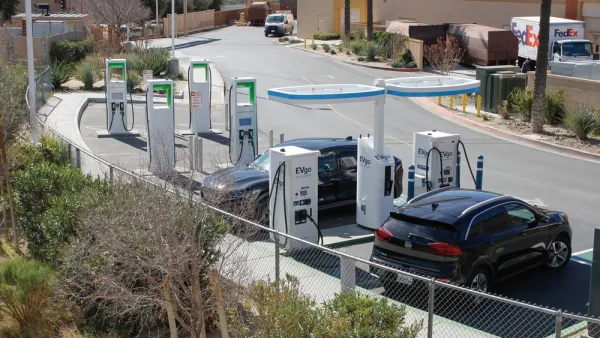
EVs are great, but they’re not perfect. Let’s end their free ride.

Planetizen Federal Action Tracker
A weekly monitor of how Trump’s orders and actions are impacting planners and planning in America.

California plans to bury El Niño’s downpour
If the state plays its cards right, it may be able to store a billion acre-feet of El Niño’s water in aquifers.

Desperate measures: Advocates weigh draining Lake Powell to fill Colorado River
Draining the reservoir could reduce evaporation losses by a couple hundred thousand acre-feet.

Mamdani’s pied-à-terre tax survives legal challenge
A panel of judges found that the plaintiffs failed to demonstrate injury as a result of New York City's implementation of the tax.

Eastern Nebraska is running out of electricity
Data centers and electrification are straining eastern Nebraska’s grid, throttling economic development.

Seattle passes record-breaking transit services expansion
Proposition 1 will double the city’s transit tax to add 95,000 more bus trips and preserve 180,000 bus trips annually.

FREE Course: Walkable City 1: Why Walkability?
After describing his path towards focusing on walkability as the essence of good planning, Jeff Speck marches through his five principal reasons for making more walkable places.
Reinventing Malls: Planning Alchemy—Turning Gray Fields Into Gold
The course focuses on the opportunities and imperatives that shape reinvention of mall sites.

City of Rosemead
Rutgers University, Edward J. Bloustein School of Planning and Public Policy
One Hundred Miles
University of Michigan School for Environment and Sustainability (SEAS)
Hunter College, City University of New York (CUNY)
The Architects Foundation
City of Cambridge
Montrose County
The Pocatello Development Authority