New leadership at Los Angeles County's Metro says its planning efforts should consider much more than transit routes and service—including the potential for gentrification in the neighborhoods where it's investing.


"Los Angeles County Metropolitan Transportation Authority CEO Phil Washington wants his agency to do more to prepare for gentrification around new transit lines and help prevent the displacement of longtime residents," according to a column by Kerry Cavanaugh.
"Washington, who has been on the job for seven months, said too many transportation officials believe their sole responsibility is the transit line and that they have no interest in the development that occurs around the stations. The result is that low-income residents and businesses are often displaced shortly after new transit lines open."
Washington's opinion comes out clearly on one side of a debate that has occurred around Metro for years—but especially as the system builds out new rail infrastructure all over the region, including into neighborhoods with large populations of low-income and minority residents. A sign of Metro leadership's agreement with Washington on the issue came in March 2015, when the Metro board of directors "[voted] to set a goal that 35% of all apartments and condos built on land no longer needed by Metro be set aside for low-income residents," according top Cavanaugh.
Putting its money where Washington's mouth is, later this month Metro will consider ten sites as pilot projects in its Transit-Oriented Community Demonstration Program.
FULL STORY: Metro CEO says transit agencies need to care about gentrification


New Bus Priority Lane Under Construction in Los Angeles
La Brea Avenue will soon gain a new bus priority lane, with plans for more to come still gathering community feedback.
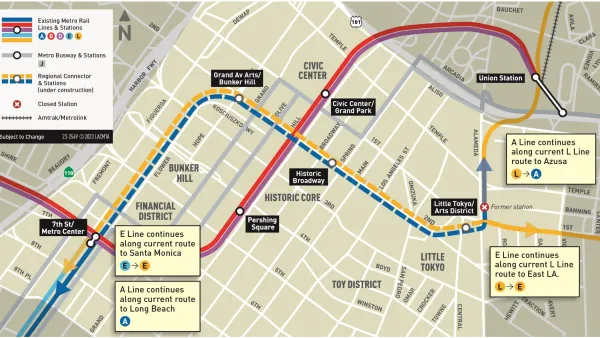
Newly Opened Regional Connector Redefines Light Rail Transit in Los Angeles
Three rail lines have become two rail lines in Los Angeles, providing one-seat rides from four corners of Los Angeles County.
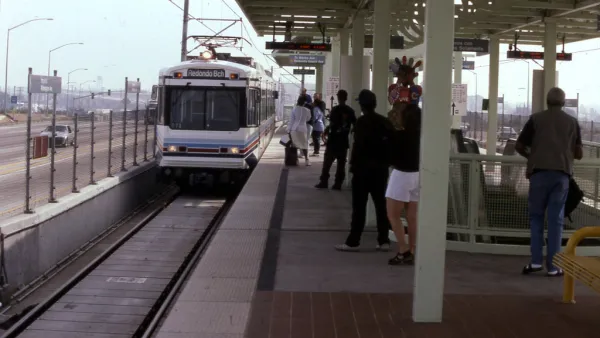
Rail Transit Plans Would Connect L.A.’s South Bay to the Regional Rail System
Two new transit extensions promise several new routes for South Bay residents to access the Los Angeles region’s transit system.

The state-sanctioned urbicide of Austin
People don’t kill cities. Freeways do.

US to reduce Colorado River water deliveries to Mexico
A new Colorado Treaty amendment reduces Mexico’s Colorado River water allocation by 250,000 acre feet.

New Jersey’s second-largest city bans standalone data centers
Jersey City will continue to allow co-location facilities, such as those meant for research institutions that store their own data.

Amtrak not solely to blame for New Jersey commuter rail's unreliability, report finds
A new study from the Garden State Initiative found that NJ Transit’s budget grew 20% across a 4 year period, but reliability declined significantly over the same period.

EPA erases limits on planet-warming pollution from power plants
Under Monday’s plan, power plants would still have some limits on how much mercury, arsenic and other contaminants they can emit.

Phoenix announces new on-demand transit service, more frequent RAPID buses
Both new services will launch in October, and are part of Phoenix's Project Effective Access Solutions for Easing Congestion.

FREE Course: Walkable City 1: Why Walkability?
After describing his path towards focusing on walkability as the essence of good planning, Jeff Speck marches through his five principal reasons for making more walkable places.
Reinventing Malls: Planning Alchemy—Turning Gray Fields Into Gold
The course focuses on the opportunities and imperatives that shape reinvention of mall sites.

Eagle County Government
Harvard University Graduate School of Design
Nashville Planning Department
The Architects Foundation
University of Cincinnati Online
The Pocatello Development Authority
The Urban Renewal Agency of the City of Pocatello
Journal of the American Planning Association