The 82 municipalities that make up Greater Montreal are finally working together to forge a more sustainable, economically robust future.


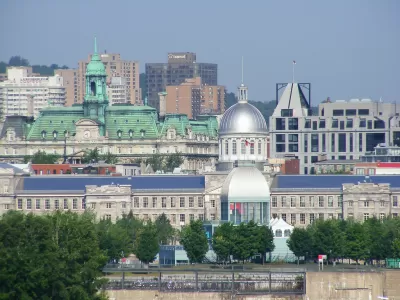
Flavie Halas reports in Citiscope on the ongoing effort in the Montreal metropolitan area to bring the region's 82 municipalities together on shared interests, including better transit, environmental protection, and economic development. After facing crumbling infrastructure, a sluggish economy, and the migration of residents from the urban center to the city's periphery, the region’s mayors developed the Metropolitan Land Use and Development Plan (PMAD), allowing them to address the region's pressing problems together.
"Among the flagship projects included in PMAD is a 'green and blue belt' connecting green space, natural parks, rivers and protected buildings by a network of bike paths, public transit and waterways. That includes a new 143-kilometer (89-mile) bike and pedestrian path going from west to east."
However, the implementation of PMAD’s plans faces continuing challenges, including the sharing of data between municipalities and funding for the new transit infrastructure, which Halas notes has been chronically underfunded. PMAD's success may rely on the continuing cooperation of the region's 82 mayors, who despite occasional differences in opinion have relied on what one mayor describes as a mutual respect and recognition that there must be a balance between the needs of the urban center and the smaller suburban communities surrounding Montreal.
Read the full story: In the Montréal area, 82 municipalities begin to think and act as one


How the ‘Big Beautiful Bill’ Impacts Transportation
Five ways the bill negatively impacts U.S. transportation policy.
Book Review: Combining Sustainability and Smart Growth
A review of The Sustainable Urban Design Handbook, by architects Nico Larco and Kaarin Knudson.
Revitalizing Texas: Sustainable Rail Solutions
An argument for why investing in trains is the key to sustainable growth and economic success in the Lone Star State.

Planetizen Federal Action Tracker
A weekly monitor of how Trump’s orders and actions are impacting planners and planning in America.

The state-sanctioned urbicide of Austin
People don’t kill cities. Freeways do.

US to reduce Colorado River water deliveries to Mexico
A new Colorado Treaty amendment reduces Mexico’s Colorado River water allocation by 250,000 acre feet.

Nation's most wind-powered state turns to coal as data centers increase energy demand
For the first time in decades, Iowa has increased its generation of coal power.

NYC cools commuters with city's first rain garden above a bus stop
New York City officials say the plants in the rain garden can absorb 16 gallons of rainwater during heavy storms.

Brightline West’s future may rely on $6 billion federal loan
The company has until Nov. 2 to make a $400 million equity investment into its proposed high-speed rail line.

FREE Course: Walkable City 1: Why Walkability?
After describing his path towards focusing on walkability as the essence of good planning, Jeff Speck marches through his five principal reasons for making more walkable places.
Reinventing Malls: Planning Alchemy—Turning Gray Fields Into Gold
The course focuses on the opportunities and imperatives that shape reinvention of mall sites.

Greater Baltimore Committee
Eagle County Government
Harvard University Graduate School of Design
The Architects Foundation
University of Cincinnati Online
The Pocatello Development Authority
The Urban Renewal Agency of the City of Pocatello
Journal of the American Planning Association