In a pattern evident in communities all over the country, U.S. Census data shows more Americans are working from home. Researchers from the Brookings Institution are hoping that planners have noticed the trend.



"Over time, though, the American commute is shifting in increasingly novel ways, especially at the metropolitan level. Going back to 2000, many workers are opting out of traditional modes of transport like cars and switching to other modes," report Joseph Kane and Adie Tomer.
The most compelling evidence of the evolution of commute patterns, according to Kane and Tomer, is the "continued surge in remote working."
"From 2000 to 2014, nearly 2.4 million more people—or 13 percent of all new commuters—are working at home to bring their national total to 6.5 million. Moreover, the share of workers at home has risen from 3.2 percent to 4.5 percent, surpassing the rate of growth in all other commuting categories and building off a series of emerging work patterns in the public and private sector."
The post goes on to provide examples of some of the other ways commuting has changed in recent years, before concluding with an appeal to transportation and land use planners to take the shift into account.
Read the full story: Since 2000, American commuters more likely to work from home or use alternate modes

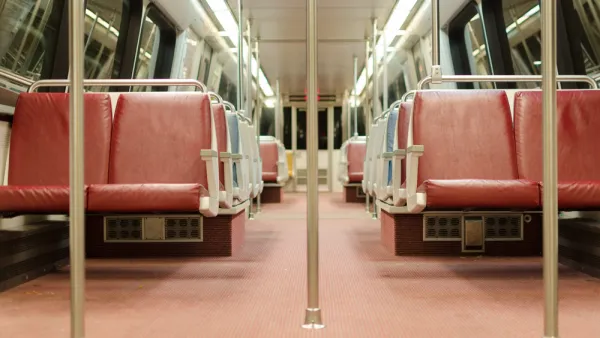
Census: Working From Home More Common Than Taking Transit to Work
A more sedentary approach to commuting is now more common than taking the bus or train to work, trailing only driving to work as the most common commute mode.
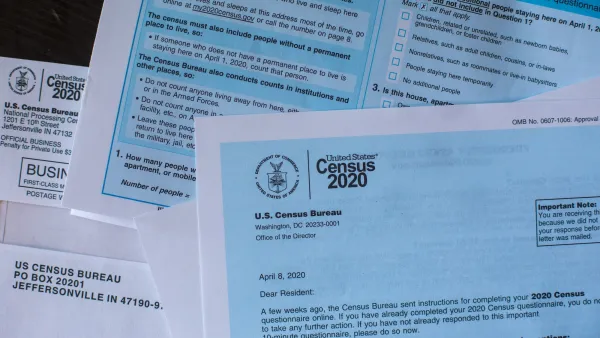
Republicans are Pushing to Make the American Community Survey Voluntary. History Shows That’s a Death Sentence for Data.
A voluntary survey will make demographic data “less accurate, less available, and less useful” — and for some rural communities, “a total blackout.”

US Census Releases Most Accurate, Granular Housing Data Yet
A new measurement tool eliminates the inaccuracies that have plagued data about housing supply, helping governments more clearly understand how housing policies are impacting local needs.

Planetizen Federal Action Tracker
A weekly monitor of how Trump’s orders and actions are impacting planners and planning in America.

Amtrak, CN end decades-long dispute with eight-year agreement
The new operating agreement establishes an updated framework for the companies to work together, including processes to resolve disputes.

Northwest rail fans eager for Sept. 30 debut of Amtrak’s Airo fleet
Get ready for that new train smell and more seats. But they won’t go faster or run more frequently on the Cascades route in Washington and Oregon.

Newsom kills bill requiring polluting factories near schools to undergo environmental review
In his veto letter, Newsom wrote that protecting communities and strengthening manufacturing “were not mutually exclusive.”

Brightline Florida files for bankruptcy
The transit company is over $5 billion in debt.

St. Louis Metro to test if single-car trains can reduce operating costs, maintain rider satisfaction
The pilot program will run from October to spring 2027, and begin with one single-car train operating on Metrolink’s Red and Blue lines.

FREE Course: Walkable City 1: Why Walkability?
After describing his path towards focusing on walkability as the essence of good planning, Jeff Speck marches through his five principal reasons for making more walkable places.
Reinventing Malls: Planning Alchemy—Turning Gray Fields Into Gold
The course focuses on the opportunities and imperatives that shape reinvention of mall sites.

City of Thousand Oaks
City of Wisconsin Rapids
Harvard University Graduate School of Design
The Architects Foundation
University of Cincinnati Online
The Pocatello Development Authority
The Urban Renewal Agency of the City of Pocatello