Charles Marohn, known as a reformed traffic engineer that launched Strong Towns, recently debated Randall O'Toole, known as the anti-planner. Recommended for understanding the conflicts that arise on the right side of the political spectrum.


Charles Marohn provides a post-mortem on the debate he participated in with Randall O'Toole at a Plan Lafayette event after a weekend spent pondering the proceedings. Here's Marohn's diplomatic summary of his opinions about O'Toole's platforms:
"If we’re to believe O’Toole, we should privatize the local streets, utilities and other common goods and let property owners figure it out. You could probably convince me that would be a good idea on some level – particularly on the many dead end cul-de-sacs that are little more than publicly-maintained driveways – but good luck running as a local council candidate on that platform."
The question of political viability was especially relevant due to the event's focus on the ongoing effort to develop a comprehensive plan for the city Lafayette, Louisiana. Marohn noticed O'Toole's inflammatory rhetoric, which seemed to focus only on debunking the need for a comprehensive plan:
"We’re not in Portland. We’re not in San Francisco. This was Lafayette, Louisiana, a fairly conservative place in a rather conservative part of the country. These people should be working together, not living in fear that a (rather weak and broadly unimaginative) comprehensive plan will give their local leaders – people who are literally their neighbors – the power to torch their house. He knows better, and I thought his repeatedly resorting to the flaming rhetoric was a huge disservice to not just the conversation but the people of Lafayette who were listening."
The article also includes the audio of the debate, embedded in the YouTube video found below.
Read the full story: Reflections on the Debate

On the Municipal Balance Sheet, Central Districts Look Good
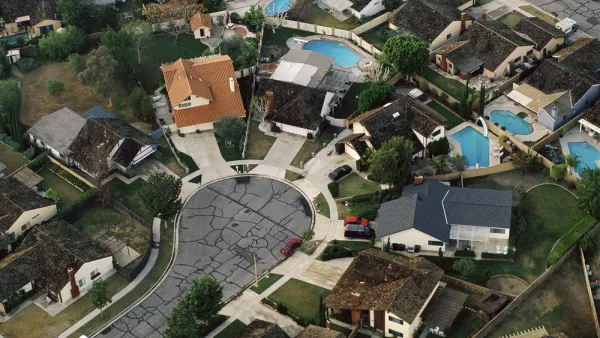
Charles Marohn analyzes Lafayette, Louisiana for how well (or poorly) its districts measure up in terms of infrastructure investment versus tax revenues. The results are telling.
A Historic Texas Beach Town Faces Existential Growth Questions
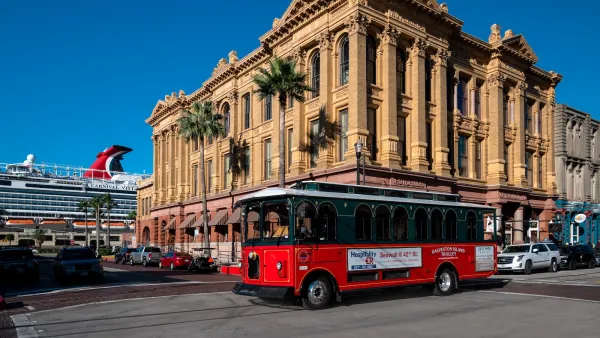
Galveston, Texas is growing — and so are questions about its land use strategy.

Vancouver Set to Adopt Game-changing Citywide Development Plan
To comply with new provincial law, Vancouver will adopt a new city plan aimed at guiding development for the next three decades.

Planetizen Federal Action Tracker
A weekly monitor of how Trump’s orders and actions are impacting planners and planning in America.

Amtrak, CN end decades-long dispute with eight-year agreement
The new operating agreement establishes an updated framework for the companies to work together, including processes to resolve disputes.

Judges permit Denver to divert 77,000 acre feet from the Colorado River for reservoir expansion
Overuse and climate change have caused the Colorado River’s water levels to plummet.

NYC DOT wants faster, more permanent street upgrades
The city is examining ways to build more concrete infrastructure without getting entangled in 'decades-long' projects.

'Something we’ve never seen before:' rising utility rates could strain city finances nationwide
Data centers, climate change and other factors have caused utility rates in the United States to increase by 38% since 2020.

Trump to overrule local leaders, lease millions of acres of America’s Pacific Island territories’ seafloors to mining companies
International law says that the Indigenous people of America’s territories have a right to prior and informed consent regarding projects that impact their countries.

FREE Course: Walkable City 1: Why Walkability?
After describing his path towards focusing on walkability as the essence of good planning, Jeff Speck marches through his five principal reasons for making more walkable places.
Reinventing Malls: Planning Alchemy—Turning Gray Fields Into Gold
The course focuses on the opportunities and imperatives that shape reinvention of mall sites.

Harvard University Graduate School of Design
KFH Group Inc.
Greater Baltimore Committee
The Architects Foundation
University of Cincinnati Online
The Pocatello Development Authority
The Urban Renewal Agency of the City of Pocatello