Although it's a favorite tool of urbanists all over the country—Detroit has taken to adaptive reuse with singular aplomb.


Jeffrey Spivak surveys the effects of adaptive reuse in the city of Detroit, describing the city as a leader in the adaptive reuse of commercial buildings: "It is not just the redevelopment of former Class B or C office spaces into residential lofts, as has happened in so many cities. What is really flourishing in Detroit are innovative and even exotic reuses of long-vacant or historic structures."
After listing some prominent examples and also mentioning the trends reach into other nearby cities, Spivak writes that adaptive reuse is flourishing in Detroit thanks to the city's unique history of population loss and the more recent history of renewed demand for walkability and urban amenities.
Spivak goes on to describe some of the public and private initiatives that kickstarted Detroit's adaptive reuse investment environment, including the work of the Detroit Economic Growth Corporation and Quicken Loans chairman Dan Gilbert. The article includes a lot more detail about the city's adaptive reuse projects, as well as the many effects of such projects on the market and the communities they call home.
Read the full story: Adaptive Use Is Reinventing Detroit

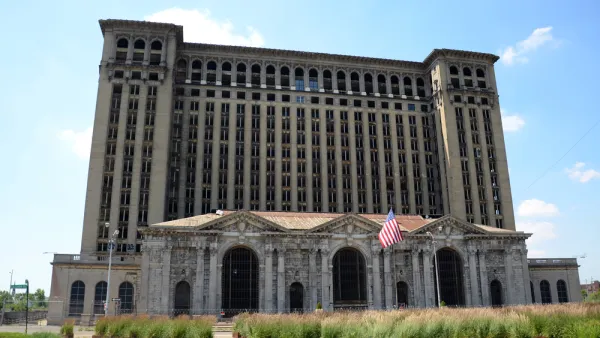
Ford Planning Residential Units in its Detroit Train Station Adaptive Reuse
Ford will treat the Michigan Central Depot to a mixed-use adaptation.
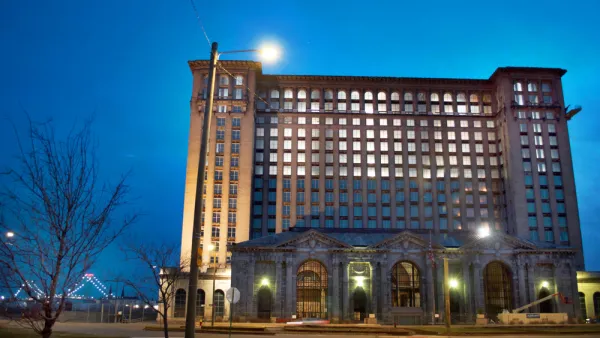
The Massive Significance of Ford's Move into Detroit's Abandoned Michigan Central Depot
Ford has confirmed its plan to move into the Michigan Central Depot in Detroit.
Ford Motor Company Considering Big Move to Historic Detroit
If Ford Motor Co. goes through with a plan to move into the old Michigan Central Depot, it would mark a new phase of the rebirth of Detroit's urban core.

Planetizen Federal Action Tracker
A weekly monitor of how Trump’s orders and actions are impacting planners and planning in America.

Amtrak, CN end decades-long dispute with eight-year agreement
The new operating agreement establishes an updated framework for the companies to work together, including processes to resolve disputes.

Judges permit Denver to divert 77,000 acre feet from the Colorado River for reservoir expansion
Overuse and climate change have caused the Colorado River’s water levels to plummet.

Boston has spent millions making the Green Line more accessible — and there’s no end in sight
While the city has invested millions into expanding and adding platforms to the Green Line to make it more accessible, new train cars set to arrive next year will be too tall for disabled passengers to board without raising the current platforms.

Idaho may see an 18% drop in federal surface transit funding — the largest estimated cut in the US
Transit systems in rural communities are much more reliant on federal funding to provide their services.

How ‘post-disaster gentrification’ alters neighborhoods after natural calamities
After hurricanes, fires or other calamities, the original residents of a community are often replaced by younger, wealthier residents.

FREE Course: Walkable City 1: Why Walkability?
After describing his path towards focusing on walkability as the essence of good planning, Jeff Speck marches through his five principal reasons for making more walkable places.
Reinventing Malls: Planning Alchemy—Turning Gray Fields Into Gold
The course focuses on the opportunities and imperatives that shape reinvention of mall sites.

City of Wisconsin Rapids
Harvard University Graduate School of Design
KFH Group Inc.
The Architects Foundation
University of Cincinnati Online
The Pocatello Development Authority
The Urban Renewal Agency of the City of Pocatello