As the city of Houston is growing, car traffic and rail traffic are also growing. The conflict between the two will be very expensive to resolve.


"Along with freeway traffic volumes, the number of rail cars moving through Houston is expected to grow over time, leading to more pressure to untie some critical spots where railroad tracks and roads intersect," reports Dug Begley.
"The solution is to build overpasses or underpasses in as many places as possible. Eliminate the at-grade crossing and automobile traffic keeps moving while trains can move more efficiently," explains Begley, but the high cost of those projects makes it difficult. One potential source of money, notes Begley, is the federal government, which is "focusing on highway and rail crossings that experience a high volume of rail cars carrying energy products like crude oil and ethanol."
There is another safety concern as well: "Collisions at highway crossings are the second most common cause of deaths along tracks, behind trespasser fatalities that occur mostly when people walk along the tracks and are struck by a train. Last year, 269 people were killed in crossing collisions, the first time in a decade the number of fatalities increased."
Read the full story: Rail crossings remain a problem and a priority
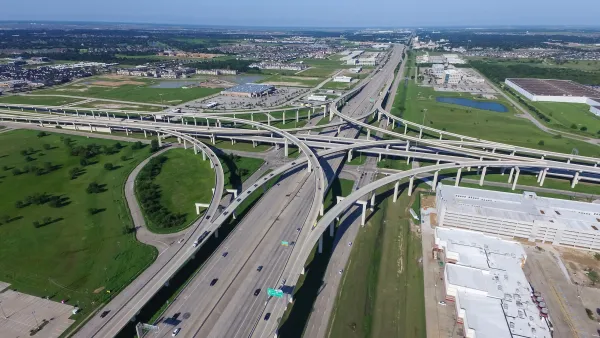
Induced demand is real: Commutes on Houston's 26-lane freeway take 51% longer after expansion
A massive freeway expansion only led to longer drive times, showing that building more lanes won't solve congestion.
Houston Metro May Now Share Lanes With Traffic After All
When the Houston Metro debuted they had planned to keep parts of the route open to cars. After recent crashes that might change.
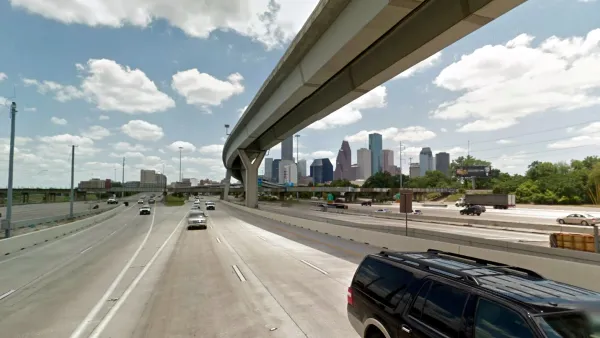
Too Big for Texas? Houston's 23-Lane Freeway
After a $2.3 billion widening project, traffic once again chokes the Katy Freeway's 23 lanes. For road spending critics who are also taxpayers, this I-told-you-so moment is bittersweet.

Planetizen Federal Action Tracker
A weekly monitor of how Trump’s orders and actions are impacting planners and planning in America.

Washington state to charge fee to drivers with fuel-efficient cars
Revenue from the fee will go towards supporting the state’s highways.

Illinois considers spending $1 billion in taxpayer money on data center
A quantum computing campus and data center are currently under construction in Chicago.

Senate passes bill overhauling permitting
The bill still needs to pass the House.

Did data centers change how voters cast their ballots?
Texas, Ohio, and Georgia all flipped party control. But in rural counties, the effect of local data centers was mixed.

Amtrak invests in eight new Airo trainsets
The new trainsets will begin serving passengers in 2031.

FREE Course: Walkable City 1: Why Walkability?
After describing his path towards focusing on walkability as the essence of good planning, Jeff Speck marches through his five principal reasons for making more walkable places.
Reinventing Malls: Planning Alchemy—Turning Gray Fields Into Gold
The course focuses on the opportunities and imperatives that shape reinvention of mall sites.

City of Charlotte
City of Rosemead
Rutgers University, Edward J. Bloustein School of Planning and Public Policy
University of Michigan School for Environment and Sustainability (SEAS)
Hunter College, City University of New York (CUNY)
The Architects Foundation
University District Partnership