The 10th anniversary of Hurricane Katrina is upon us. Many of us city planners invested whatever skills we thought we had, plus a heavy dose of passionate naivete, to recovery planning in the wake of the 2005 storm.


"This week kicks off the anniversary month of Hurricane Katrina, which walloped the Gulf Coast states on August 29, 2005, killing more than 1,800 people and causing more than $150 billion in property damage. While anniversary summaries have dribbled into the mainstream already, August will be the big month for looking back and guessing at what was learned."
Ben Brown speaks from his own extensive experience, as well as quoting several articles and reports on the Gulf Coast.
"This discussion is an important one, not only because it comes as part of the tenth anniversary look back, but also because it speaks to the future of planning and governing in our cities and regions beyond the storm zone. Disasters are stress tests."
"What experts on disaster recovery and resilience tried to tell us before and after recent catastrophes like Hurricanes Katrina and Sandy and the BP Oil Spill is that communities’ abilities to bounce back after such events depend largely on how well things were working before disruptions struck. That’s a more complex observation than it sounds, because the definition of “what’s working” has all kinds of caveats."

Read the full story: Katrina ‘Ten Years After’: And the band plays on

Remember That Katrina Cottages Thing? Whatever Happened to That?
Katrina Cottages held such great promise 10 years ago, as an alternative to FEMA trailers. But a host of roadblocks stood in the way. After a decade, has the tiny house time arrived?
A Hurricane Response Lesson: Disrupt the Cycle of Futility
How do we disrupt the cycle of rebuilding things exactly as they were before—if slightly hardened—after increasingly powerful weather events?
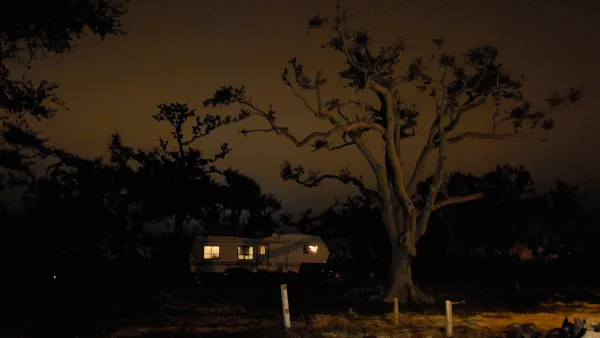
The Katrina Cottage Legacy
The New Urbanist Katrina Cottages initiative for the Gulf Coast appeared to be a failure but their legacy lives on in the SmartDwellings and in the Tiny House movement.

Planetizen Federal Action Tracker
A weekly monitor of how Trump’s orders and actions are impacting planners and planning in America.

Amtrak, CN end decades-long dispute with eight-year agreement
The new operating agreement establishes an updated framework for the companies to work together, including processes to resolve disputes.

Northwest rail fans eager for Sept. 30 debut of Amtrak’s Airo fleet
Get ready for that new train smell and more seats. But they won’t go faster or run more frequently on the Cascades route in Washington and Oregon.

Brightline Florida files for bankruptcy
The transit company is over $5 billion in debt.

St. Louis Metro to test if single-car trains can reduce operating costs, maintain rider satisfaction
The pilot program will run from October to spring 2027, and begin with one single-car train operating on Metrolink’s Red and Blue lines.

Pennsylvania is building data centers in abandoned mines
Housing data centers in mines provides an alternative to destroying local forests and may spare residents from data centers’ noise and air pollution.

FREE Course: Walkable City 1: Why Walkability?
After describing his path towards focusing on walkability as the essence of good planning, Jeff Speck marches through his five principal reasons for making more walkable places.
Reinventing Malls: Planning Alchemy—Turning Gray Fields Into Gold
The course focuses on the opportunities and imperatives that shape reinvention of mall sites.

City of Thousand Oaks
City of Wisconsin Rapids
Harvard University Graduate School of Design
The Architects Foundation
University of Cincinnati Online
The Pocatello Development Authority
The Urban Renewal Agency of the City of Pocatello