A data visualization project illustrates the long and varied traditions of American single-family housing.


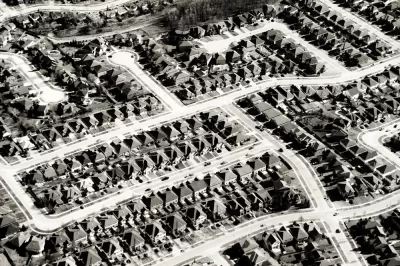
Emily Badger shares insights and lessons about the evolution of the American single-family home from a data visualization project by Pop Chart Lab. Among those lessons: "a sense of why the bland sameness of suburban subdivisions is often criticized. There is tremendous variety, and architectural heritage, in the American single-family home."
Badger also offers a few caveats about the poster. First, the "400-year visual history of the American home focuses on single-family houses, and so the collection skews suburban and rural; there are no apartment buildings here." That omission is especially noteworthy because, that is "the housing type that's home to a majority of American families."
Second, the visualization "doesn't give a full sense of how the scale itself has shifted." The beginning of the article includes a lot more detail on how the growing size of the single-family home is one of the most defining features of its evolution.
FULL STORY: A single image captures how the American house has changed over 400 years

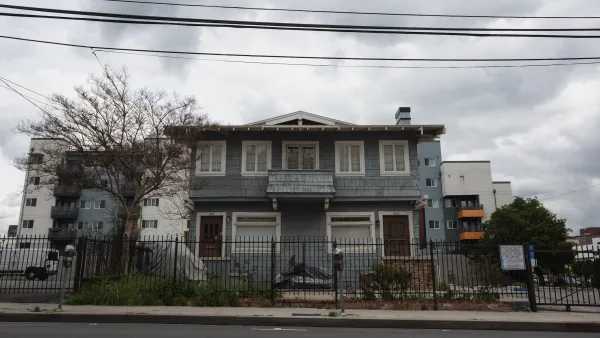
Study: Legalizing single-family home conversions could nearly double LA's new housing
Research shows that making it easier to turn single-family homes into multiple units could unlock tens of thousands of new units per year.
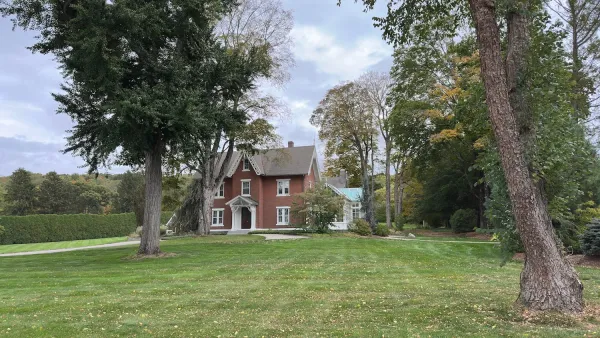
Study: Minimum lot sizes reinforce racial disparities
A Connecticut study found that zoning rules perpetuate residential segregation.
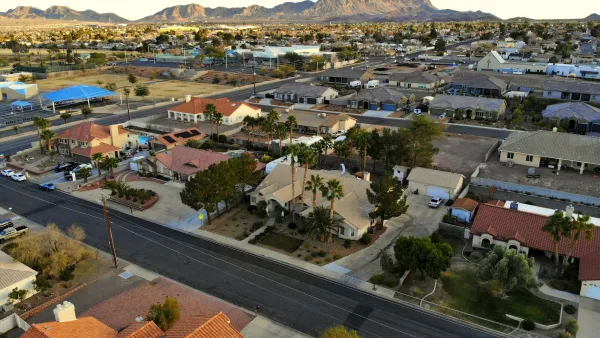
Las Vegas-area development promises over 900 homes below market price
The master-planned Henderson community promises a variety of home types and parks, trails and other amenities.

Planetizen Federal Action Tracker
A weekly monitor of how Trump’s orders and actions are impacting planners and planning in America.

The state-sanctioned urbicide of Austin
People don’t kill cities. Freeways do.

US to reduce Colorado River water deliveries to Mexico
A new Colorado Treaty amendment reduces Mexico’s Colorado River water allocation by 250,000 acre feet.

Brightline West’s future may rely on $6 billion federal loan
The company has until Nov. 2 to make a $400 million equity investment into its proposed high-speed rail line.

LA Metro’s ultimatum: no extra buses for LA28 if federal funding isn’t imminently secured
If Metro does not provide additional buses, LA28 organizers will have to find a new way to manage Olympic traffic. LA28’s budget does not include a line item for transit.

Colorado’s Largest Data Center Could Rise Next to Homes — Without a Public Hearing
The proposed campus would consume 11 times the power of Denver International Airport; as it has across the country, opposition mounts.

FREE Course: Walkable City 1: Why Walkability?
After describing his path towards focusing on walkability as the essence of good planning, Jeff Speck marches through his five principal reasons for making more walkable places.
Reinventing Malls: Planning Alchemy—Turning Gray Fields Into Gold
The course focuses on the opportunities and imperatives that shape reinvention of mall sites.

Eagle County Government
Harvard University Graduate School of Design
Nashville Planning Department
The Architects Foundation
University of Cincinnati Online
The Pocatello Development Authority
The Urban Renewal Agency of the City of Pocatello
Journal of the American Planning Association