An unflinching op-ed begs a rethinking of narratives that cheer the "Triumph of the City." In the contemporary city, the argument goes, only the rich are better off from urbanization.


A CityMetric post by Deepa Naik and Trenton Oldfield makes a provocative argument:
"Alarmingly, everything everyone one thinks they know about urbanization and cities is mistaken, absolutely and entirely. Contrary to the heavily promoted narrative, people arenot cheerfully and enthusiastically moving to cities. Most of the world’s population have been forced to, or left with no other alternative but to attempt to make a life in a city."
Naik and Oldfield also note that urbanization processes in history, such as Britain of the 18th and 19th centuries and the Post-World War II United States, were forced through various methods.
Another bleak pronouncement: "Despite the assurances of the Urban Industry, westernised cities are not 'good for you'. And doses of wealth, health and wisdom will not trickle down to their inhabitants."
Certainly, there is no small amount of exuberance over the perceived contemporary renaissance of urban living—but this article argues that that common narrative is misguided. In London, for example, residents "are leaving in droves."
The article goes on to elaborate on more of the implications of the current trends in urbanization—especially its impacts on at-risk and low-income populations all over the world. The article is an example of frank, tough talk at its most provocative.
Read the full story: Everything you thought you knew about cities is wrong

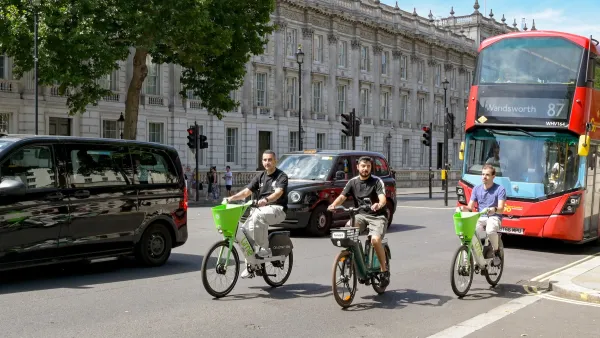
Bike use in London grew by 43% since 2019, but car use remains roughly the same
The city's efforts to reduce car use have stalled despite ambitious programs like congestion pricing and low-traffic neighborhoods.

Beavers save London Tube station from flooding
A small group of beavers is increasing biodiversity and creating cost-free flood mitigation infrastructure.

Can Robotaxis Handle London's Famously Tangled Streets?
Black Cab drivers say autonomous cars won’t be able to handle London’s unique conditions.

Planetizen Federal Action Tracker
A weekly monitor of how Trump’s orders and actions are impacting planners and planning in America.

Amtrak, CN end decades-long dispute with eight-year agreement
The new operating agreement establishes an updated framework for the companies to work together, including processes to resolve disputes.

Northwest rail fans eager for Sept. 30 debut of Amtrak’s Airo fleet
Get ready for that new train smell and more seats. But they won’t go faster or run more frequently on the Cascades route in Washington and Oregon.

Brightline Florida files for bankruptcy
The transit company is over $5 billion in debt.

St. Louis Metro to test if single-car trains can reduce operating costs, maintain rider satisfaction
The pilot program will run from October to spring 2027, and begin with one single-car train operating on Metrolink’s Red and Blue lines.

Pennsylvania is building data centers in abandoned mines
Housing data centers in mines provides an alternative to destroying local forests and may spare residents from data centers’ noise and air pollution.

FREE Course: Walkable City 1: Why Walkability?
After describing his path towards focusing on walkability as the essence of good planning, Jeff Speck marches through his five principal reasons for making more walkable places.
Reinventing Malls: Planning Alchemy—Turning Gray Fields Into Gold
The course focuses on the opportunities and imperatives that shape reinvention of mall sites.

City of Thousand Oaks
City of Wisconsin Rapids
Harvard University Graduate School of Design
The Architects Foundation
University of Cincinnati Online
The Pocatello Development Authority
The Urban Renewal Agency of the City of Pocatello