Insightful designers continue to seek a better future for Los Angeles architecture by way of L.A. urbanism.


In Los Angeles, in the last decade of the old millennium, these were polarizing debates, especially for the swell of Baby Boomers trying to establish careers in practice and academia. Yet since then the vitriol has eased. Starting in the mid-'90s, as the public Internet began to organize the world, the focus on local "place" has been eclipsed by a fascination with global "space"; and leftish designers in Los Angeles—Boomers no less than Gen-Xer’s and Millennials—who've wanted to erect actual buildings have devised various ways to get past the impasse of the Double No. Today we can categorize these local workarounds under the useful rubrics of Everyday, Interdictory, Infrastructural, Interventionist, and now Informal Urbanism. (While beyond Los Angeles, a welter of more insurrectionist urbanism-without-urbanists has arisen: Burning Man, Occupy, and the Tea Party, to name a few; and taken to a city-altering extreme, one might even include the horrifically anti-cosmopolitan war crimes of ISIS.)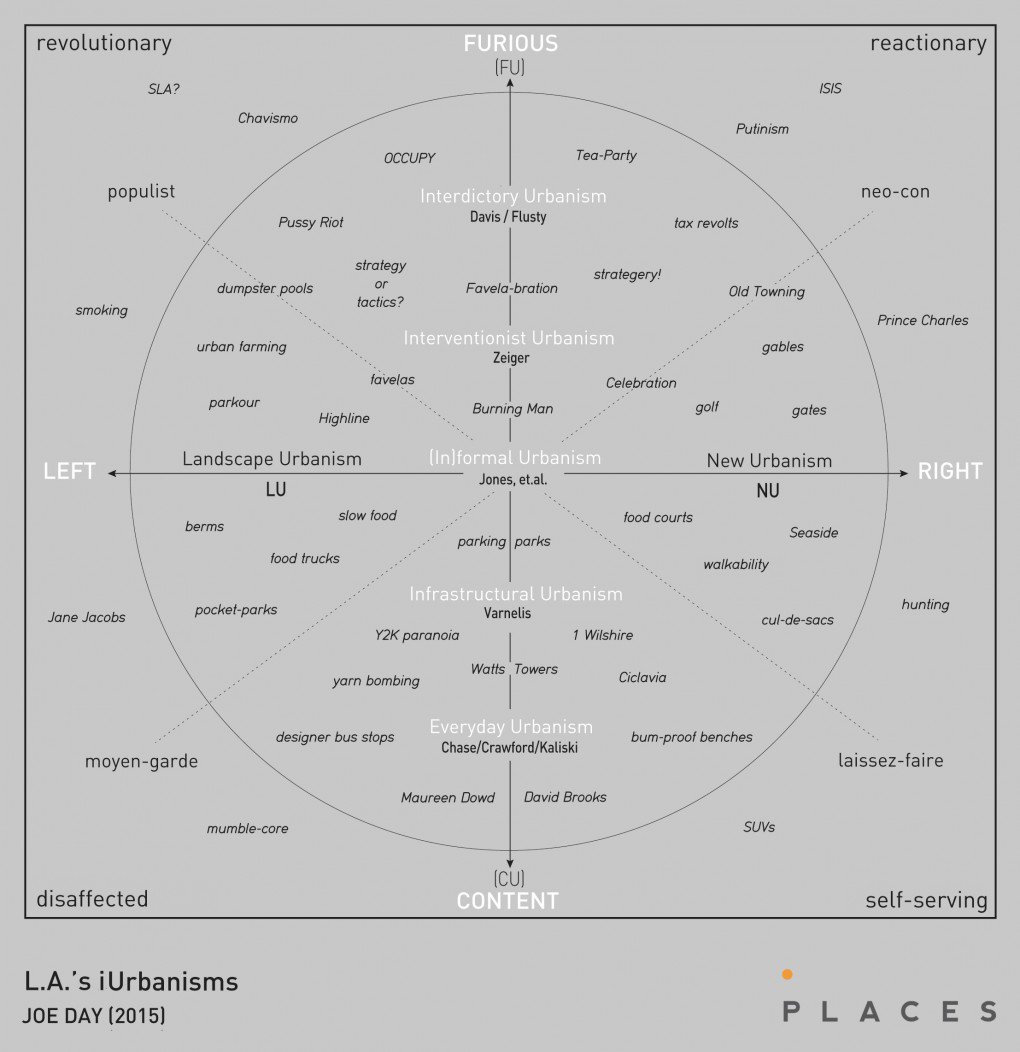
FULL STORY: The iUrbanism of Los Angeles by Joe Day

Independent Music Venues Face a Tough Road Ahead
Where have all the venues gone?
Where Los Angeles Equals San Francisco's Density
Though the Los Angeles region is very dense, significant barriers to transit-oriented planning remain. Based on this analysis, the lack of a central urban core shouldn't be one of them.
Developer Pins Los Angeles' Infrastructure Problems on Bureaucratic Bloat
According to developer and consultant Michael P. Russell, the city of Los Angeles has a chronic shortage of funds for infrastructure due to a bloated bureaucracy, small district city council elections, and term limits.

The state-sanctioned urbicide of Austin
People don’t kill cities. Freeways do.

US to reduce Colorado River water deliveries to Mexico
A new Colorado Treaty amendment reduces Mexico’s Colorado River water allocation by 250,000 acre feet.

New Jersey’s second-largest city bans standalone data centers
Jersey City will continue to allow co-location facilities, such as those meant for research institutions that store their own data.

Amtrak not solely to blame for New Jersey commuter rail's unreliability, report finds
A new study from the Garden State Initiative found that NJ Transit’s budget grew 20% across a 4 year period, but reliability declined significantly over the same period.

EPA erases limits on planet-warming pollution from power plants
Under Monday’s plan, power plants would still have some limits on how much mercury, arsenic and other contaminants they can emit.

Phoenix announces new on-demand transit service, more frequent RAPID buses
Both new services will launch in October, and are part of Phoenix's Project Effective Access Solutions for Easing Congestion.

FREE Course: Walkable City 1: Why Walkability?
After describing his path towards focusing on walkability as the essence of good planning, Jeff Speck marches through his five principal reasons for making more walkable places.
Reinventing Malls: Planning Alchemy—Turning Gray Fields Into Gold
The course focuses on the opportunities and imperatives that shape reinvention of mall sites.

Eagle County Government
Harvard University Graduate School of Design
Nashville Planning Department
The Architects Foundation
University of Cincinnati Online
The Pocatello Development Authority
The Urban Renewal Agency of the City of Pocatello
Journal of the American Planning Association