After spending $10 billion since 2005 on capital improvements, Chicago's O'Hare is still losing business to competitors along with the battle of public opinion.


An in-depth profile of Ginger Evans, Chicago's new aviation commissioner, reveals details about the tough challenges facing one of the nation's busiest airports—not the least of which is a growing discontent among its neighbors.
In fact, "[a] record number of noise complaints about new flight patterns at O'Hare, which use new east-west runways, have been logged this year," reports Jon Hilkevitch.
Evans delivers bad news on that front, as she's quoted directly in the story, saying: "People 10 miles away from the airport, I can tell you right now today that there probably is not much I can do for them…"
Additional subjects of the article include flight delays and congestion. Evans told Hilkevitch that the "next phase of the O'Hare overhaul must go beyond, even possibly significantly alter, the airfield expansion project that began in 2005 and has cost more than $10 billion to date…"
Read the full story: New Chicago aviation chief: O'Hare expansion is only the beginning

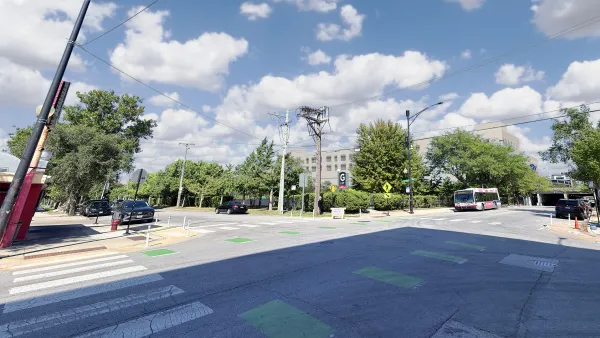
A ‘shady’ deal: Chicagoans rally against planned Amtrak maintenance facility
The $900 million facility would allow Amtrak to maintain entire trains in one building, which the company says will reduce delays.
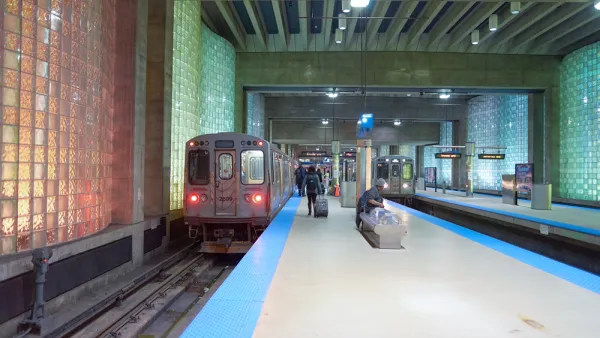
The Great O'Hare Race (And its Discontents)
Four intrepid reporters from the Chicago Tribune raced to O'Hare International Airport by personal car, a ride-share, on CTA, and on Metra to decide which is fastest.
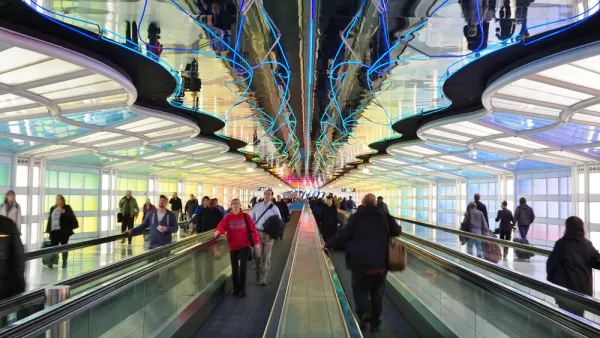
Chicago Launches Design Competition to Redesign O'Hare International Airport
This isn’t a speculative, unfunded design competition. The city has already promised to borrow $4 billion toward the $8.5 billion O'Hare 21 expansion plan.

Planetizen Federal Action Tracker
A weekly monitor of how Trump’s orders and actions are impacting planners and planning in America.

Amtrak, CN end decades-long dispute with eight-year agreement
The new operating agreement establishes an updated framework for the companies to work together, including processes to resolve disputes.

Northwest rail fans eager for Sept. 30 debut of Amtrak’s Airo fleet
Get ready for that new train smell and more seats. But they won’t go faster or run more frequently on the Cascades route in Washington and Oregon.

Brightline Florida files for bankruptcy
The transit company is over $5 billion in debt.

St. Louis Metro to test if single-car trains can reduce operating costs, maintain rider satisfaction
The pilot program will run from October to spring 2027, and begin with one single-car train operating on Metrolink’s Red and Blue lines.

Pennsylvania is building data centers in abandoned mines
Housing data centers in mines provides an alternative to destroying local forests and may spare residents from data centers’ noise and air pollution.

FREE Course: Walkable City 1: Why Walkability?
After describing his path towards focusing on walkability as the essence of good planning, Jeff Speck marches through his five principal reasons for making more walkable places.
Reinventing Malls: Planning Alchemy—Turning Gray Fields Into Gold
The course focuses on the opportunities and imperatives that shape reinvention of mall sites.

City of Thousand Oaks
City of Wisconsin Rapids
Harvard University Graduate School of Design
The Architects Foundation
University of Cincinnati Online
The Pocatello Development Authority
The Urban Renewal Agency of the City of Pocatello