Seattle is showing all indications of a city ready to take its bikeshare system to the next level.


Tom Fucoloro details the city of Seattle's plan to address one of the glaring weaknesses of the Pronto bikeshare system: it's limited service area. "That’s why the city has put together a visionary plan for a massive, fast expansion of Pronto that would increase the service area from five square miles to 42 square miles, reaching from Northgate to Rainier Beach to Alki. The number of stations would increase from 50 to 250, and the percentage of Seattle residents within walking distance of a station would go from 14 percent to 62 percent."
Fucoloro quotes Seattle Department of Transportation Director Scott Kubly, who says that the system should aim to expand the reach of transit by connecting more homes and destination within reach of transit routes.
Also included in the system expansion plans are electric assist bikes, such as those recently announced for the city of Birmingham, Alabama.
The Seattle Department of Transportation drew up its expansion plans in an application for a $25 million 2015 TIGER grant. Applications were due June 5, with awards typically announced in September.
Read the full story: City proposes ‘massive’ Pronto Cycle Share expansion

$1.4 Million Needed to Bailout Seattle's Pronto! Bikeshare
After missing out on the latest round of TIGER grants and being stuck in acquisition limbo with the city of Seattle, the bikeshare system of Pronto is running out of money and time.
Seattle Bikeshare Going Public
The city of Seattle is considering a significant public investment in its bikeshare system, treading where some cities have feared to tread.
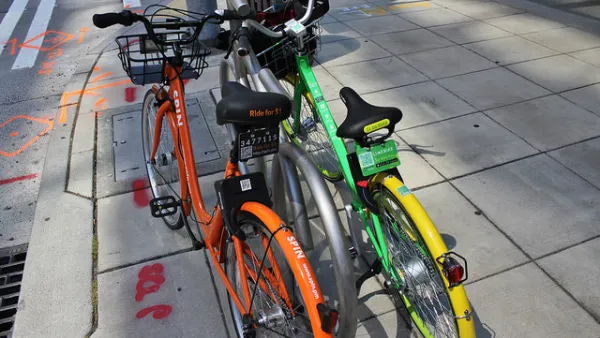
Seattle Bikeshare: From Failure to Success in Less Than Six Months
News of the demise of the Pronto! bikeshare system in Seattle broke in February, but by the end of the year, the city is expected to have the U.S.'s largest bikeshare network.

Planetizen Federal Action Tracker
A weekly monitor of how Trump’s orders and actions are impacting planners and planning in America.

The state-sanctioned urbicide of Austin
People don’t kill cities. Freeways do.

US to reduce Colorado River water deliveries to Mexico
A new Colorado Treaty amendment reduces Mexico’s Colorado River water allocation by 250,000 acre feet.

Nation's most wind-powered state turns to coal as data centers increase energy demand
For the first time in decades, Iowa has increased its generation of coal power.

NYC cools commuters with city's first rain garden above a bus stop
New York City officials say the plants in the rain garden can absorb 16 gallons of rainwater during heavy storms.

Brightline West’s future may rely on $6 billion federal loan
The company has until Nov. 2 to make a $400 million equity investment into its proposed high-speed rail line.

FREE Course: Walkable City 1: Why Walkability?
After describing his path towards focusing on walkability as the essence of good planning, Jeff Speck marches through his five principal reasons for making more walkable places.
Reinventing Malls: Planning Alchemy—Turning Gray Fields Into Gold
The course focuses on the opportunities and imperatives that shape reinvention of mall sites.

Greater Baltimore Committee
Eagle County Government
Harvard University Graduate School of Design
The Architects Foundation
University of Cincinnati Online
The Pocatello Development Authority
The Urban Renewal Agency of the City of Pocatello
Journal of the American Planning Association