2 WTC was designed by Bjarke Ingels Group and already has a tentative lease agreement with Rupert Murdoch’s media companies, 21st Century Fox and News Corp.


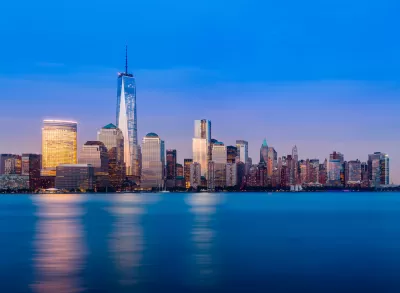
Wired, and an article by Andrew Rice, wins the bonanza as the media outlet to break the big reveal of the final tower designed for the World Trade Center site in New York City.
According to Rice, the design concept is the result of a super-secret design process known as Project Gotham, led by Danish architect Bjarke Ingels. Once complete the project will become the headquarters of Rupert Murdoch’s media companies, 21st Century Fox and News Corp.
Bjarke Ingels describes his design concept in a video included with the article, saying that the project, when viewed from Tribeca, will be "like a vertical village of singular buildings, each tailored to their individual activities, stacked on top of each other, forming parks and plazas in the sky." Viewed from the World Trade Center, explains Ingels, "the individual blocks unite, completing the spiral of towers framing the memorial." Then the video follows with the soaring three dimensional renderings and animated interior shots of the proposed design.
Rice also makes the point that the long process of redeveloping the World Trade Center, once beset by political infighting, has given way in its final chapters to the realities of the real estate market in Manhattan. "The once-dowdy area known as the Financial District has been transformed by an influx of companies from the advertising, design, and tech industries," writes Rice.
The article includes a lot more detail about the design of the building, including similarities between how the buildings will work for Murdoch's companies and designs by Ingels for Google on the other side of the country.
Read the full story: Revealed: The Inside Story of the Last WTC Tower’s Design
Friday Funny: Is the Design for 2 WTC Too King Kong-Friendly?
Henry Melcher reports on a humorous response to the new renderings revealed for the future 2 WTC tower (also the future home of 21st Century Fox and News Corp), designed by Bjarke Ingels Group.
20 Years After 9/11: The 'Age of Skyscrapers' Is Nowhere Near Over
Despite predictions that the events of September 11, 2001 would be the end of skyscrapers, U.S. cities are building more tall buildings than ever.
World Trade Center Rebuild Almost Complete With Approval of 900-Foot Mixed-Use Tower
Plans have been approved for the development of 5 World Trade Center, in place of a building damaged on September 11 and eventually torn down.

Planetizen Federal Action Tracker
A weekly monitor of how Trump’s orders and actions are impacting planners and planning in America.

Eastern Nebraska is running out of electricity
Data centers and electrification are straining eastern Nebraska’s grid, throttling economic development.

Study reveals best places in the U.S. for cycling, walking
New research from Streetlight Data examines bicycle and pedestrian miles per capita in the 100 largest U.S. cities by population.

Developers reveal $10 billion stadium plan as ‘Hail Mary’ to keep Bears in Chicago
The plan would also boast a public park, high- and mid-rise buildings and a youth sports complex.

As Texas embraces carbon storage, a Black community questions the risks
Texas now issues permits for companies to store carbon dioxide underground. East Texas residents fear safety risks, and skeptics doubt the climate benefits.

New BLM proposal would slash public comment periods, environmental protections
The proposed rewrite would also strip legal leverage from Tribal nations and state governments.

FREE Course: Walkable City 1: Why Walkability?
After describing his path towards focusing on walkability as the essence of good planning, Jeff Speck marches through his five principal reasons for making more walkable places.
Reinventing Malls: Planning Alchemy—Turning Gray Fields Into Gold
The course focuses on the opportunities and imperatives that shape reinvention of mall sites.

City of Rosemead
Rutgers University, Edward J. Bloustein School of Planning and Public Policy
One Hundred Miles
University of Michigan School for Environment and Sustainability (SEAS)
Hunter College, City University of New York (CUNY)
The Architects Foundation
City of Cambridge
The Pocatello Development Authority
The Urban Renewal Agency of the City of Pocatello