Danya Henninger reports on the local controversy over a pop-up beer garden in the Philadelphia neighborhood of Point Breeze.


According to Henniger, the controversy over the Point Breeze Pop-Up is indicative of a neighborhood resisting the changes to demographics and urban fabric that follow new investments. The local opposition to the project is such that 150 concerned local residents attended a recent public hearing to protest the Point Breeze Pop-Up, which is the work of John Longacre, a local restaurateur and real estate investor.
At the center of the controversy are similar concerns about how some pop-up beer gardens are "hacking" a provision of Act 116, which allows liquor license holders to serve alcohol at off-site events. The licenses allowed under Act 116 do not require advanced notice of pop-up beer gardens, which has exacerbated the Point Breeze situation.
However, Henniger concludes with a discussion about the prevailing context of the controversy: "For many residents, the pop-up a symbol of forthcoming development…and gentrification."
Read the full story: Why Point Breeze residents are fighting a pop-up beer garden

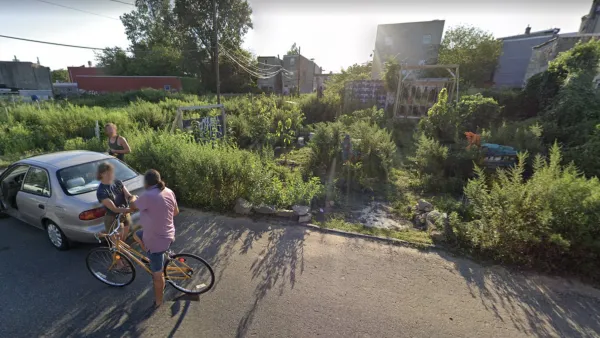
Community Opposition and a Rezoning Controversy in Philadelphia
The local councilmember is seeking a rezoning from commercial to residential in the Kensington neighborhood of Philadelphia, but local community members say the development will be priced out of their range.
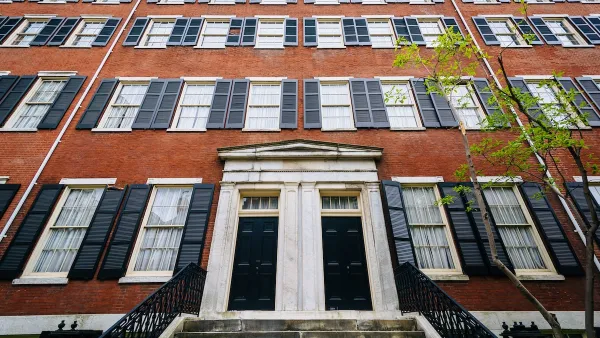
Philly Residents Push Back on New Historic Preservation District
Some residents of Philadelphia’s newly designated Washington Square West Historic District say the community was left out of the decision-making process that could impact housing costs and building requirements.
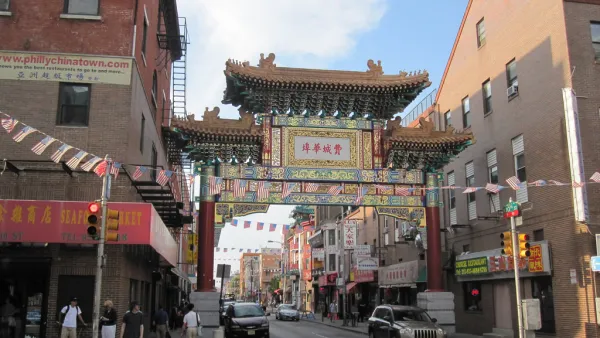
Equitable Development Plan Aims To Protect Philly's Chinatown
As the historic neighborhood experiences increased redevelopment around the new Rail Park, community activists are working to ensure older residents and businesses aren't displaced in the process.

Planetizen Federal Action Tracker
A weekly monitor of how Trump’s orders and actions are impacting planners and planning in America.

Amtrak, CN end decades-long dispute with eight-year agreement
The new operating agreement establishes an updated framework for the companies to work together, including processes to resolve disputes.

Northwest rail fans eager for Sept. 30 debut of Amtrak’s Airo fleet
Get ready for that new train smell and more seats. But they won’t go faster or run more frequently on the Cascades route in Washington and Oregon.

Brightline Florida files for bankruptcy
The transit company is over $5 billion in debt.

St. Louis Metro to test if single-car trains can reduce operating costs, maintain rider satisfaction
The pilot program will run from October to spring 2027, and begin with one single-car train operating on Metrolink’s Red and Blue lines.

Pennsylvania is building data centers in abandoned mines
Housing data centers in mines provides an alternative to destroying local forests and may spare residents from data centers’ noise and air pollution.

FREE Course: Walkable City 1: Why Walkability?
After describing his path towards focusing on walkability as the essence of good planning, Jeff Speck marches through his five principal reasons for making more walkable places.
Reinventing Malls: Planning Alchemy—Turning Gray Fields Into Gold
The course focuses on the opportunities and imperatives that shape reinvention of mall sites.

City of Thousand Oaks
City of Wisconsin Rapids
Harvard University Graduate School of Design
The Architects Foundation
University of Cincinnati Online
The Pocatello Development Authority
The Urban Renewal Agency of the City of Pocatello