After a splashy project recently hit its crowdfunding goals, one write dares to suggest that such fund raising methods might not be the best idea.


"Earlier this week, another project achieved its funding target on Kickstarter – the Thames Baths, an innovative plan by a team of young British architects to bring swimming back to the Thames," reports Leo Hollis.
Rather than just providing another victory lap for the Internet's benefit to "cool" urban projects, Hollis expresses his concern about the use of crowdfunding to enable projects like the Thames Baths (which, for the record, Hollis supports wholeheartedly).
The first line of Hollis's argument:
"Do these online platforms offer a good alternative to traditional civic planning and investment? In many occasions, it might appear so. The success of crowdfunding can give the impression that such schemes replace the obligation of local government to provide for its constituents. This is wrong-headed, to be sure, but is already happening: Belsize Community Library, for example, is being threatened with closure unless it can find a lifeline with local fundraising."
Hollis raises additional questions about the equity and the reliability of crowdfunding—even offering an alternative method, in the form of participatory budgeting, to combine the strengths of crowdfunding with "the less exciting, but equally important, responsibilities of government to provide public services for citizens."
Read the full story: Thames Baths is a great idea, but should city projects be crowdfunded at all?

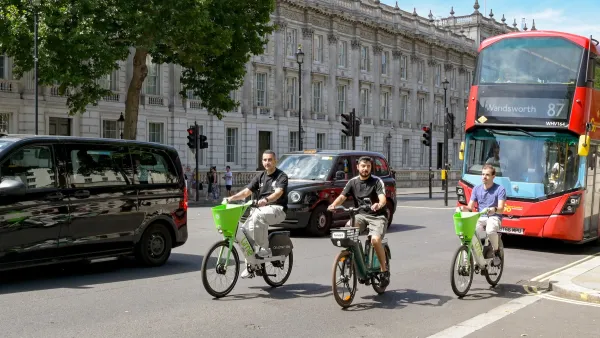
Bike use in London grew by 43% since 2019, but car use remains roughly the same
The city's efforts to reduce car use have stalled despite ambitious programs like congestion pricing and low-traffic neighborhoods.

Beavers save London Tube station from flooding
A small group of beavers is increasing biodiversity and creating cost-free flood mitigation infrastructure.
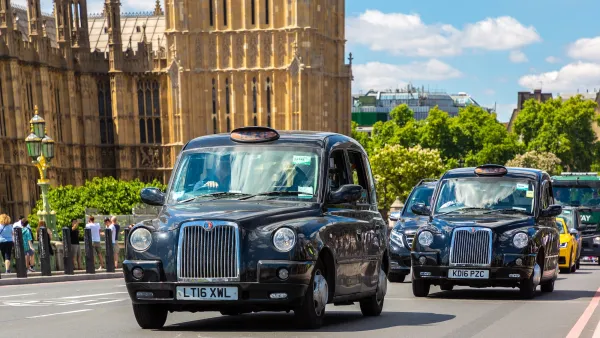
Can Robotaxis Handle London's Famously Tangled Streets?
Black Cab drivers say autonomous cars won’t be able to handle London’s unique conditions.

Planetizen Federal Action Tracker
A weekly monitor of how Trump’s orders and actions are impacting planners and planning in America.

Amtrak, CN end decades-long dispute with eight-year agreement
The new operating agreement establishes an updated framework for the companies to work together, including processes to resolve disputes.

Judges permit Denver to divert 77,000 acre feet from the Colorado River for reservoir expansion
Overuse and climate change have caused the Colorado River’s water levels to plummet.

Boston has spent millions making the Green Line more accessible — and there’s no end in sight
While the city has invested millions into expanding and adding platforms to the Green Line to make it more accessible, new train cars set to arrive next year will be too tall for disabled passengers to board without raising the current platforms.

Idaho may see an 18% drop in federal surface transit funding — the largest estimated cut in the US
Transit systems in rural communities are much more reliant on federal funding to provide their services.

How ‘post-disaster gentrification’ alters neighborhoods after natural calamities
After hurricanes, fires or other calamities, the original residents of a community are often replaced by younger, wealthier residents.

FREE Course: Walkable City 1: Why Walkability?
After describing his path towards focusing on walkability as the essence of good planning, Jeff Speck marches through his five principal reasons for making more walkable places.
Reinventing Malls: Planning Alchemy—Turning Gray Fields Into Gold
The course focuses on the opportunities and imperatives that shape reinvention of mall sites.

City of Wisconsin Rapids
Harvard University Graduate School of Design
KFH Group Inc.
The Architects Foundation
University of Cincinnati Online
The Pocatello Development Authority
The Urban Renewal Agency of the City of Pocatello