Mayors Bill de Blasio of New York and Mick Cornett of Oklahoma City say federal dollars are the only way to restore crumbling infrastructure. China and Europe are investing heavily, while U.S. rates are at a 20-year low.


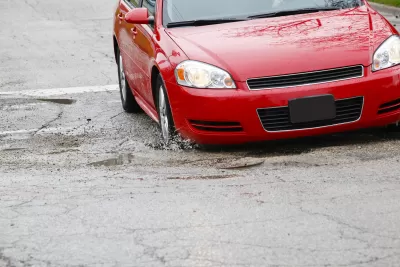
Rates of federal transportation spending have long been on a downward trajectory. This week's Amtrak fatalities, whatever their root cause, highlight a troubling fact: "Spending on infrastructure in the United States has sunk to 1.7 percent of gross domestic product, a 20-year low."
Cornett and de Blasio say a failure to invest puts America further and further behind. "The Department of Transportation estimates that by 2030, it will cost $84 billion to $105 billion a year just to keep the highway, bridge and transit systems in good repair, and up to $170 billion a year to improve conditions and performance. Meanwhile, the rest of the world races ahead. Europe spends 5 percent of G.D.P. on infrastructure, and China 9 percent."
The mayors, speaking on behalf of a bipartisan coalition of their peers, conclude by "calling on Congress to pass a six-year transportation authorization measure that significantly increases investments from the current level of $50 billion a year."
Read the full story: Let Our Cities Move
Agreement Keeps NYC Congestion Pricing Alive Through Summer
The tolling program will continue while a court considers the city’s lawsuit against the Trump administration.
Boston-to-New York High-Speed Rail Project Hopes for Federal Support
If completed, the North Atlantic Rail project could transform New England's transportation landscape.
Design Collective Using Black-Centered Approaches to Transform Cities
BlackSpace seeks to empower Black practitioners and change the way planning and design happens in and affects Black communities.

Planetizen Federal Action Tracker
A weekly monitor of how Trump’s orders and actions are impacting planners and planning in America.

Eastern Nebraska is running out of electricity
Data centers and electrification are straining eastern Nebraska’s grid, throttling economic development.

Study reveals best places in the U.S. for cycling, walking
New research from Streetlight Data examines bicycle and pedestrian miles per capita in the 100 largest U.S. cities by population.

Developers reveal $10 billion stadium plan as ‘Hail Mary’ to keep Bears in Chicago
The plan would also boast a public park, high- and mid-rise buildings and a youth sports complex.

As Texas embraces carbon storage, a Black community questions the risks
Texas now issues permits for companies to store carbon dioxide underground. East Texas residents fear safety risks, and skeptics doubt the climate benefits.

New BLM proposal would slash public comment periods, environmental protections
The proposed rewrite would also strip legal leverage from Tribal nations and state governments.

FREE Course: Walkable City 1: Why Walkability?
After describing his path towards focusing on walkability as the essence of good planning, Jeff Speck marches through his five principal reasons for making more walkable places.
Reinventing Malls: Planning Alchemy—Turning Gray Fields Into Gold
The course focuses on the opportunities and imperatives that shape reinvention of mall sites.

City of Rosemead
Rutgers University, Edward J. Bloustein School of Planning and Public Policy
One Hundred Miles
University of Michigan School for Environment and Sustainability (SEAS)
Hunter College, City University of New York (CUNY)
The Architects Foundation
City of Cambridge
The Pocatello Development Authority
The Urban Renewal Agency of the City of Pocatello