The world now includes a technology that raises the stakes of the collective interest in self-driving cars to a whole new weight class: a self-driving big rig.


"[On May 5], atop the Hoover Dam, Freightliner unveiled the Inspiration Truck — a partially autonomous big rig that could save lives, mitigate driver fatigue and stress, and reduce CO2 emissions up to 5 percent," reports Sean O'Kane.
Daimler, the owner of Freightliner, claims that they have already put 10,000 miles of test miles on the car, which has paved the way for the vehicle's new street-legal status, "having been officially granted one of Nevada's "Autonomous Vehicle" license plates (the first for a commercial truck) by Nevada governor Brian Sandoval at a media event before the unveiling.
O'Kane notes that the Inspiration Truck, as its called, and the "highway Pilot" technology it relies on is not meant to entirely replace truck drivers. "Instead, it's meant to solve the problem of fatigued driving, something that plagues truck drivers who have to pull long shifts. According to Daimler, 90 percent of truck crashes result from driver error, and in one out of every eight of those cases driver fatigue plays a role." The truck currently achieves a "level 3" on the National Highway Traffic Safety Administration's automation scale—the same level currently achieved by Google's self-driving car, according to O'Kane.
The article includes more detail about the current capabilities of the truck and its potential as well as picture of the truck at work at the big reveal.
Joseph Stromberg followed the news of the big reveal to explain why driverless trucks are more likely to be seen on highways sooner than droves of driverless cars on city streets.
Read the full story: This is the first road-legal big rig that can drive itself

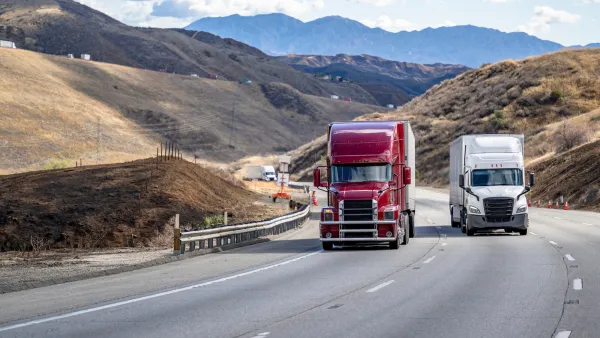
California lifts ban on heavy-duty autonomous vehicles
AV manufacturers can begin testing self-driving vehicles weighing over 10,001 pounds on California roads.
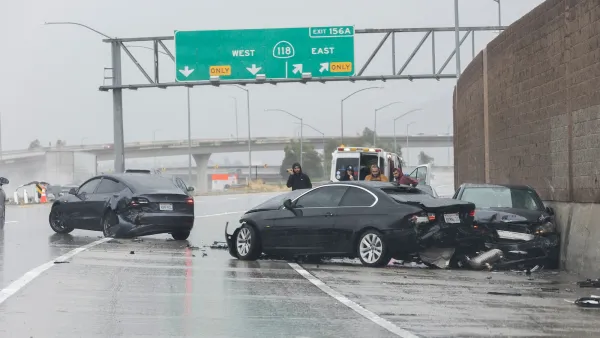
Tesla 'completely' redacts robotaxi crash reports
Reports submitted to the NHTSA also reveal differences in the types of crashes Tesla cars are involved in as opposed to its competitors.
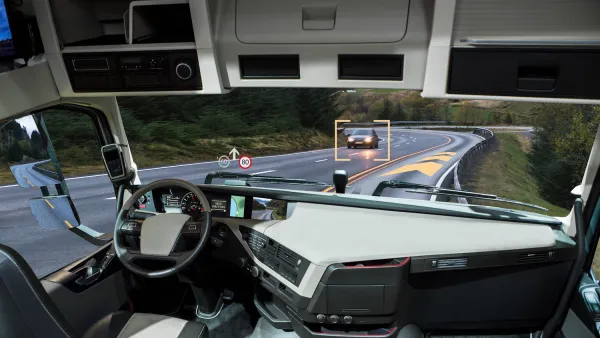
California Is Retooling its AV Guidelines
The California DMV is proposing a new framework for light- and heavy-duty self-driving trucks that would enhance reporting requirements and pave the way for autonomous commercial fleets.

Planetizen Federal Action Tracker
A weekly monitor of how Trump’s orders and actions are impacting planners and planning in America.

‘Going backwards:’ Baltimore mayor, students rally against state's transit funding plan
Maryland's proposed six-year plan provides no funding for Baltimore’s BMORE bus program and reduces its road maintenance funding.

Detroit to transform waterfront with $2.2 billion investment
Developers will convert about 18 acres of unused parking lot space into civic spaces.

HUD modernizes 50-year-old manufactured housing framework
The Next Generation Manufactured Housing Action Plan establishes new energy-efficiency standards for manufactured homes, and new guidelines for anchoring them.

New CA housing laws tear down development red tape
Recently-signed legislation makes building starter homes and ADUs cheaper and faster in California.

Metrolink finishes first expansion in 20 years
The transit agency is now one of very few in the United States to connect two major airports.

FREE Course: Walkable City 1: Why Walkability?
After describing his path towards focusing on walkability as the essence of good planning, Jeff Speck marches through his five principal reasons for making more walkable places.
Reinventing Malls: Planning Alchemy—Turning Gray Fields Into Gold
The course focuses on the opportunities and imperatives that shape reinvention of mall sites.

One Hundred Miles
County of Mendocino
planning NEXT
The Architects Foundation
University of Cincinnati Online
Montrose County
Northern Illinois Transit Authority (NITA)
The Pocatello Development Authority