Based on a history of park-friendly ordinances, Seattle parks and urban forests are largely off-limits to developers. Landowners who flout these regulations must provide the city with an adjacent and equivalent parcel.


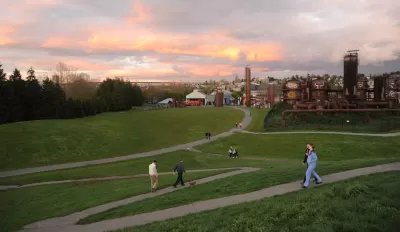
Seattle is becoming a very attractive place to live, going by real estate prices at least. "With more density and higher property values, it seems possible a developer might call up the Parks Department and make an enticing offer. Could Seattle parks be turned into housing developments?"
Overall, the answer appears to be a resounding no. From the 1970s onward, Seattle residents have been adamant that parkland remain protected. After a series of proposals to develop park land failed at the voting booth, "In 1997, the city passed the Initiative 42 ordinance, which makes it nearly impossible to develop city land designated for park purposes."
"According to the initiative, the first step to turning even a single square foot of parkland begins with a public hearing. Then the city must pass an ordinance saying there's no reasonable alternative. Then the city would have to receive a piece of land of equal or better size and value in exchange."
Typically only individual landowners, not big developers, have taken advantage of this provision, and then only "in exchange for several square feet."
Read the full story: Why Have Seattle's Urban Forests Dodged Development?

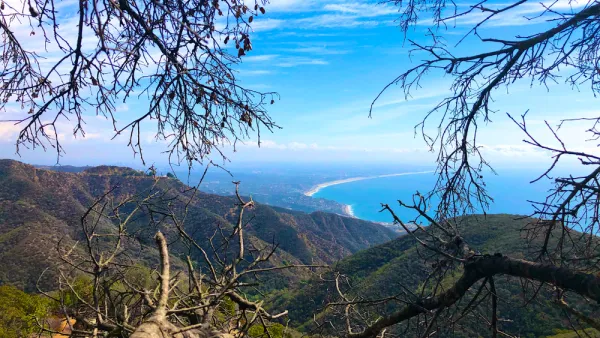
Santa Monica Mountains Acquires More Land For Conservation
The Mountains Recreation and Conservation Authority has acquired the final 150 acres of the 325-acre Triangle Ranch open space in the Santa Monica Mountains.
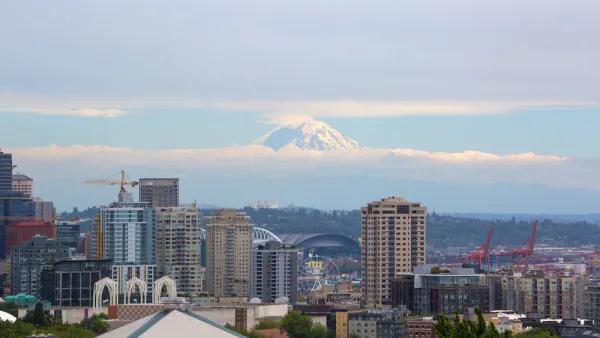
Luxury Condos, Not Luxury Single-Family Homes, Take the Blame in the Affordability Debate
An article in The Urbanist suggests the ire over new developments is misplaced.
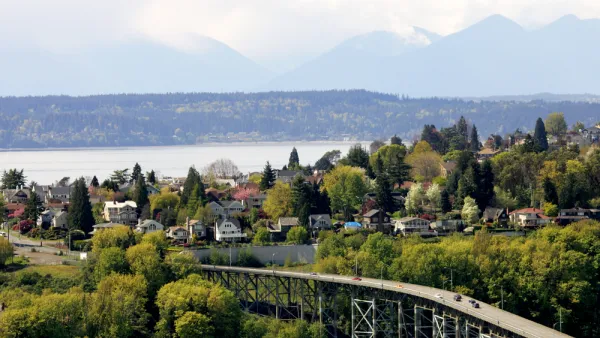
State Law Allows for Local Reform of the Washington State Environmental Policy Act
Reform of the Washington State Environmental Policy Act (SEPA) is underway at the local level after a new state bill offered "safe harbor" under the law for a menu of land use and development reforms.

Planetizen Federal Action Tracker
A weekly monitor of how Trump’s orders and actions are impacting planners and planning in America.

Amtrak, CN end decades-long dispute with eight-year agreement
The new operating agreement establishes an updated framework for the companies to work together, including processes to resolve disputes.

Judges permit Denver to divert 77,000 acre feet from the Colorado River for reservoir expansion
Overuse and climate change have caused the Colorado River’s water levels to plummet.

NYC DOT wants faster, more permanent street upgrades
The city is examining ways to build more concrete infrastructure without getting entangled in 'decades-long' projects.

'Something we’ve never seen before:' rising utility rates could strain city finances nationwide
Data centers, climate change and other factors have caused utility rates in the United States to increase by 38% since 2020.

Trump to overrule local leaders, lease millions of acres of America’s Pacific Island territories’ seafloors to mining companies
International law says that the Indigenous people of America’s territories have a right to prior and informed consent regarding projects that impact their countries.

FREE Course: Walkable City 1: Why Walkability?
After describing his path towards focusing on walkability as the essence of good planning, Jeff Speck marches through his five principal reasons for making more walkable places.
Reinventing Malls: Planning Alchemy—Turning Gray Fields Into Gold
The course focuses on the opportunities and imperatives that shape reinvention of mall sites.

KFH Group Inc.
Greater Baltimore Committee
Eagle County Government
The Architects Foundation
University of Cincinnati Online
The Pocatello Development Authority
The Urban Renewal Agency of the City of Pocatello