Joel Kotkin recently waded into the conversation about that it will take to return Legacy Cities into the prosperity of former years.


Jay Miller was on hand to cover an event at the City Club of Cleveland, where author and advocate Joel Kotkin made the case for the potential resurgence of Northeast Ohio. Miller explains Kotkin's pitch: "His point was that metropolitan areas in the Great Lakes, like Cleveland, are beginning to have advantages that will make them increasingly more attractive places to live and work — especially for the so-called millennial generation born after about 1978, which is moving into adulthood and family formation."
Kotkin argued that as Millennials start settling down, they will leave cities like San Francisco and New York in pursuit of attractive, affordable housing options, such as those found in Northeast Ohio.
"Kotkin also said Northeast Ohio’s strong manufacturing base and its access to abundant fresh water will make the region more attractive and will help the strengthen the region’s economy, though population growth will not be significant," adds Miller.
Marcia Pledger was also present at the event to cover the remarks, noting Kotkin's take on the strengths of the Cleveland industrial base: "While core industries such as manufacturing may not ever return to its best years, Kotkin said embedded skills are crucial for other thriving industries including creating medical devices."
Read the full story: How Cleveland and the Rust Belt can come back through tech, manufacturing
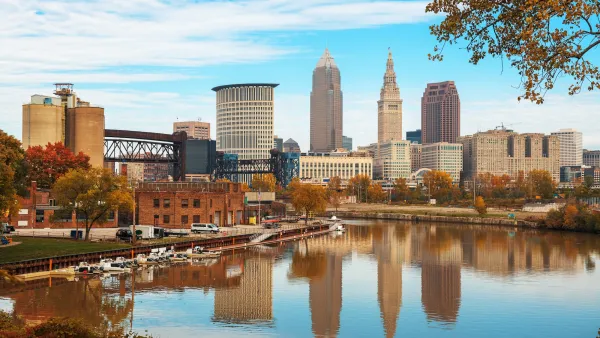
Cleveland program has housed 200 people since 2024
The A Home For Every Neighbor initiative successfully moves people into housing in under two weeks.
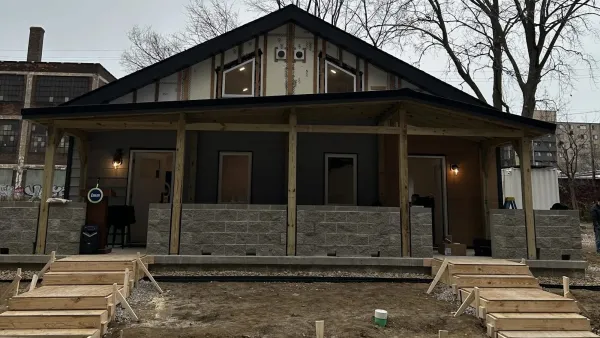
Cleveland Deploys Solar to Make Affordable Housing More Affordable
A nonprofit-backed project is bringing efficient duplexes to Cleveland.
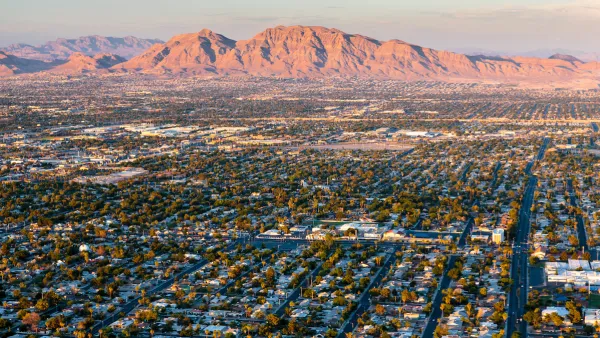
Where Are Millennials Moving to?
As the housing crisis rages on, four U.S. states are seeing high levels of new migration from young and middle-aged workers.

Planetizen Federal Action Tracker
A weekly monitor of how Trump’s orders and actions are impacting planners and planning in America.

California plans to bury El Niño’s downpour
If the state plays its cards right, it may be able to store a billion acre-feet of El Niño’s water in aquifers.

Desperate measures: Advocates weigh draining Lake Powell to fill Colorado River
Draining the reservoir could reduce evaporation losses by a couple hundred thousand acre-feet.

Mamdani’s pied-à-terre tax survives legal challenge
A panel of judges found that the plaintiffs failed to demonstrate injury as a result of New York City's implementation of the tax.

Eastern Nebraska is running out of electricity
Data centers and electrification are straining eastern Nebraska’s grid, throttling economic development.

Seattle passes record-breaking transit services expansion
Proposition 1 will double the city’s transit tax to add 95,000 more bus trips and preserve 180,000 bus trips annually.

FREE Course: Walkable City 1: Why Walkability?
After describing his path towards focusing on walkability as the essence of good planning, Jeff Speck marches through his five principal reasons for making more walkable places.
Reinventing Malls: Planning Alchemy—Turning Gray Fields Into Gold
The course focuses on the opportunities and imperatives that shape reinvention of mall sites.

City of Rosemead
Rutgers University, Edward J. Bloustein School of Planning and Public Policy
One Hundred Miles
University of Michigan School for Environment and Sustainability (SEAS)
Hunter College, City University of New York (CUNY)
The Architects Foundation
City of Cambridge
Montrose County
The Pocatello Development Authority