Los Angeles is known for a few magnificent parks—but they are hard to reach and concentrated in affluent areas. The 50 Parks program, however, is delivering on its titular promise.


Josh Stephens reports on the progress of the 50 Parks Initiative, the work of the Los Angeles Department of Recreation and Parks to "promote the development of 50 parks in underserved areas of the city."
According to the article, "[t]he initiative is now more than halfway to its goal. According to program director Darryl Ford, 31 parks have been completed, six are under construction and 17 more sites have been identified, for a total of 54."
The program dates back to 2012, when the department "acknowledged…it would be nearly impossible to build large parks in a dense, built-out city. Instead, they focused on small, neighborhood parks — sometimes called 'pocket parks,' though some of the initiative’s backers dismiss that term — that could be wedged into small and irregular spaces."
Stephens also includes more detail on the local partners that have helped the department in working toward its goals as well as the features of the parks that have been built so far.
Read the full story: L.A. Builds Tiny Parks at Furious Pace

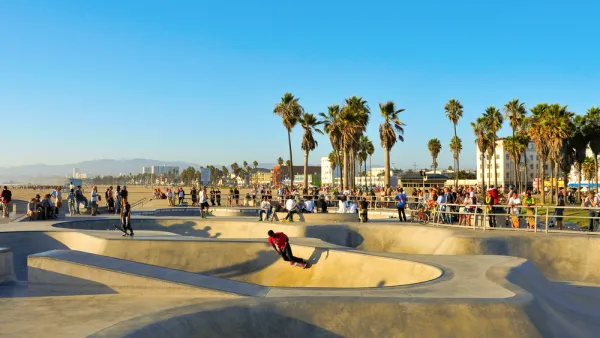
Los Angeles Adds New Developer Fee to Pay for Parks
The city of Los Angeles has been improving its parks resources for several years, and a new funding mechanism should help continue that trend.
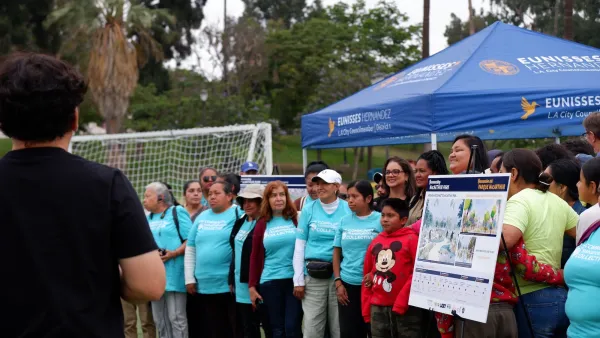
LA unveils plans to reconnect MacArthur Park
The construction of Wilshire Boulevard split the park in two in 1934.

Delivering on the Promise of Parks
In LA County, even amid budget challenges, new parks are opening, targeted investments are being made in underserved communities, and long-term plans are guiding progress — demonstrating a sustained commitment to parks as essential infrastructure.

Planetizen Federal Action Tracker
A weekly monitor of how Trump’s orders and actions are impacting planners and planning in America.

Amtrak, CN end decades-long dispute with eight-year agreement
The new operating agreement establishes an updated framework for the companies to work together, including processes to resolve disputes.

Northwest rail fans eager for Sept. 30 debut of Amtrak’s Airo fleet
Get ready for that new train smell and more seats. But they won’t go faster or run more frequently on the Cascades route in Washington and Oregon.

Brightline Florida files for bankruptcy
The transit company is over $5 billion in debt.

St. Louis Metro to test if single-car trains can reduce operating costs, maintain rider satisfaction
The pilot program will run from October to spring 2027, and begin with one single-car train operating on Metrolink’s Red and Blue lines.

Pennsylvania is building data centers in abandoned mines
Housing data centers in mines provides an alternative to destroying local forests and may spare residents from data centers’ noise and air pollution.

FREE Course: Walkable City 1: Why Walkability?
After describing his path towards focusing on walkability as the essence of good planning, Jeff Speck marches through his five principal reasons for making more walkable places.
Reinventing Malls: Planning Alchemy—Turning Gray Fields Into Gold
The course focuses on the opportunities and imperatives that shape reinvention of mall sites.

City of Thousand Oaks
City of Wisconsin Rapids
Harvard University Graduate School of Design
The Architects Foundation
University of Cincinnati Online
The Pocatello Development Authority
The Urban Renewal Agency of the City of Pocatello