A writer for a national environmental publication searches for middle ground in the climate change policy debate.


Ben Adler surveys the policy platforms of conservative intellectuals (Adler sets aside right-wing pundits like Rush Limbaugh and the talking heads on Fox News as well as the current Republican presidential field from the discussion) for evidence of a rational conservative approach to climate change.
According to Adler (who surveyed op-eds, opinion magazines, and policy journals), conservative intellectuals fall into three categories: "those who argue for adaptation instead of trying to stop climate change (the Adapters), the anguished advocates of a carbon tax (the Handwringers), and those who simply deny climate science (the Deans of Denialism)."
Adler proceeds to examine each of these categories, focusing especially on the leading figures in each category. Adler also makes counter arguments to their claims. So, after Adler describes Reihan Salam (in the "Adapter" category), executive editor at National Review and columnist for Slate, as a pro-urban conservative who supports incentives for clean technology, rather than disincentives for dirty energy production, Adler also responds that we don't have decades to wait for a technological breakthrough.
Read the full story: What do conservative policy intellectuals think about climate change?


Washington Voters Keep Carbon Tax
An initiative that would have ended the state’s “cap and invest” program failed, leaving the program in place.
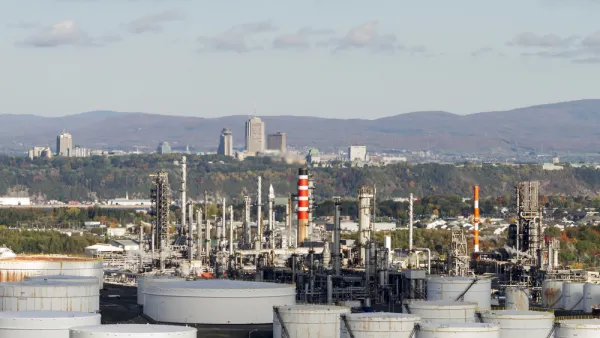
Canadian Supreme Court Upholds Carbon Tax
A historic ruling in Canada allows the federal government to supersede the efforts of provinces in fighting the causes of climate change.

Urban Planning and the Democratic Debate Field
The Democratic Party will hold a two-day debate event, starting tonight. It's time to brush up on the positions of the leading candidates on policies and politics relate to housing, climate change, and infrastructure.

Planetizen Federal Action Tracker
A weekly monitor of how Trump’s orders and actions are impacting planners and planning in America.

Amtrak, CN end decades-long dispute with eight-year agreement
The new operating agreement establishes an updated framework for the companies to work together, including processes to resolve disputes.

Northwest rail fans eager for Sept. 30 debut of Amtrak’s Airo fleet
Get ready for that new train smell and more seats. But they won’t go faster or run more frequently on the Cascades route in Washington and Oregon.

Brightline Florida files for bankruptcy
The transit company is over $5 billion in debt.

St. Louis Metro to test if single-car trains can reduce operating costs, maintain rider satisfaction
The pilot program will run from October to spring 2027, and begin with one single-car train operating on Metrolink’s Red and Blue lines.

Pennsylvania is building data centers in abandoned mines
Housing data centers in mines provides an alternative to destroying local forests and may spare residents from data centers’ noise and air pollution.

FREE Course: Walkable City 1: Why Walkability?
After describing his path towards focusing on walkability as the essence of good planning, Jeff Speck marches through his five principal reasons for making more walkable places.
Reinventing Malls: Planning Alchemy—Turning Gray Fields Into Gold
The course focuses on the opportunities and imperatives that shape reinvention of mall sites.

City of Thousand Oaks
City of Wisconsin Rapids
Harvard University Graduate School of Design
The Architects Foundation
University of Cincinnati Online
The Pocatello Development Authority
The Urban Renewal Agency of the City of Pocatello