In some places in the United States, mostly in Florida, some suburban cities have become the big kids on the block.


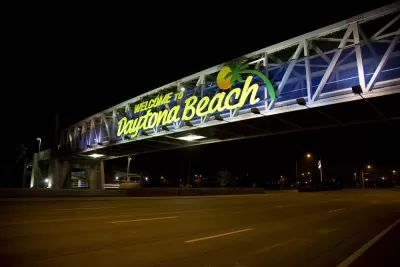
A post on the Panethos blog examines examples from the United States of suburbs outgrowing—in terms of population—the original core city of the metropolitan area. In a conspicuous trend, most metropolitan areas that have managed this trick of population growth are located in Florida, designed as planned retirement centers. Norfolk, Virginia, which has been outgrown by Virginia Beach, provides a geographic exception.
The list of core cities overtaken by their suburbs includes recognizable names like Daytona Beach, FL; Naples, FL; and Hollywood, FL.
Such a population dynamic will crop up in the nomenclature used by the U.S. Census for describing metropolitan statistical areas (MSAs). According to the post, "[when] a suburb exceeds the core city in population, the Census Bureau’s references to the metropolitan statistical area (MSA) [pdf] begins to change, as well. For instance, what once was the 'Fort Myers MSA,' eventually became the 'Fort Myers-Cape Coral MSA,' and is now known as 'Cape Coral-Fort Myers MSA,' as the moniker is revised with the changing population status. Poor Fort Pierce isn’t even listed as part of the metropolitan area name any longer, as it is just identified as 'Port St. Lucie MSA.'"
Read the full story: When a suburb becomes larger than the core city


Richard Florida: 'The Urban Revival Is Over'
The author of the "The Rise of the Creative Class" and the "New Urban Crisis" says cities have had their moment.
Population Decline in the Latest Census Estimates
Not only are suburbs growing, many of the larger, older cities that had reversed decades of population decline, are now losing population, again. The biggest losers: counties with the greatest population densities.
New Census Data Confirms: Suburban Areas Lead U.S. Growth
Post-recession population growth in the United States looks a lot like pre-recession growth in the United States. As some have predicted or already noticed: the story of U.S. growth is still suburban.

Planetizen Federal Action Tracker
A weekly monitor of how Trump’s orders and actions are impacting planners and planning in America.

Amtrak, CN end decades-long dispute with eight-year agreement
The new operating agreement establishes an updated framework for the companies to work together, including processes to resolve disputes.

Judges permit Denver to divert 77,000 acre feet from the Colorado River for reservoir expansion
Overuse and climate change have caused the Colorado River’s water levels to plummet.

Idaho may see an 18% drop in federal surface transit funding — the largest estimated cut in the US
Transit systems in rural communities are much more reliant on federal funding to provide their services.

How ‘post-disaster gentrification’ alters neighborhoods after natural calamities
After hurricanes, fires or other calamities, the original residents of a community are often replaced by younger, wealthier residents.

Maryland local governments examine if they should have more power to raise property taxes
Maryland’s housing market is out of reach for the majority of moderate-income residents.

FREE Course: Walkable City 1: Why Walkability?
After describing his path towards focusing on walkability as the essence of good planning, Jeff Speck marches through his five principal reasons for making more walkable places.
Reinventing Malls: Planning Alchemy—Turning Gray Fields Into Gold
The course focuses on the opportunities and imperatives that shape reinvention of mall sites.

Harvard University Graduate School of Design
KFH Group Inc.
Greater Baltimore Committee
The Architects Foundation
University of Cincinnati Online
The Pocatello Development Authority
The Urban Renewal Agency of the City of Pocatello