A Chicago Tribune article reveals some of the behind-the-scenes moves made by the Chicago Cubs to control more of the commercial interests in a neighborhood already famously devoted to its team.


According to an article by Jared S. Hopkins and Ameet Sachdev, Chicago Cubs owner Tom Ricketts "has taken the Boston blueprint far beyond the historic stadium — past Wrigley's bricks and ivy, in fact, and into the nearby streets where the Cubs want to control more of the local economy that feeds off the baseball team."
"His purchase of three rooftop businesses last month is the latest sign that he is gaining control not just of the future of Wrigley but portions of Wrigleyville itself."
"From winning approval to close portions of streets during game days to hosting concerts, the team has begun to transform the rhythm and character of the Lakeview neighborhood. Ricketts' plans to increase business opportunities beyond the stadium already include an open-air plaza, a nearby hotel and street fairs similar to the ones the Red Sox host."
As the plan plays out slowly and below the level of hoopla the team's recent renovation of Wrigley Field elicited, local rooftop business owner Mark Schlenker is quoted in the article describing the team's accomplishments in consolidating control of the neighborhood: "They do have a longer plan — the Disney World of baseball….This is a very brilliantly run campaign to slowly get what they want. I give them credit."
FULL STORY: Cubs owner transforming Wrigley Field, Lakeview to rake in more money

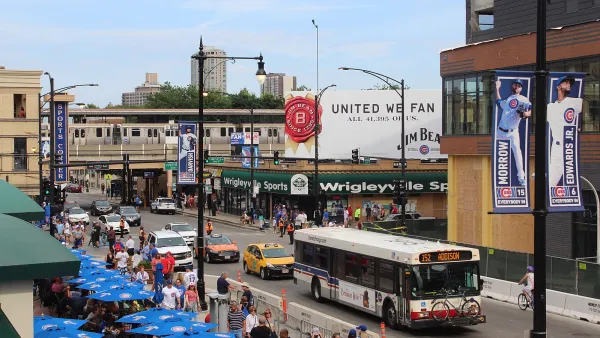
New Development Continues in Wrigleyville
New mixed-use projects bring residential units, retail, and entertainment venues to the neighborhood surrounding Chicago's Wrigley Field as stadium-adjacent development grows in popularity.
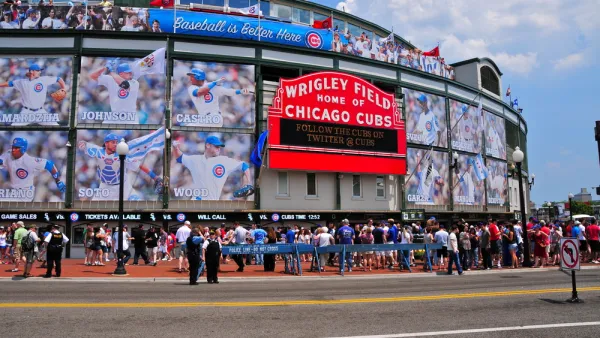
Dynamic Parking Prices Lack Political Will, Local Support Near Wrigley Field
Setting the example for the rest of city was too tough a pill to swallow for businesses located near Wrigley Field.
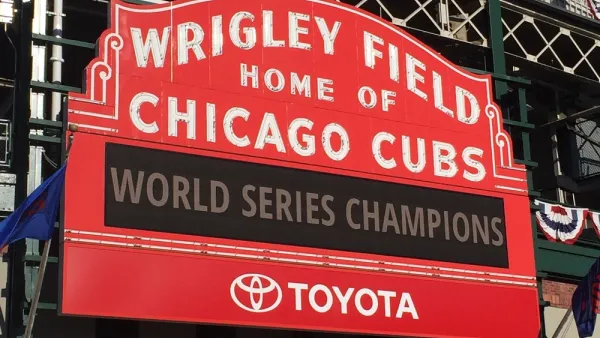
New Public Space Outside Wrigley Field Just Another Win for Chicago
Chicago Cubs fans looking to bask in the glory of the team's first World Series victory since 1908 will find a new public plaza and lawn next to the stadium. The plaza will be open to the public on non-baseball days too.

Planetizen Federal Action Tracker
A weekly monitor of how Trump’s orders and actions are impacting planners and planning in America.

The state-sanctioned urbicide of Austin
People don’t kill cities. Freeways do.

US to reduce Colorado River water deliveries to Mexico
A new Colorado Treaty amendment reduces Mexico’s Colorado River water allocation by 250,000 acre feet.

Mamdani overhauls NYC's Vision Zero plan with 100 new policy goals
The overhaul aims to reduce traffic deaths and make streets safer for pedestrians, cyclists and drivers through lower speed limits, new safety infrastructure and more.

Amtrak not solely to blame for New Jersey commuter rail's unreliability, report finds
A new study from the Garden State Initiative found that NJ Transit’s budget grew 20% across a 4 year period, but reliability declined significantly over the same period.

EPA erases limits on planet-warming pollution from power plants
Under Monday’s plan, power plants would still have some limits on how much mercury, arsenic and other contaminants they can emit.

FREE Course: Walkable City 1: Why Walkability?
After describing his path towards focusing on walkability as the essence of good planning, Jeff Speck marches through his five principal reasons for making more walkable places.
Reinventing Malls: Planning Alchemy—Turning Gray Fields Into Gold
The course focuses on the opportunities and imperatives that shape reinvention of mall sites.

Eagle County Government
Harvard University Graduate School of Design
Nashville Planning Department
The Architects Foundation
University of Cincinnati Online
The Pocatello Development Authority
The Urban Renewal Agency of the City of Pocatello
Journal of the American Planning Association