Many citizens in independent-minded Texas may not like the idea of spending $10 billion on high speed rail. Backers in Dallas, though, have begun to dream up big plans for a station area to serve Texas Central Railway.


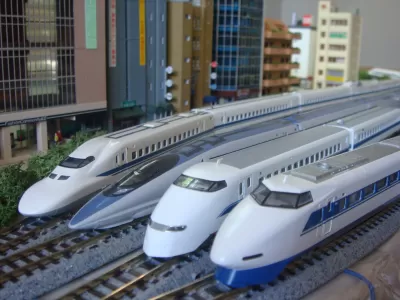
The $10 billion planned Texas Central Railway promises to take passengers from *Houston to Dallas in about 90 minutes, making the nation's second-largest state a little smaller. Railway officials recently announced potential locations for the Dallas terminus, which has civic leaders in the city excited about development in the area.
The city is considering a partnership that would develop an extensive mixed-use community around the station. This approach would contrast dramatically with the spread-out development that characterizes much of the Dallas-Ft. Worth Metroplex. The location takes advantage of vacant land south of downtown Dallas. Dallas has grown mostly northward from downtown, so the station is seen as a catalyst for revitalizing a neglected part of the city. It will be linked to Dallas' growing light rail network.
"Texas Central also announced that it was creating a development company that would partner with the existing development firm Matthews Southwest to turn the station into a mixed-use development that could encourage more retail, residences and businesses in the gateway to the city’s southern half. The parcels identified are owned by Matthews entities or the city."
*The article was corrected to reflect the correct extent of the route.
Read the full story: Bullet train developer's preferred station sites seen as boon to Dallas' Cedars area


Eminent Domain Questions Still Dog Texas Central High Speed Rail Plans
The Texas Attorney General took a break from its crusade against unsubstantiated claims of voter fraud to weigh in on a controversial question of property rights.
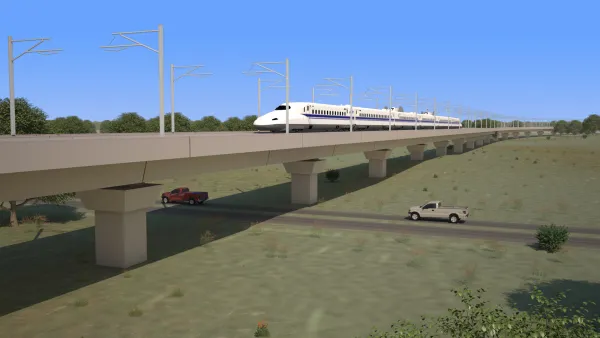
Contracts Signed, Funding Still TBD: Texas Central High-Speed Rail Moves Forward
Texas Central has its construction contracts and a court decision in its favor, but significant obstacles remain for the high-speed rail project connecting Houston and Dallas to get underway.

The Future of U.S. High-Speed Rail Is in Texas
Carlos Aguilar, Texas Central president and CEO, comments on the changes to the San Francisco-to-Anaheim project announced last month by California Gov. Gavin Newsom, and why his project linking Houston and Dallas/Fort Worth will progress.

Planetizen Federal Action Tracker
A weekly monitor of how Trump’s orders and actions are impacting planners and planning in America.

Amtrak, CN end decades-long dispute with eight-year agreement
The new operating agreement establishes an updated framework for the companies to work together, including processes to resolve disputes.

Judges permit Denver to divert 77,000 acre feet from the Colorado River for reservoir expansion
Overuse and climate change have caused the Colorado River’s water levels to plummet.

Boston has spent millions making the Green Line more accessible — and there’s no end in sight
While the city has invested millions into expanding and adding platforms to the Green Line to make it more accessible, new train cars set to arrive next year will be too tall for disabled passengers to board without raising the current platforms.

Idaho may see an 18% drop in federal surface transit funding — the largest estimated cut in the US
Transit systems in rural communities are much more reliant on federal funding to provide their services.

How ‘post-disaster gentrification’ alters neighborhoods after natural calamities
After hurricanes, fires or other calamities, the original residents of a community are often replaced by younger, wealthier residents.

FREE Course: Walkable City 1: Why Walkability?
After describing his path towards focusing on walkability as the essence of good planning, Jeff Speck marches through his five principal reasons for making more walkable places.
Reinventing Malls: Planning Alchemy—Turning Gray Fields Into Gold
The course focuses on the opportunities and imperatives that shape reinvention of mall sites.

City of Wisconsin Rapids
Harvard University Graduate School of Design
KFH Group Inc.
The Architects Foundation
University of Cincinnati Online
The Pocatello Development Authority
The Urban Renewal Agency of the City of Pocatello