A column by Aaron Seward provides advice for architects and designers in weathering the public review process. Lesson one: watch how successful politicians do it.


Seward notes a few examples of particularly stinging comments received during the public review process for Houston's Memorial Park before observing that "though the remarks above may have a certain regional flavor specific to Texas and the Southwest, this brand of misinformed, knee-jerk reaction is common all across our great nation. It seems, in fact, to be endemic in the American Grain."
According to Seward, "to protect the integrity of a good design it has to be carried through opposition without distortion." Though Seward acknowledges that much of the "backroom dealing," "ardent cajoling," and "pugilistic obstinacy" required to keep the vision of an ambitious project alive fall under the purview of politicians, "architects should pay attention to how ambitious projects are taken through the public approval process because it can help them craft their presentations to better ensure that the ideas that matter make it to construction."
Seward goes on to site a pair of examples of politicians who convinced the public of the benefits of large projects to see the vision through to delivery.
Read the full story: Editorial>Control the Message


55% of Houston renters are cost-burdened, analysis shows
Of America’s 10 largest cities, Houston had the second-most renters spending more than 30% of their income on housing in 2024.

EPA to kill law requiring states to inform the public about new data centers
Over 200 advocacy groups and a dozen states have voiced opposition to this change.
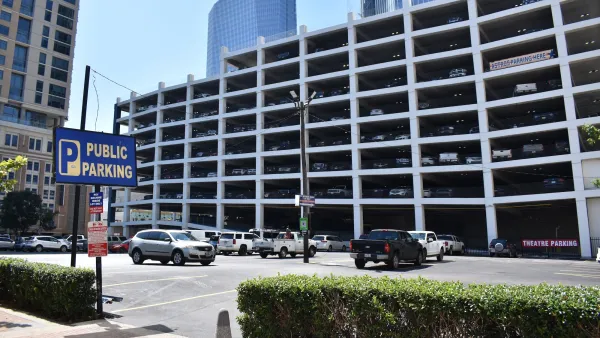
Downtown Houston parking garage will take up an entire block
The garage will connect to the Houston Center retail complex, a 4.6-million square foot office and commercial site.

Planetizen Federal Action Tracker
A weekly monitor of how Trump’s orders and actions are impacting planners and planning in America.

Amtrak, CN end decades-long dispute with eight-year agreement
The new operating agreement establishes an updated framework for the companies to work together, including processes to resolve disputes.

Judges permit Denver to divert 77,000 acre feet from the Colorado River for reservoir expansion
Overuse and climate change have caused the Colorado River’s water levels to plummet.

Boston has spent millions making the Green Line more accessible — and there’s no end in sight
While the city has invested millions into expanding and adding platforms to the Green Line to make it more accessible, new train cars set to arrive next year will be too tall for disabled passengers to board without raising the current platforms.

Idaho may see an 18% drop in federal surface transit funding — the largest estimated cut in the US
Transit systems in rural communities are much more reliant on federal funding to provide their services.

How ‘post-disaster gentrification’ alters neighborhoods after natural calamities
After hurricanes, fires or other calamities, the original residents of a community are often replaced by younger, wealthier residents.

FREE Course: Walkable City 1: Why Walkability?
After describing his path towards focusing on walkability as the essence of good planning, Jeff Speck marches through his five principal reasons for making more walkable places.
Reinventing Malls: Planning Alchemy—Turning Gray Fields Into Gold
The course focuses on the opportunities and imperatives that shape reinvention of mall sites.

Harvard University Graduate School of Design
KFH Group Inc.
Greater Baltimore Committee
The Architects Foundation
University of Cincinnati Online
The Pocatello Development Authority
The Urban Renewal Agency of the City of Pocatello