Solar panel company SolarCity unveiled plans for one of the largest solar panel factories to open in Buffalo, New York, forecasting almost 3,000 jobs for the factory alone.


As reported in The Buffalo News by David Robinson, "Buffalo’s transformation took on new meaning Tuesday when Gov. Andrew M. Cuomo announced that SolarCity’s planned factory in South Buffalo will bring not the 475 jobs first projected by the RiverBend project or even the 850 jobs later forecast, but 3,000 jobs – more even than the employment that parcel supported when it was occupied by Republic Steel."
The new factory, creating solar panels to generate upwards of 1,000 megawatts of electricity, is going to be the Western Hemisphere's largest solar panel factory. With 1,450 jobs towards manufacturing, and 1,400 jobs for support and services related to the factory, there will be an estimated 2,000 additional spin-off jobs for suppliers, installers, and other related fields. To put this in perspective, the former Republic Steel site employed about 2,500 people during its peak in the 1960's.
The factory is expected to open in early 2016, with full production occurring a year later. Buffalo sets a great example of repurposing a former industrial site as a factory for building clean technology and energy production.
Read the full story: ‘Historic day for Buffalo,’ Zemsky says of SolarCity RiverBend plans
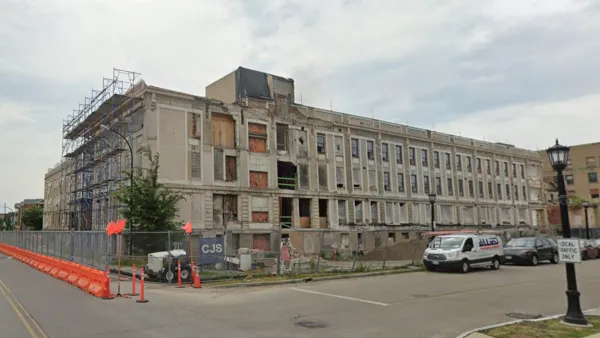
Buffalo Hospital to Become 80 Housing Units
The former Millard Fillmore Gates Circle hospital building is part of a larger development aimed at bringing affordable housing to western New York.
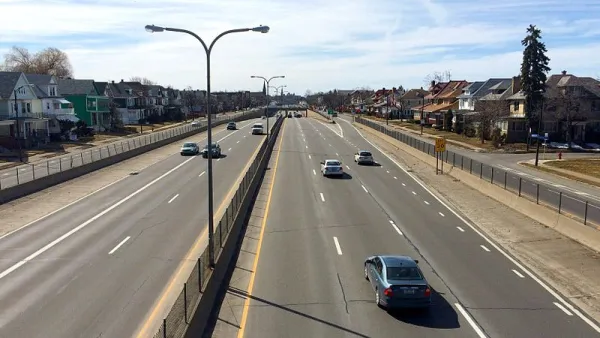
Buffalo Residents Push Back on Proposed Cap Park
State and local officials say the $1 billion project will heal neighborhoods divided by the Kensington Expressway, but community members say the proposed plan will exacerbate already poor air quality in the area.
The Link Between Employment and Housing
For many people experiencing homelessness, the process of finding and keeping a job is fraught with challenges.

Planetizen Federal Action Tracker
A weekly monitor of how Trump’s orders and actions are impacting planners and planning in America.

Washington state to charge fee to drivers with fuel-efficient cars
Revenue from the fee will go towards supporting the state’s highways.

Trump to blast ‘hydrocarbon highway’ through ‘world’s longest art gallery’
Environmental and historic preservation groups are suing to stop the project.

MBTA Green Line project moved to next phrase of CIG program
The modernization effort will cost $4.08 billion.

22-mile pedestrian and bike path to encircle Atlanta by 2030
The project will also support affordable housing.

Army detonates nearly 5 tons of lead in Iowa
The detonation comes after days of delays and public outcry.

FREE Course: Walkable City 1: Why Walkability?
After describing his path towards focusing on walkability as the essence of good planning, Jeff Speck marches through his five principal reasons for making more walkable places.
Reinventing Malls: Planning Alchemy—Turning Gray Fields Into Gold
The course focuses on the opportunities and imperatives that shape reinvention of mall sites.

City of Charlotte
City of Rosemead
Rutgers University, Edward J. Bloustein School of Planning and Public Policy
University of Michigan School for Environment and Sustainability (SEAS)
Hunter College, City University of New York (CUNY)
The Architects Foundation
University District Partnership