A travel article in the Dallas Morning News describes the Las Vegas Strip's recent changes as Las Vegas-style New Urbanism.


According to an article by Michael Hiller, "despite the desert heat, new shops on Las Vegas Boulevard face outward to the sidewalks rather than inside to casino gaming tables. The deck has been shuffled to more broadly appeal to millennials."
Although Downtown Las Vegas, old Las Vegas, incorporated Las Vegas, has been well documented in its Tony Hsieh-led revitalization efforts (although Hsieh still gets a gratuitous mention), we're talking about the Las Vegas Strip here. Nor are we talking about the contrived and starchitect-designed gesture to urbanism attempted by the City Center complex of hotels and shopping destinations.
Hiller lists three new hotels that have "embraced" the millennial attitude—the SLS Las Vegas, for instance, opened last month. At $415 million, the Southern California-inspired hotel is an "over-the-top version of the original SLS in Beverly Hills sports an industrial-chic design from Philippe Starc."
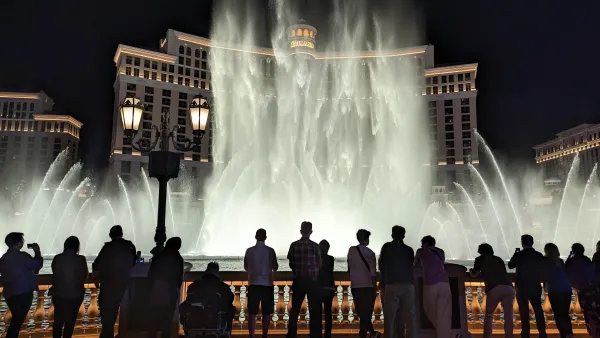
Also getting scant attention in the body of the article but featured as the image in the article's accompanying slideshow is another new addition, Linq—a (deliberately) pedestrian-oriented, ersatz industrial district anchored by the world's largest Ferris wheel.
Read the full story: Las Vegas reinvents itself with young visitors in mind
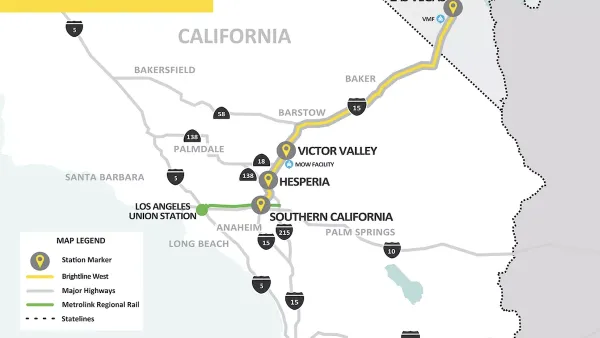
Brightline West’s future may rely on $6 billion federal loan
The company has until Nov. 2 to make a $400 million equity investment into its proposed high-speed rail line.
Nevada sues feds to block Colorado River cuts
The federal government’s newly released plan for managing the Colorado River’s dwindling water supply could cause Nevada to lose over 70% of its allocated water.

Las Vegas debuts new bus rapid transit
The project also brings widened sidewalks and more trees to the Maryland Parkway corridor.

Planetizen Federal Action Tracker
A weekly monitor of how Trump’s orders and actions are impacting planners and planning in America.

California plans to bury El Niño’s downpour
If the state plays its cards right, it may be able to store a billion acre-feet of El Niño’s water in aquifers.

Desperate measures: Advocates weigh draining Lake Powell to fill Colorado River
Draining the reservoir could reduce evaporation losses by a couple hundred thousand acre-feet.

Chicago voters approve permanent festival grounds, penalty for vacant property owners
Currently, major summer and fall festivals take over public parks for weeks at a time, drawing criticism from nearby residents

NYC votes to cut outdoor dining red tape, speed up permitting
New York City also voted to allow the Department of Transportation to begin work on urgent projects before notifying elected officials.

California appears to reject Prop. 45
The proposition would have expanded the projects that qualify for a streamlined environmental review, effectively paring down the California Environmental Quality Act.

FREE Course: Walkable City 1: Why Walkability?
After describing his path towards focusing on walkability as the essence of good planning, Jeff Speck marches through his five principal reasons for making more walkable places.
Reinventing Malls: Planning Alchemy—Turning Gray Fields Into Gold
The course focuses on the opportunities and imperatives that shape reinvention of mall sites.

City of Rosemead
Rutgers University, Edward J. Bloustein School of Planning and Public Policy
One Hundred Miles
Hunter College, City University of New York (CUNY)
The Architects Foundation
University of Cincinnati Online
City of Cambridge
Montrose County
The Pocatello Development Authority