Philadelphia Inquirer Architecture Critic Inga Saffron is the latest to respond to an article in the Washington Post asking whether family-friendly cities make economic sense.


The question posed originally by Lydia DePillis: "Why, from a purely economic standpoint, would a city on the make try to attract families at all?" Saffron says the inquiry "stopped me in my tracks" because Philadelphia has been one of those "cities on the make" that has attracted thousands of new, young residents in recent years.
But Philadelphia's evolution is not without concerns, especially with regard to its school budget crisis: "Philadelphia has undergone such a quick and heady transformation, as housing construction exploded and the streets filled again with people, that it hasn't spent much time asking itself, what next? Can this recovery be sustained once millennial parents start confronting the first day of kindergarten in a classroom with 35 kids and no teacher's aide?"
The critical argument in the piece is that Philadelphia is "effectively embracing" antifamily policies. For example: "We dole out 10-year property tax abatements to encourage new housing construction, even as the program drains the schools of revenue. Who do we expect to live in those houses, which are now typically built with three bedrooms?"
FULL STORY: City school crisis dire for us all

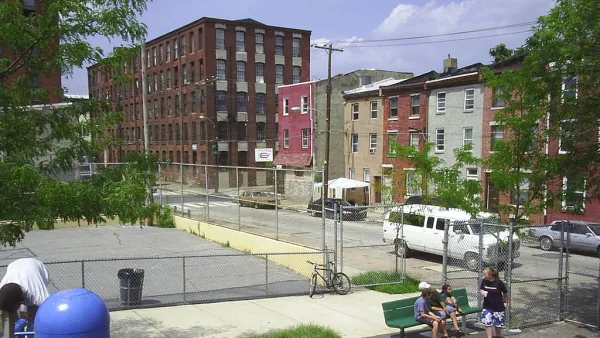
Philadelphia Could Hit the Brakes on Housing
With bills on the table to update its zoning code, Philadelphia may be poised to slow the pace of its housing construction.
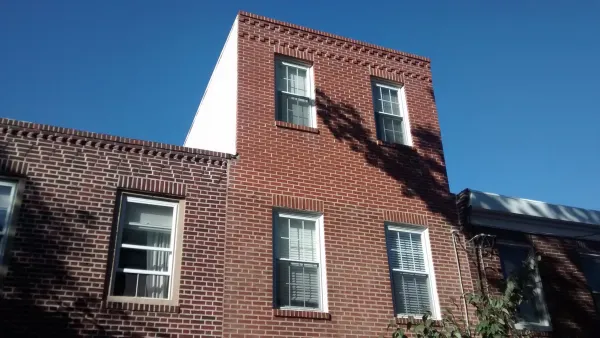
Philadelphia Rowhouse Owners Embrace the 'Overbuild'
Quarters can be cramped for growing families in Philadelphia's many two-story rowhouses. Rather than decamp to the suburbs, more and more homeowners are simply adding a third story, known as an "overbuild."
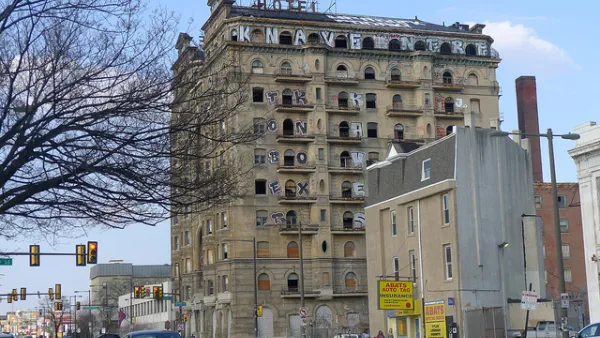
Save the Historic Tax Credit, Save Buildings in Philadelphia and Elsewhere
Renovations of historic structures in Philly are an example of the nationwide importance of the historic tax credit.

Planetizen Federal Action Tracker
A weekly monitor of how Trump’s orders and actions are impacting planners and planning in America.

The state-sanctioned urbicide of Austin
People don’t kill cities. Freeways do.

US to reduce Colorado River water deliveries to Mexico
A new Colorado Treaty amendment reduces Mexico’s Colorado River water allocation by 250,000 acre feet.

5 New England states march closer to 800 megawatt wind energy project
Securing federal approval for the project may be complicated under the Trump administration, which has historically been hostile towards domestic wind power.

Baltimore to break ground on $50 million Transit Priority Project
The project will bring faster bus trips, safer streets and better bike connections to Baltimore.

Airbnb launches $250 million 'last-dollar financing' housing accelerator, makes first investment in Austin
The company will put $6.4 million towards affordable housing development in Texas’ capital.

FREE Course: Walkable City 1: Why Walkability?
After describing his path towards focusing on walkability as the essence of good planning, Jeff Speck marches through his five principal reasons for making more walkable places.
Reinventing Malls: Planning Alchemy—Turning Gray Fields Into Gold
The course focuses on the opportunities and imperatives that shape reinvention of mall sites.

Eagle County Government
Harvard University Graduate School of Design
Nashville Planning Department
The Architects Foundation
University of Cincinnati Online
The Pocatello Development Authority
The Urban Renewal Agency of the City of Pocatello
Journal of the American Planning Association