With bills on the table to update its zoning code, Philadelphia may be poised to slow the pace of its housing construction.


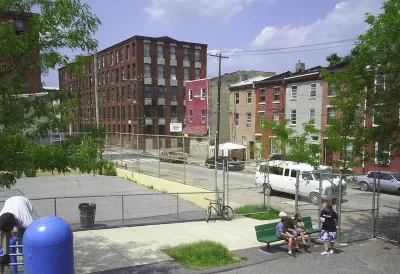
"There is little doubt that Philadelphia's relentless housing boom (fueled by the 10-year property tax abatement) has run roughshod over some neighborhoods, destroying cherished architecture, driving up prices, and pushing out the poor and elderly," Inga Saffron writes.
In response, City Council President and "longtime density skeptic" Darrell Clarke has introduced two bills that could put in check a construction spree dating to a 2011 update of Philly's zoning code. "The more significant of Clarke's bills would create a Council-controlled commission to review and update the zoning code" once again.
Hardcore urbanists, Saffron writes, "fear that Clarke, who once boasted that he drives everywhere — even to the corner store — is determined to impose a suburban vision on Philadelphia." On the other hand, "the 2011 zoning code has been much more generous to developers and private interests than to the overall public good. Construction quality is so poor — even for so-called luxury housing — that it often seems like we are building the slums of tomorrow."
Saffron concludes with an argument that the real problem lies with the planning commission's lack of authority. Fixing that, she says, will let the city better negotiate big projects rather than leaving the task to volunteer-run Registered Community Organizations.
FULL STORY: Is Philadelphia getting too crowded? City Council president wants fewer apartments and more parking.

Philadelphia's downtown parking lots are a 'valuable, untapped resource'
Over two dozen city-owned parking lots could be developed into housing or other uses.

Austin Could Reduce Minimum Lot Sizes
In an effort to increase housing production and bring down housing costs, the city council approved a resolution calling for reduced lot sizes and higher density in single-family neighborhoods.
Boise Approves First Zoning Code Update in 60 Years
A comprehensive update of the city’s zoning code aimed at making housing more affordable and promoting sustainable growth received unanimous support from the city council.

Planetizen Federal Action Tracker
A weekly monitor of how Trump’s orders and actions are impacting planners and planning in America.

The state-sanctioned urbicide of Austin
People don’t kill cities. Freeways do.

US to reduce Colorado River water deliveries to Mexico
A new Colorado Treaty amendment reduces Mexico’s Colorado River water allocation by 250,000 acre feet.

5 New England states march closer to 800 megawatt wind energy project
Securing federal approval for the project may be complicated under the Trump administration, which has historically been hostile towards domestic wind power.

Baltimore to break ground on $50 million Transit Priority Project
The project will bring faster bus trips, safer streets and better bike connections to Baltimore.

Airbnb launches $250 million 'last-dollar financing' housing accelerator, makes first investment in Austin
The company will put $6.4 million towards affordable housing development in Texas’ capital.

FREE Course: Walkable City 1: Why Walkability?
After describing his path towards focusing on walkability as the essence of good planning, Jeff Speck marches through his five principal reasons for making more walkable places.
Reinventing Malls: Planning Alchemy—Turning Gray Fields Into Gold
The course focuses on the opportunities and imperatives that shape reinvention of mall sites.


Eagle County Government
Harvard University Graduate School of Design
Nashville Planning Department
The Architects Foundation
University of Cincinnati Online
The Pocatello Development Authority
The Urban Renewal Agency of the City of Pocatello
Journal of the American Planning Association