Notwithstanding a favorable court ruling freeing state bond funds, construction is delayed on the 800-mile project, reports Ralph Vartabedian of the LA Times. Jessica Calefati of the Mercury News writes on opponents' appeal to the state Supreme Court


While the July 31 ruling of the state appeals court lifted the legal weight on California's $68 billion high speed rail project, it did nothing to speed-up construction on the ground. Ralph Vartabedian of the Los Angeles Times reports on the slow-going of preparing to begin construction "because it lacks most of the Central Valley land needed for an initial 29-mile segment that will pass through Fresno" in his article, which also appears in Governing.
The state has acquired 71 of 526 parcels needed for the segment, about 13% of the total, according to figures provided by the California High-Speed Rail Authority.
While the rail authority has the power of eminent domain, "that process can be time-consuming," notes Vartabedian, so it "is relying on a separate state entity, the State Public Works Board, to condemn property for the project where needed."
However, the agency does have a webpage devoted to construction, so it would appear that progress has been made since Vartabedian wrote his August 14 article.
Jessica Calefati of the Bay Area News Group writes that the formal appeal was filed with the California Supreme Court the day after Labor Day, Sept. 2.
Several weeks or months may pass before the state Supreme Court responds to Tuesday's petition for review, and legal experts say predicting whether the court will take up the bullet train case is a toss-up.
Opponents are appealing the July 31 ruling because they believe that the California High-Speed Rail Authority had not "followed a sweeping set of stringent rules for selling $8.6 billion in bonds approved by voters in 2008," Calefati writes. However, she notes that a broader issue may be division of powers in the state.
The appellate court was reluctant to overrule the Legislature's endorsement of a bullet train funding plan it approved several years ago that was at the heart of the opposition's case for killing the project. The Supreme Court may feel the same way, said Gerald Uelman, a Santa Clara University law professor who directs the Edwin A. Heafey Jr. Center for Trial and Appellate Advocacy.
Read the full story: Lack of Land Delays California's High-Speed Rail Construction

California High Speed Rail Breaks Ground Today in Fresno
The long-beleaguered California High Speed Rail project will have a historic moment today, January 6. The media's coverage of the event indicates the yet-to-be-determined future of the project.
California Supreme Court Rebuffs High Speed Rail Opponents
The California Supreme Court gave a green light to the state's embattled High Speed Rail Authority to begin issuing $8.6 billion in voter-approved bonds by rejecting the appeal by Central Valley opponents of the project.
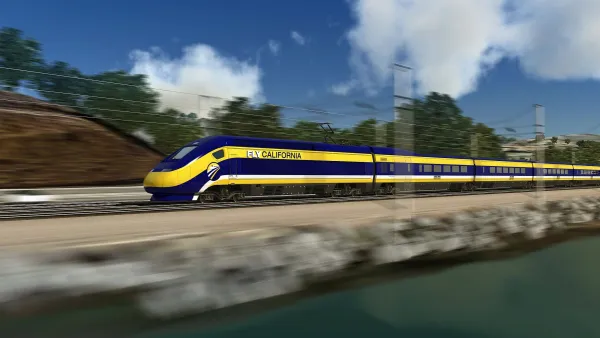
Luck May Be Changing for California High Speed Rail
No, the debilitating lawsuits haven't been resolved, so the HSR Authority still can't tap the $10 billion in voter-approved bonds, but the new state budget based on cap-and-trade revenue for HSR is sparking inquiries from private investors.

Amtrak, CN end decades-long dispute with eight-year agreement
The new operating agreement establishes an updated framework for the companies to work together, including processes to resolve disputes.

Judges permit Denver to divert 77,000 acre feet from the Colorado River for reservoir expansion
Overuse and climate change have caused the Colorado River’s water levels to plummet.
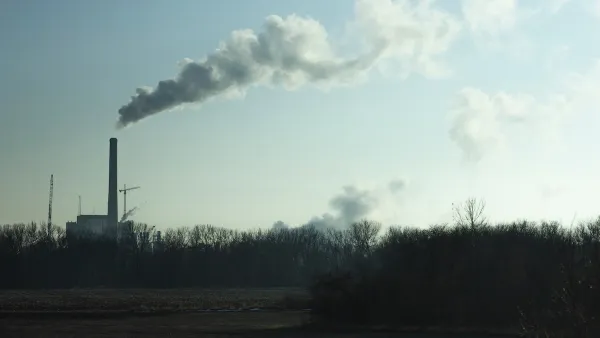
Nation's most wind-powered state turns to coal as data centers increase energy demand
For the first time in decades, Iowa has increased its generation of coal power.

Boston has spent millions making the Green Line more accessible — and there’s no end in sight
While the city has invested millions into expanding and adding platforms to the Green Line to make it more accessible, new train cars set to arrive next year will be too tall for disabled passengers to board without raising the current platforms.

Idaho may see an 18% drop in federal surface transit funding — the largest estimated cut in the US
Transit systems in rural communities are much more reliant on federal funding to provide their services.

How ‘post-disaster gentrification’ alters neighborhoods after natural calamities
After hurricanes, fires or other calamities, the original residents of a community are often replaced by younger, wealthier residents.

FREE Course: Walkable City 1: Why Walkability?
After describing his path towards focusing on walkability as the essence of good planning, Jeff Speck marches through his five principal reasons for making more walkable places.
Reinventing Malls: Planning Alchemy—Turning Gray Fields Into Gold
The course focuses on the opportunities and imperatives that shape reinvention of mall sites.

City of Wisconsin Rapids
Harvard University Graduate School of Design
KFH Group Inc.
The Architects Foundation
University of Cincinnati Online
The Pocatello Development Authority
The Urban Renewal Agency of the City of Pocatello