With national action tackling climate change remaining weak, regional and local municipalities are taking substantive actions to address the oncoming severe affects of climate change.


According to a recently leaked IPCC draft "synthesis report," the lack of national action is leading to "severe, pervasive, and irreversible" climate change in the coming decades. While this news is depressing and troubling, the IPCC reports that localities all over the world are picking up some of this slack. Despite a particularly gridlocked Congress in the United States, state and local governments continue to pass effective and sophisticated climate change policies.
A Brookings Institution post authored by Devashree Saha and Mark Muro outlined the recent measures states like Rhode Island, California, Connecticut, and New York have passed to curtail greenhouse gas emissions. Ranging from cap and trade programs, to "green banks," these measures illustrate the power of smaller government entities to prototype future large-scale climate efforts.
That being said, our planet's health cannot rely solely on the actions of local and regional municipalities, "nations are going to have to act more vigorously, including with investments in technology innovation. Not only does the federal government need to enact policies to significantly decrease greenhouse gas emissions nationally but it also needs to partner effectively with states and regions by providing aid and technical assistance."
Read the full story: Climate Response Goes Local
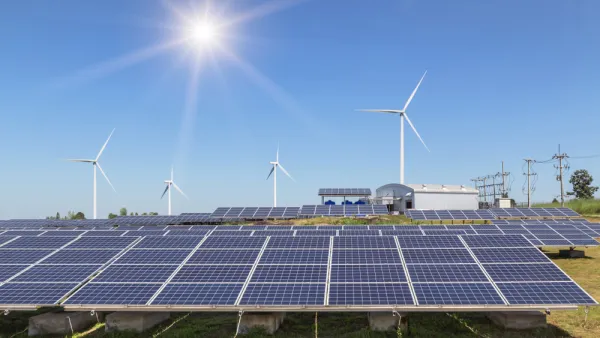
The Congressional Budget Cut Clean Energy Tax Breaks
The consequences of the Congressional budget approved at the end of 2019 can be measured in millions of tons of greenhouse gas emissions.

The Generational Warfare of Our Times
If action isn’t taken to address the major issues the nation faces today, younger people will be contending with a lifetime of hardship. But older generations seem mostly to be looking the other way.
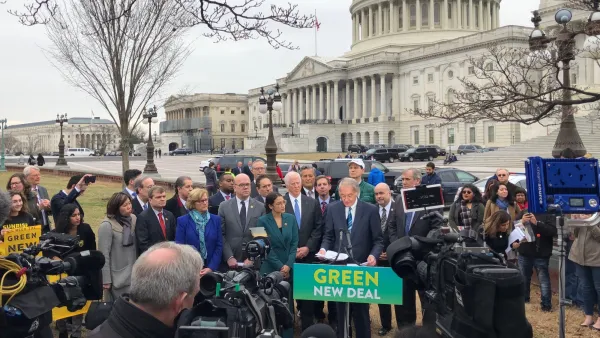
Climate Action and the Green New Deal: Interview with Rep. Mike Levin
Long before winning the congressional seat in California's 49th District, Mike Levin advocated for clean energy and a green economy.

Planetizen Federal Action Tracker
A weekly monitor of how Trump’s orders and actions are impacting planners and planning in America.

California plans to bury El Niño’s downpour
If the state plays its cards right, it may be able to store a billion acre-feet of El Niño’s water in aquifers.

Desperate measures: Advocates weigh draining Lake Powell to fill Colorado River
Draining the reservoir could reduce evaporation losses by a couple hundred thousand acre-feet.

US buildings threatened, destroyed by fires set to triple by 2060
Researchers found a high fire risk for socioeconomically vulnerable neighborhoods in the American West.

LA residents may be allowed to paint their own crosswalks
Councilwoman Katy Yaroslavsky put out a motion instructing the Los Angeles Department of Public Transportation to study the feasibility of allowing volunteers to paint crosswalks.

Dallas moves to overhaul its zoning code
The city's zoning reform will allow more multi-family and mixed-use developments.

FREE Course: Walkable City 1: Why Walkability?
After describing his path towards focusing on walkability as the essence of good planning, Jeff Speck marches through his five principal reasons for making more walkable places.
Reinventing Malls: Planning Alchemy—Turning Gray Fields Into Gold
The course focuses on the opportunities and imperatives that shape reinvention of mall sites.

City of Rosemead
Rutgers University, Edward J. Bloustein School of Planning and Public Policy
One Hundred Miles
Hunter College, City University of New York (CUNY)
The Architects Foundation
University of Cincinnati Online
City of Cambridge
Montrose County
The Pocatello Development Authority