Back in July, white flags appeared atop the Brooklyn Bridge, sparking speculation about the meaning of the gesture. Was it about gentrification? Was it a warning of a forthcoming act of terrorism?


"A pair of artists in Berlin said they were the ones who pulled off the stunt of the summer, hoisting two big all-white flags atop the Brooklyn Bridge last month, swapping them for the usual red, white and blue," reports New York Times Architecture Critic Michael Kimmelman.
According to Kimmelman's article, "the artists, Mischa Leinkauf and Matthias Wermke, say the flags — with hand-stitched stars and stripes, all white — had nothing to do with terrorism. In a series of phone interviews, they explained that they only wanted to celebrate 'the beauty of public space' and the great American bridge whose German-born engineer, John Roebling, died in 1869 on July 22, the day the white flags appeared."
Read the full story: German Artists Say They Put White Flags on Brooklyn Bridge
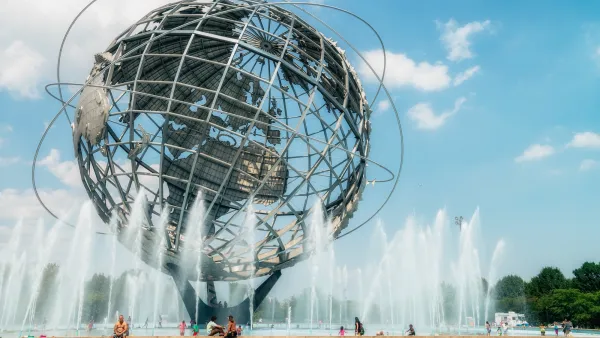
Historic Queens park is getting a $120M upgrade
The borough's largest park will undergo significant upgrades for accessibility, flood mitigation and historic preservation.
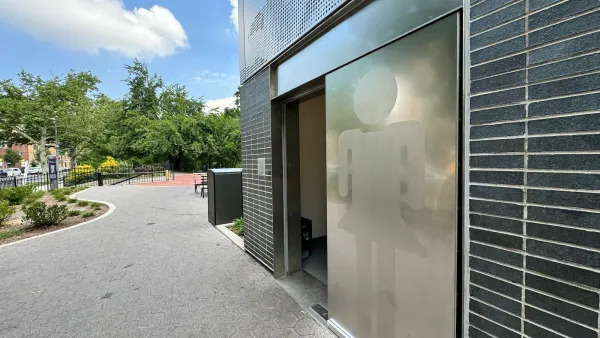
Mamdani Administration Promises 20-30 New Public Bathrooms by End of Summer
Of the city’s 1,000 public restrooms, just 30 percent are located outside of parks.
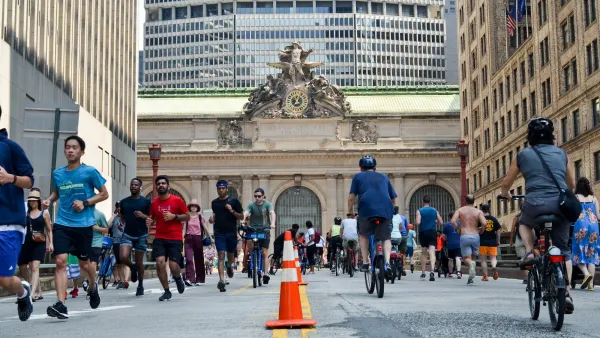
Mamdani’s Budget Fails to Expand Open Streets, Breaking Campaign Promise
The proposed budget allocates $2 million to Summer Streets and Open Streets, less than the $2.1 million allocated by the Adams administration last year.

Desperate measures: Advocates weigh draining Lake Powell to fill Colorado River
Draining the reservoir could reduce evaporation losses by a couple hundred thousand acre-feet.

Eastern Nebraska is running out of electricity
Data centers and electrification are straining eastern Nebraska’s grid, throttling economic development.

Malls are becoming the midtowns of the future
Mall and office park redevelopments are a generational opportunity to create new nodes of urbanity.

NYC breaks ground on anti-flooding infrastructure project
New York City's new system will reduce stormwater flows to local sewers by 90%.

One Kentucky town’s secret to affordable housing
The Smoketown Community Land Trust has already built seven affordable homes for community members.

Houston gains petal-shaped cooling infrastructure to make streets more ‘delightful’
The city has installed the pavilions along 15 blocks in Houston.

FREE Course: Walkable City 1: Why Walkability?
After describing his path towards focusing on walkability as the essence of good planning, Jeff Speck marches through his five principal reasons for making more walkable places.
Reinventing Malls: Planning Alchemy—Turning Gray Fields Into Gold
The course focuses on the opportunities and imperatives that shape reinvention of mall sites.

City of Rosemead
Rutgers University, Edward J. Bloustein School of Planning and Public Policy
One Hundred Miles
University of Michigan School for Environment and Sustainability (SEAS)
Hunter College, City University of New York (CUNY)
The Architects Foundation
City of Cambridge
Montrose County
The Pocatello Development Authority