Researchers from Harvard and the University of British Columbia used "self-reported life satisfaction data" from the Centers for Disease Control and Prevention to locate the cities and regions where Americans are most happy (or unhappy).



"There's more to take away from [the Unhappy Cities] study than a list of which cities are winners and which are losers," according to the analysis of Danielle Kurtzleben.
"The data also carries in it an insight into how people make major life choices. If people only sought to live in happy places, cities like Richmond and Charlottesville, Virginia would be swamped with people, while New York would be desolate. Clearly, that hasn't happened."
Kurtzleben also analyzes an additional layer of data reported by the study, namely the connection between income and levels of happiness.
Read the full story: Map: The happiest places in America

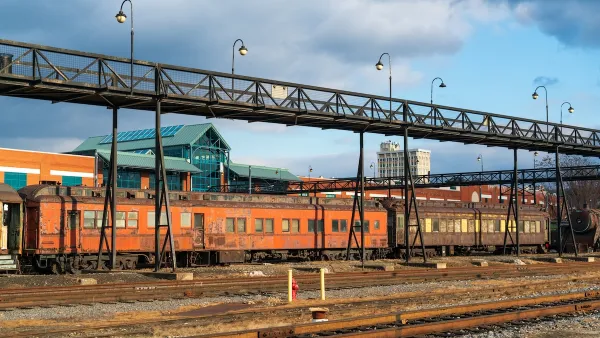
NYC-to-Scranton Train Advocates Confident About Project’s Future
State transportation officials say the effort to restore passenger rail service between Scranton and New York City is moving full steam ahead despite remaining challenges.
Want Happiness? Live Near Transit
According to a study by U. of Minn's Jason Cao published in the journal, Transportation, there is a positive correlation between living near light rail transit and satisfaction with life. He based it on the Hiawatha light rail line in Minneapolis.
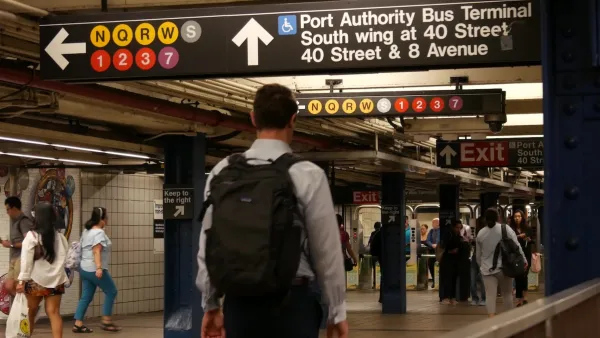
MTA looks to bring AI-assisted, multilingual announcement system to subways
Some of the transit agency’s audio systems haven’t been upgraded in 40 years.

Planetizen Federal Action Tracker
A weekly monitor of how Trump’s orders and actions are impacting planners and planning in America.

Amtrak, CN end decades-long dispute with eight-year agreement
The new operating agreement establishes an updated framework for the companies to work together, including processes to resolve disputes.

Northwest rail fans eager for Sept. 30 debut of Amtrak’s Airo fleet
Get ready for that new train smell and more seats. But they won’t go faster or run more frequently on the Cascades route in Washington and Oregon.

Trump administration unlawfully slashed $7 billion in clean energy grants, judge rules
The Environmental Protection Agency ended the Solar For All program, which provided the grants, after President Donald Trump’s inauguration.

Record-breaking wildlife overpass in Colorado brings 91% reduction in animal collisions
Prior to the overpass, vehicles were hitting one deer per day on Colorado’s Interstate 25.

California lawmakers approve just 5% of much-needed LA28 transportation funding
State legislators appear just as unwilling as Trump to pay for Olympics-related transportation projects.

FREE Course: Walkable City 1: Why Walkability?
After describing his path towards focusing on walkability as the essence of good planning, Jeff Speck marches through his five principal reasons for making more walkable places.
Reinventing Malls: Planning Alchemy—Turning Gray Fields Into Gold
The course focuses on the opportunities and imperatives that shape reinvention of mall sites.

City of Thousand Oaks
City of Wisconsin Rapids
Harvard University Graduate School of Design
The Architects Foundation
University of Cincinnati Online
The Pocatello Development Authority
The Urban Renewal Agency of the City of Pocatello